




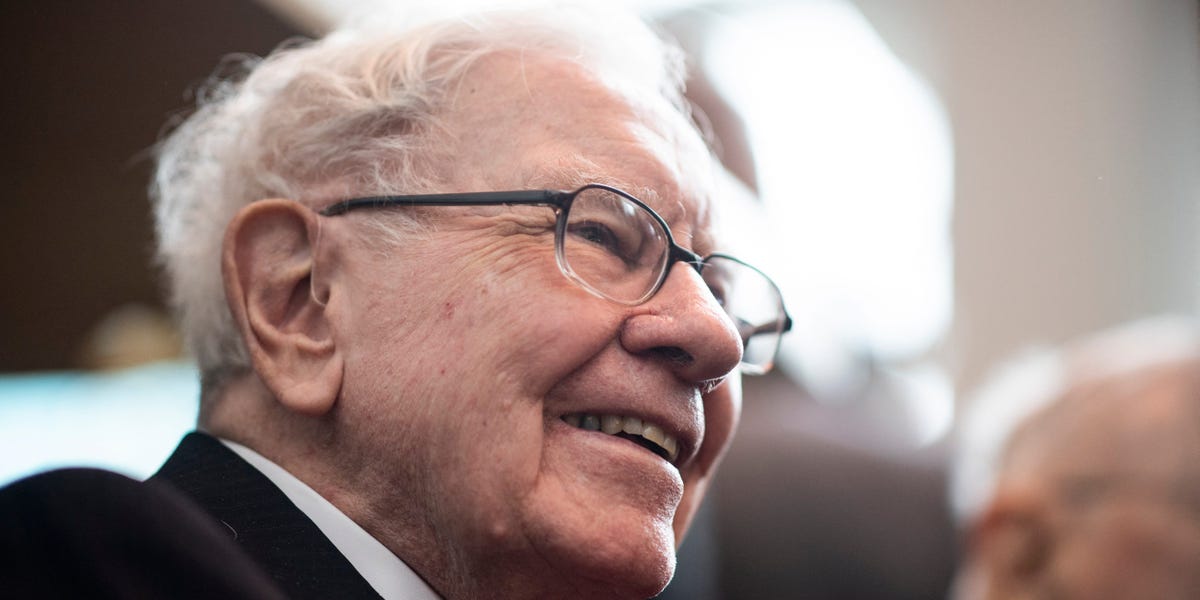
Warren Buffett’s cash hoard will pay off handsomely, and Michael Burry’s AI critique is right on the money, Paul Dietrich says.
“Buffett is right to still be keeping a lot of cash,” Wedbush’s chief investment strategist told Business Insider by email. “Given all the economic turmoil, the market is still very overvalued.”
The S&P 500 closed at an all-time high of about 7,023 points on Wednesday, fueled by a sharp rebound in tech stocks.
In his final quarter as Berkshire Hathaway CEO, Buffett and his team grew the company’s liquid assets to a record $373 billion as of December 31.
“They will do very well when the market finally bottoms out after the next major bear market,” Dietrich said, adding that “when it starts to recover, they will have great buying opportunities.”
Buffett famously deployed over $21 billion across five transactions between 2008 and 2009, when credit markets froze up and Berkshire stood virtually alone in being willing and able to put large sums to work.
As for Burry, Dietrich said he subscribes to his Substack and “agrees with all of his analysis of AI funding and accounting.”
The investor of “The Big Short” fame has been sounding the alarm on AI stocks, pointing to their heady valuations, slowing growth, inflated earnings, excessive investments, and “give-and-take” deals.
“It is a scandal!” Dietrich said.
Navigating war and AI
Dietrich shared a draft of his next market commentary with Business Insider.
The Wall Street veteran wrote that energy prices are unlikely to materially retreat before next year, given it takes 60 to 90 days for fuel from the region to reach US pumps, there’s been widespread damage to Gulf energy facilities, and there are clear signs of inventory pressure and shortages in the oil sector.
Dietrich wrote that he favors investing indirectly in AI via utilities. “I can, at least, understand their financials,” he said, adding that public utilities are the “backbone” of supplying the energy that data centers require.
“Where utilities were once seen as a widow and orphans’ safe bond-like investment known for steady dividends, they’re now viewed as future growth companies powering the AI boom,” he wrote.
“Investing in utilities gives exposure to this long-term AI trend without the risks faced by other investors who are ignoring Burry’s warnings,” he added.
Dietrich wrote that his analysis supports owning domestic energy producers that benefit from higher commodity prices but don’t have operations in the Gulf, as well as domestic energy infrastructure as a safer alternative to Gulf assets.
He also struck a bullish tone on gold and hard assets, noting they usually perform well in periods of inflation, geopolitical uncertainty, and currency pressure.
On the other hand, he cautioned investors about fuel-sensitive industries such as airlines and trucking, as stubbornly high energy prices could throttle their profits.
Dietrich flagged the risk of “12 to 24 months of disruption across energy markets, food supply chains, industrial input costs, and global growth.”
“The investors who navigate this period best will not be the ones who called the ceasefire date,” he wrote.
“They will be the ones who built portfolios capable of absorbing an extended disruption — and who resisted the urge to trade on every headline.”
Read the full article here