


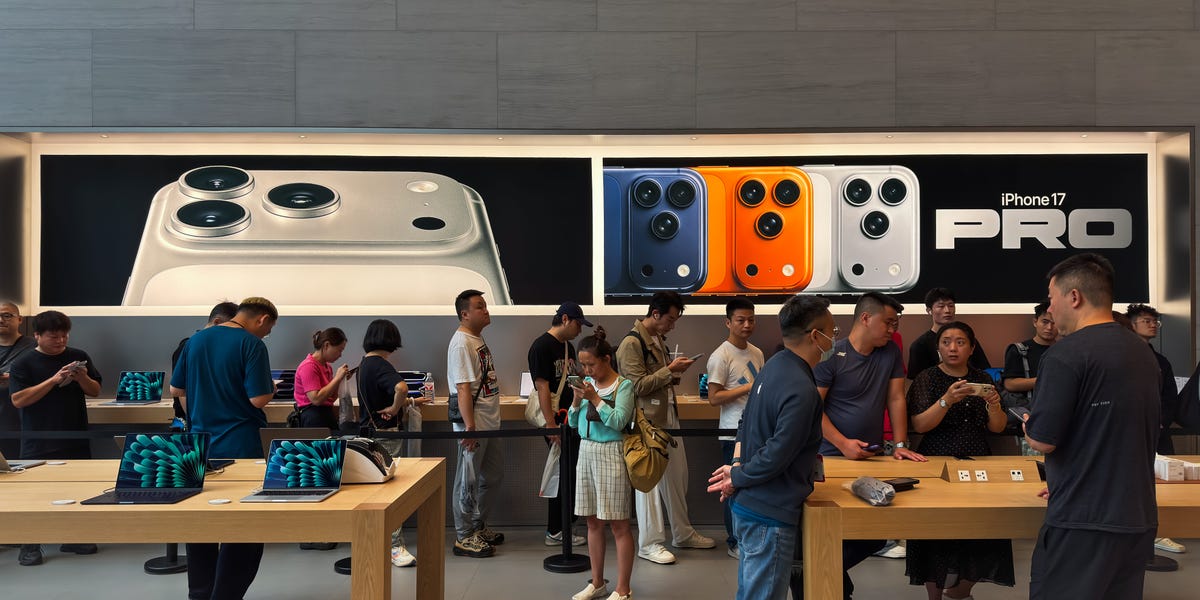
The iPhone 17 is on a hot streak for Apple while competitors cool down.
Apple’s iPhone sales volume in the US grew 1.3% year over year in the first quarter, while the broader smartphone market fell 5.7%, according to market research firm Counterpoint Research. Samsung’s later-than-usual launch of the Galaxy S26 helped give the iPhone a leg up.
Samsung’s Galaxy S26 series was delayed from a typical January release to March 11, giving Apple a head start in smartphone sales for the quarter, market research firm Counterpoint Research said. Last year, the Galaxy S25 was unveiled in January and went on sale in February.
“When one brand delays a flagship launch, it opens a window of opportunity to fill that vacuum,” Tyler Graham, senior analyst at Counterpoint Research, said in a statement. “Apple did just that.”
Apple has been racking up smartphone wins since it launched the iPhone 17 in September. The company said it had a “historic” holiday quarter for iPhone demand last year, and that strength continued into the March quarter, with 22% growth in iPhone sales.
Aside from delayed launches, economic challenges for consumers also contributed to declines in the overall US smartphone market during the period, according to Counterpoint Research.
Apple’s pricing strategy helped it keep its edge in the smartphone sales battle. The iPhone 17e, Apple’s entry-level smartphone, stayed at $599 — the same price as the iPhone 16e before it — while gaining 256 gigabytes of additional storage.
Samsung, meanwhile, raised the price of its Galaxy S26 base and Plus models by $100 from the previous lineup and phased out the entry-level phone with 128 gigabytes of storage. The price hike came as consumer electronics makers have wrestled with the rising cost of memory chips.
Apple CEO Tim Cook has been tight-lipped on whether the company would raise prices due to the memory shortage, but it said in April that it expects “significantly higher memory costs” for the June quarter.
Apple could strengthen its competitive edge in the smartphone market if it holds prices steady and continues to stimulate iPhone demand.
“If Apple can avoid significant price increases and continue to outpace its peers in promotional dollars, it will be tough for Android OEMs to keep up in the year ahead,” Counterpoint wrote.
Read the full article here