



From “Succession” to “Yellowstone,” families with business empires are a rich source of drama and conflict with huge financial stakes.
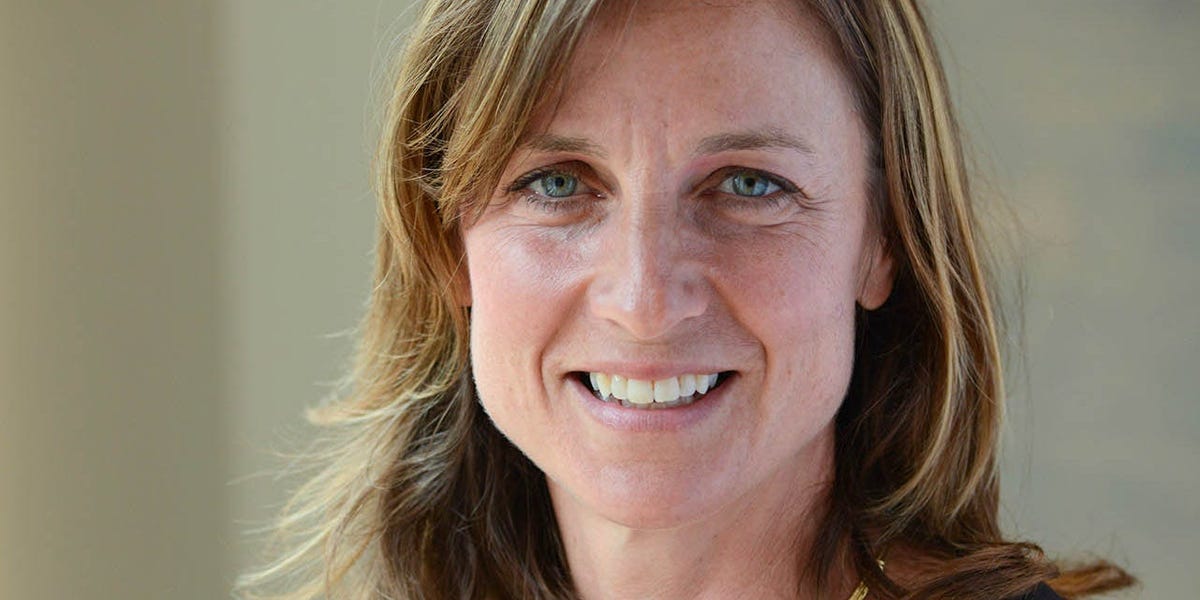
Jennifer Harvey is the CEO of Crown Worldwide, a logistics company with more than 3,000 employees and operations in 45 countries. She’s also the daughter of Crown’s billionaire founder, Jim Thompson.
Harvey recently spoke to Business Insider about the rewards and challenges of taking over the family business, how she navigates her relationship with her father, and whether she wants her own children to continue the dynasty.
Heir to the Crown
Thompson founded Crown in Japan in 1965 to support US military families relocating there.
Harvey recalled her father’s startup being a constant presence in her childhood.
“Crown was definitely part of the family,” she said, adding that her parents would often take her to the office, and she knew the employees.
Harvey said the reality for many children whose parents are building a business is “you have to share them with that all-consuming exercise.”
But she said her father did a “really good job of making sure he knew what was going on in our lives, even if he was phoning us from abroad.”
Harvey moved from Japan to Hong Kong around age 10. After she graduated from high school, she relocated to New York to attend Columbia University, where she majored in East Asian Studies with an economics concentration, and learned Japanese.
Her first job after college was at an investment bank, but she found the culture of working all hours “brutal” and realized it wouldn’t make her happy in the long run.
She remembered that before leaving for college, she’d had dinner with her father at a “little tonkatsu restaurant.” Thompson had told her there’s “no pressure,” but “if you ever want to work for the company, we’d love to have you.”
Disillusioned by her banking gig, Harvey thought to herself: “Maybe now is the time to give it a shot.”
She had “mixed feelings” about asking her dad for a job, so she told him to “send me wherever you want,” and he promptly dispatched her to Japan.
Some years later, she moved to Singapore, where she met her husband and had three children. They relocated to New York after he was offered a big promotion there, and have lived there ever since.
Harvey had been working at Crown for more than 30 years when the CEO who succeeded her father retired. She was chosen to be the company’s next chief and took the role in August 2023.
Honoring a legacy
Over the years, Crown has evolved from primarily relocating employees and military personnel, to becoming a specialized logistics business.
It now provides everything from information management and workspace fit-outs to healthcare logistics and fine art and wine storage.
Harvey said she’s adapted to changing market needs while staying true to the values and culture that define her father’s company.
She said that she wants to “leverage what he did that worked,” and doesn’t “want to break anything.”
Crown’s industry has become more international and interconnected, so she’s had to “really promote an enterprise mindset” and encourage her managers to “think globally,” she said. Otherwise, a strong performance in one country could be offset by a weak performance in another.
Harvey hailed Thompson’s ability to spot unmet needs in the market that Crown could service, and said she wants to keep that “entrepreneurial mindset.”
She gave the example of the sprawling property portfolio that her father assembled for Crown. It helps the company meet “all sorts of storage needs” across the world, and remains “one of the most valuable” parts of the business, she said.
Harvey also highlighted her father’s “magical way with employees.”
She learned from him the importance of ensuring workers feel seen and appreciated. On a trip to Crown’s Dubai office last fall, the company’s warehouse workers told her they remembered Thompson visiting more than a decade earlier. The fact that he took the time to meet and take pictures with them had a “lasting impact,” she said.
Harvey also discussed their contrasting management styles. While her dad was more likely to “delegate a tough conversation,” she’s “much more willing to lean right into it,” she said, adding that neither approach is superior.
She focuses on doing the “best job” she can rather than judging herself against her father, she said, as that “seems like a recipe for a nervous breakdown.”
“I try not to compare myself to him because he’s such a special guy in our industry,” she said. “He’s a legend.”
She likened her mindset to that of a marathon runner, who might just give up if they dwelled too much on the monumental task ahead of them. They’re “probably better off” focusing on putting one foot in front of the other, she added.
Harvey praised Thompson for always being “very, very supportive,” and available when there’s “something hard that I really want to talk to him about.”
She said the “hardest part” of their relationship is separating the business from the personal. She actively works to draw a line, for example, by not talking shop during a weekend call.
“I try to balance it because him being my father is much more important to me than anything else,” she said.
Harvey also mused on what makes her job meaningful and purposeful, joking that the thought process was a “little bit millennial of me.”
“There’s something about working for a business that he built that does give me this other dimension of reward,” Harvey said. It feels like she’s helping him and adding value to “something he spent his lifetime building,” she added.
Instead of working for some faceless corporation, “I’m doing it for family, and that matters to me,” she said.
The next generation
Growing up with a founder as a father, Harvey witnessed firsthand how difficult it can be to juggle work and family.
“It may have had an impact on my decisions as a parent,” she said. With her three children, she wanted to “make sure they felt that their parents were giving them time — not because I didn’t get that, but I think I was hyper aware of it.”
Harvey said she’s followed her father’s lead in not pressuring her children, now in their 20s, to join the family business.
“I really appreciated that there wasn’t this expectation just put in front of me at a young age,” she said.
Her children know the option is there, but she’s encouraging them to pursue their own paths first, “and then we’ll see,” she said.
Harvey said she doesn’t mind whether they join Crown or not, as a family can maintain ties to a business without running it.
“It’s not always the best answer just because they’ve got a certain surname,” she said.
Read the full article here