




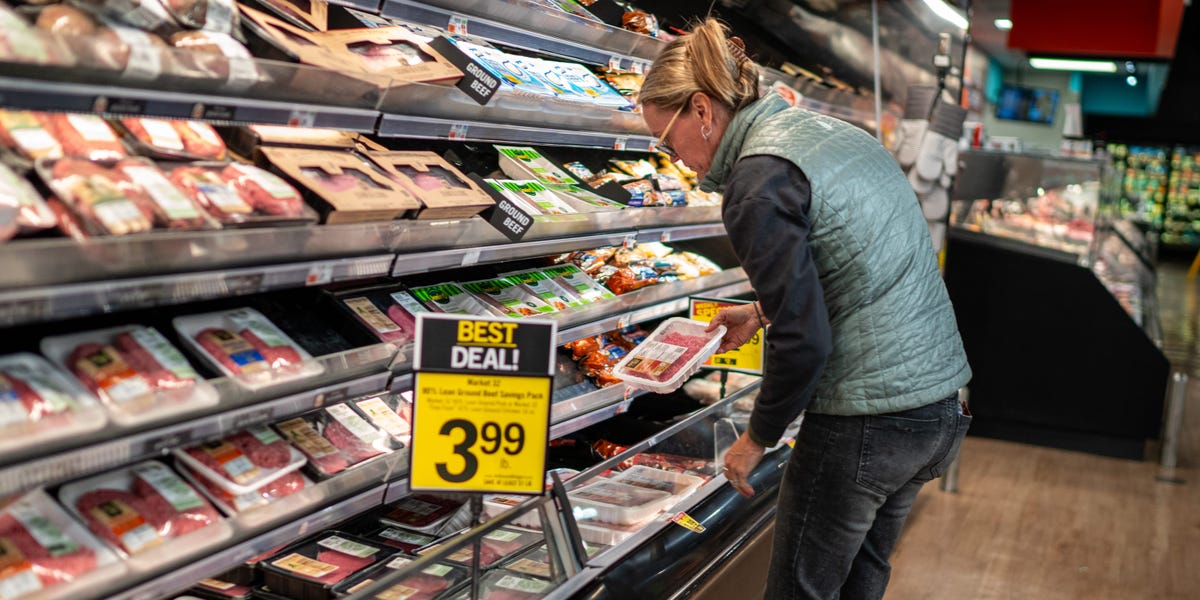
It looks like inflation is coming back from the dead, just in time for spooky season.
The conflict in Iran and other complications are driving up energy and transportation costs, and that’s taking a toll on already-stretched household budgets.
But recent food price increases aren’t yet showing up, and grocery retailers appear to be addressing shoppers’ worries head-on with preemptive cuts.
Discount chain Aldi said Wednesday that it is rolling out approximately $86 million in discounts on fresh foods through November 3, and that one-third of its assortment is already priced lower than last year.
Meanwhile, grocery giant Kroger ramped up pressure on suppliers this week when it pulled Boar’s Head and Red Bull products from some of its stores in what Bloomberg reported was a dispute over high prices.
And Instacart said Thursday that grocery chains across the US like Bashas, Fareway, Grocery Outlet, Raley’s, and Super King Markets have joined its “no markups” delivery pledge, which gives online shoppers access to the same prices and deals that in-store customers get.
“Customers are gravitating towards value, and online, that often means retailers that don’t mark up,” Instacart CEO Chris Rogers said at the Groceryshop conference. Rogers also said that retailers who don’t hike online prices grow about ten percentage points faster on Instacart than retailers who have higher prices online than in-store for the same items.
And Costco on Thursday continued its trend of highlighting each quarter’s price reductions in its earnings report, with items like walnuts, coffee, and black pepper seeing markdowns during the most recent period. (Costco does not participate in Instacart’s “no markup” option.)
“We work collaboratively with our vendors in dealing with these commodity increases and try and keep prices down the best we can, and it’s a continual focus for all of our buyers in looking at how to reduce pricing,” Costco CEO Ron Vachris said on the earnings call.
This week’s moves harken back to Walmart’s price cuts earlier this summer on 250 items in recognition of America’s 250th anniversary. That was just a fraction of more than 11,000 discounts Walmart US CEO Dave Guggina said were in effect this year.
“Now it’s really our job to work with our suppliers and take those rollbacks that we’re working and turn them into the everyday low price for our customers, so that they can experience them moving into the back half of the year,” Guggina said earlier this month at a Goldman Sachs retail conference.
Focusing on value to attract cash-strapped shoppers has been a savvy move for value-oriented retailers like Aldi, Costco, and Walmart.
Walmart and Costco have both reported significant market share gains during prior tough economic periods, and foot traffic data from Placer.ai shows Aldi gaining visits at the fastest rate of any grocer this year, thanks to its bargain value proposition.
And while these new shoppers may come for the initial relief from high prices, these chains have also been effective at turning them into loyal customers, according to their respective earnings commentary from recent years.
There’s no silver bullet for inflation, but this approach could help soften the impact.
Read the full article here