


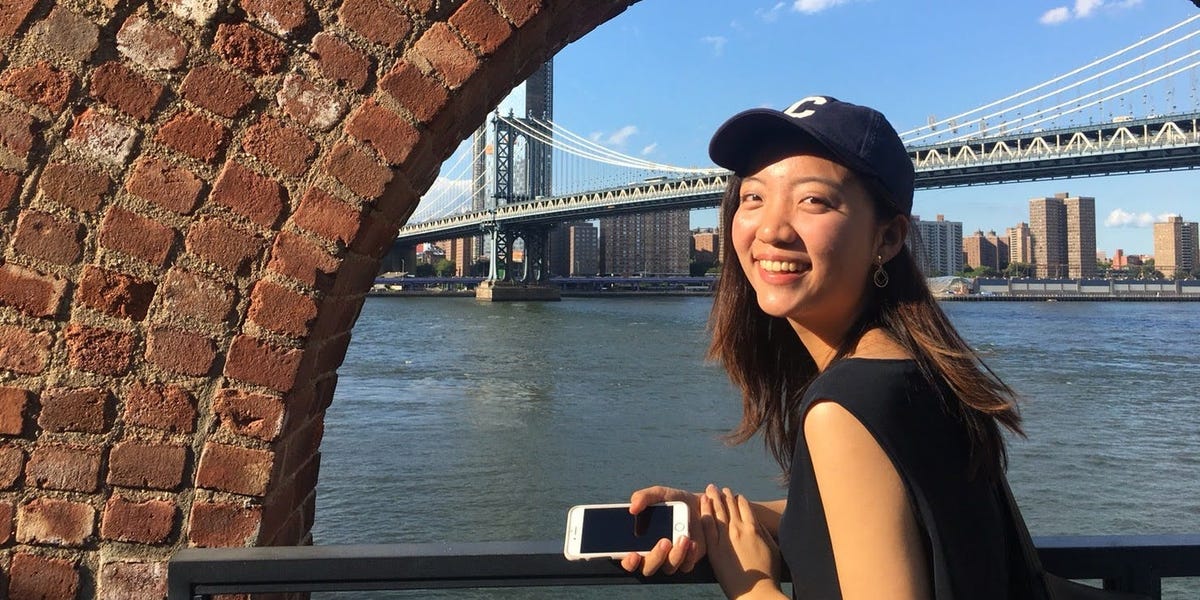
This as-told-to essay is based on a conversation with Vivienne Yang, a 31-year-old Taiwanese national who lost her job and had to leave the US because of her visa status, leaving behind her apartment and two cats. It has been edited for length and clarity.
I started falling for the American dream when I was in third grade.
It was a mix of realizing that the Taiwanese education system wasn’t really designed for me and becoming hooked on American pop culture like Taylor Swift, “Twilight,” and “America’s Next Top Model.”
In 2018, at 23, I moved to New York for a master’s in applied analytics at Columbia University, then landed a job in Manhattan’s ad-tech industry.
Over the next five years, I worked two full-time jobs, one after the other, each paying about $100,000, until I was laid off in 2024.
Getting laid off while on vacation
It was October, and I was on the second day of a 10-day trip to Japan with my partner when I learned I’d been laid off.
I was watching Japanese TV shows in our Airbnb after a day of sightseeing in Osaka, when my colleague called me on Instagram to say he couldn’t find my Slack or email and that it looked like my account had been deactivated.
I didn’t receive any calls from HR because my US SIM card wasn’t working.
I tried to have fun on the trip while struggling with immigration issues. I spent my mornings talking to immigration and labor lawyers and emailing HR.
And then in the afternoons, we would go sightseeing. The emotions came two days after I heard the news, and I cried at a shrine in Kyoto. I was praying that I could go back to the US.
The company agreed to prolong my employment for a few weeks so that I could return to the US.
Leaving my life in New York behind
I had built a life in the US. My entire friend circle and my two cats were there, and I’d spent years saving so I could buy a one-bedroom apartment in Brooklyn.
During my grace period, I changed from an H-1B to a B-2 tourist visa so I could stay in the US a little longer, and I later renewed my B-2 so I could stay for a full year. My lawyer told me not to mention that I was a homeowner, because it could make it look like I intended to immigrate.
Job searching was difficult. I spent a few months on the hunt, with more than 20 unsuccessful interviews.
Then, in September last year, the Trump administration rolled out the $100,000 fee for new H-1B applicants. Although that wouldn’t have applied to me, I feel like it affected employers’ willingness to hire foreign workers.
After a few months, I stopped focusing on corporate jobs. I couldn’t see myself in corporate America anymore. I’d always loved acting and got accepted into an acting program in New York, and was supposed to start in March this year.
In December 2025, I traveled back to Taiwan to apply for a student visa. I cried the whole way to JFK airport and on the plane. It felt like I was leaving for good.
My gut was right. My student visa was rejected because I demonstrated immigration intent. I asked my American partner to move into my apartment to take care of the cats — Dexter and Deborah — while I figured out how to get back.
I told him not to ship my stuff because I was set on going back.
Then I realized that, given the current political climate and the state of the economy, it doesn’t make sense to return to America anytime soon.
Taiwan has helped me escape survival mode
In Taiwan, I don’t need to worry about my personal safety all the time.
It’s also so weird not having to worry about a visa. Now I can get any random gig without worrying: “Oh, if I want to do this, what kind of visa do I need to get?”
One of my biggest worries over the past year in New York was not having health insurance and not knowing if I could afford to see a doctor.
In Taiwan, especially the northeastern town of Yilan, where I live, I can just pop into a clinic and spend less than $10.
It has been a bit strange getting used to living with my family again.
Now I live in a three-bedroom apartment with my mom, dad, sister, and grandma, and there are rules in this house, like where things should be placed and how many layers to wear during colder months.
I sleep on a portable bed in the storage room without air conditioning, because there’s not enough space in the house. It felt like my life got downgraded.
No plans to go back
I don’t want to deal with visa issues anytime soon, so I don’t have plans to move.
My partner plans to bring the cats in October.
I’ve been focusing on content creation here, while also teaching public speaking in English. I’m using my savings to pay off the mortgage on my Brooklyn apartment.
Despite all I went through, I don’t regret my move to the US.
If I hadn’t gone through that, I would still be asking myself, “Oh, what if I had gone?”
Now that I’ve had that experience, I’m clear about what I want and who I am.
Read the full article here