




This as-told-to essay is based on a conversation with Kristin Howard, a testing center coordinator in Chicago. In 2024, she founded “Going Up,” a camp for kids to learn life skills. This story has been edited for length and clarity.
I’d been working in the corporate world for 20 years, mostly in data analytics. As I got older, I started noticing that I wasn’t being as present with my family as I wanted to be. I wondered what I’d do if I switched careers — what could I offer that didn’t exist yet?
Childhood independence was always a topic I was really interested in as I was raising my own daughters, now 12 and 10. From a very young age, I was very intentional about giving them the experience of doing things without my husband or me. Little things, like crossing the street and walking to the mailbox, or walking the two blocks to the bodega to buy me something that I needed.
“Oh my gosh, I can’t believe you let your kids do that,” my friends would say. ‘
What was fun and exciting for me — such as coordinating a scavenger hunt in downtown Chicago for a bunch of kids — was very hard for them. They would worry about all the bad things that could happen.
That’s when I came up with the idea for Going Up, a camp for middle schoolers to learn life skills together. I wanted to think of what would be most useful for them to build their resilience and resourcefulness.
I texted my 19-person mom group and asked if anyone would be willing to lend me their kid for a week for $100 a day, or $500 for the week. My first cohort, in August 2024, was mostly 11-year-olds.
After that, I kept the group open to kids between 6th and 8th grade, with a few 9th graders as well. All the camps were either a day or a week long. Since I ran the camps on my own, my daughters also participated in most of my camps, and I never had more than 14 kids.
Throughout the 2024-2025 school year, I did camps on days when schools were closed. In 2025, I branched out to more camps throughout the summer.
Building practical and soft skills
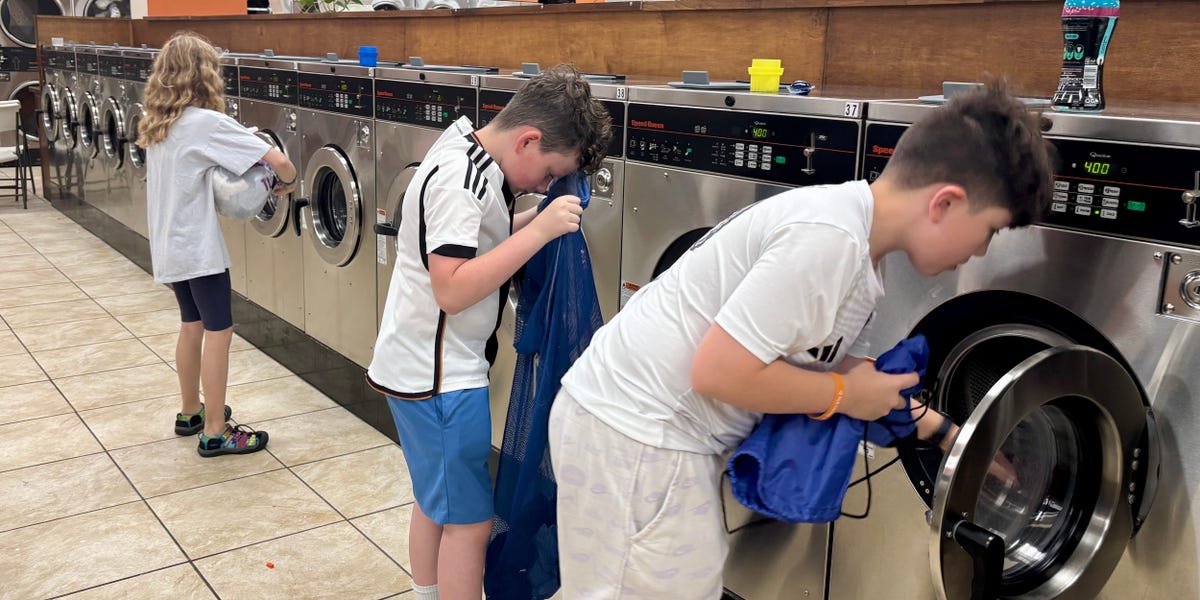
A lot of the curriculum for Going Up was my own idea, but I was always picking the brains of parents about what they wanted their kids to learn, such as one who suggested laundry.
I wanted to cover the core skills that feel important and valuable, whether you’re an adult or a teen. Skills like budgeting, cooking, and even figuring out the difference between the tax in a restaurant versus a grocery store.
These are all things they would eventually pick up, but I liked giving these kids a head start in a supportive environment.
I also wanted them to work on soft skills, like being comfortable talking to strangers. When you’re out and about in the world, stuff’s going to happen, and you might need help.
Sometimes, the parents had already tried teaching their kids the skill, but were met with eye-rolling. But when kids are in a group of 14 buddies, they will learn how to do it because they’re all in it together.
Campers had weekly allowances and self-assigned homework
I live two blocks from a park, which is where I’d have parents drop off their kids.
We’d start the day by circling up for our morning meeting. This is when we’d go over their independence projects, inspired by checklists from Let Grow, a nonprofit focused on fostering childhood autonomy.
These were new tasks the kids tried during after-hours, such as walking to school alone or washing their dog by themselves. If they finished their project, they got a bag of candy, which is very motivating for kids.
My policy was no smartphones or smartwatches: They had to learn how to navigate the world without tech.
We’d be out and about. Each kid would get a physical map of the city with locations to mark down. I’d break them up into groups to each figure out the best ways to get to each destination, whether it was a grocery store or a museum.
After they each presented their ideas for navigating the city, we’d provide feedback, then all take the best routes together. I’d pick two kids to lead, and would follow in the very back. We got a lot of extra steps in because they would take wrong turns or need to stop at bathrooms a lot, but we always ended up at our destination.
I also gave each kid $50 in cash to help them learn to budget for meals, snacks, and grocery trips. It would have to last them the whole week.
We’d end the day at the public library. The kids would be exhausted and melt into the floor while they waited for their parents to pick them up.
Parents and kids gained more confidence
In the short term, parents told me they noticed immediate changes in their kids. Just being able to come home and say, “Look what I can do,” gave them a new level of maturity and confidence they may not have had otherwise.
By the end of camp, I had the kids either write letters home or throw little parties for their parents to show them the new skills they learned and what they wanted to work on in the next month to year. If their kids were like mine and wanted to ride their bikes to school, they could start talking about what practice and training they’d need for their parents to feel comfortable with that.
After the camp, I’d get texts from parents. They’d tell me their kid took the train to the Art Institute by themselves or went to a café with their friends. They were always sending me little notes saying that their kids were doing things they couldn’t imagine they’d be capable of.
This year, I started working at a local high school testing center. As a result, I’ve had to take a step back from leading the camp, but I’m still an advocate of childhood independence.
My biggest piece of advice to parents is not to let your own fears keep you from letting kids be more independent. Instead, think about what you want your kid to be able to do in high school, and what you can do as a parent to support them in building those skills. You can walk half a block behind your kid if they’re walking to school on their own for the first time.
I always had families take surveys afterward to get feedback, and almost all of them wanted more camps like this. I think there’s a high demand, so maybe it’ll inspire someone else to start one, too.
Read the full article here