



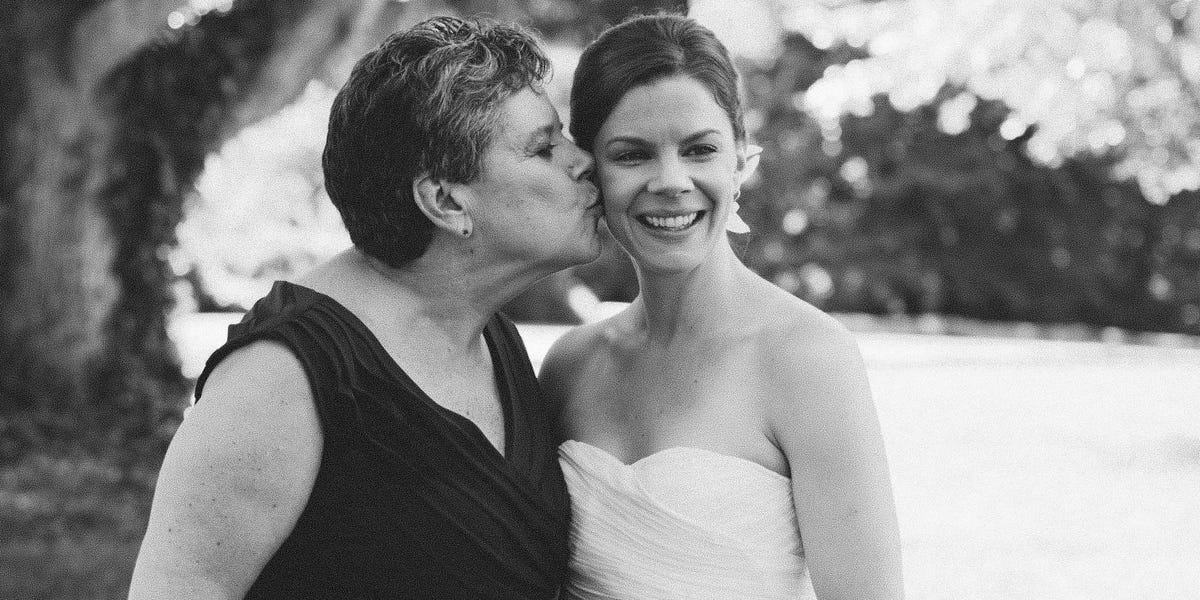
My daughter had just turned 7 years old. Her one request was that we host a birthday party at our house. My husband and I agreed and started preparing. Like many parents, we needed a little help managing the moving pieces. I asked my mother if she wouldn’t mind watching my oldest daughter and our dog during the party.
My mom was diagnosed with Alzheimer’s disease in 2025. She still lives independently, with support, but loves seeing her granddaughters. She agreed, and we decided I would drop off my daughter and my dog with her before the party.
When I opened the door to my mom’s apartment, I immediately realized something was wrong. She was lying on the floor, unable to get up. I quickly called 911 and let my husband know that I would not be returning for my daughter’s party. Thankfully, after more than 12 hours in the emergency room, my mom was able to return home.
But I was crushed by guilt. I had missed my younger daughter’s party, and the experience of seeing my mom so debilitated was deeply upsetting for my older daughter to witness.
The ‘sandwich generation’ doesn’t capture the pressure I feel
People often call this the “sandwich generation”: adults caught between raising children and caring for their aging parents. But increasingly, I have heard another phrase that feels more accurate: the “panini generation.”
A sandwich is stacked neatly. But my life often feels like it is being pressed from every side, under heat, with very little room to move. For those of us raising children while caring for parents, moments like this are not rare interruptions. They are part of the reality we are constantly trying to manage.
Alzheimer’s makes caregiving feel impossible to compartmentalize
Firsthand experience has taught me that Alzheimer’s intensifies that pressure in ways that are hard to fully grasp until you live it. It is a progressive disease that requires increasing supervision. It brings emotional strain, not just from the physical demands of care, but from memory loss and personality changes that reshape relationships over time. Losing my mother bit by bit is heart-wrenching. And it unfolds over years, adding a layer of anticipatory grief and emotional strain on top of one of the most demanding periods of my life as a mother and a professional.
While this reality affects families broadly, women often bear the brunt. We carry the majority of Alzheimer’s caregiving responsibilities, while also facing a higher lifetime risk of developing the disease ourselves. That dual reality makes this not just a caregiving issue, but a personal health issue.
The women who join me in this “panini generation” are simultaneously managing careers and financial responsibilities, raising children, caring for aging parents, and navigating midlife health changes that can impact their own brain health. We are the stabilizing force across generations, often at a cost that isn’t visible in the moment.
Caregivers often face reduced income or career disruption, rising out-of-pocket care costs, and competing priorities between children, parents, and their own long-term security. One particularly difficult piece for me is the intense mental load that comes with being the command center for everyone: organizing doctors’ visits, medications, finances, transportation, and social engagements. I am everyone’s emergency contact, if and when something goes wrong.
My mom is still herself
Nearly two years into my mom’s Alzheimer’s diagnosis, she’s still herself — sharp in so many ways, funny, and stubborn. But caregiving has become a bigger part of my life, and I know that will only continue to grow. What has helped me navigate that uncertainty is finding community with other women who are carrying many of the same responsibilities — caring for aging parents while raising children, managing careers, and trying to remain present for the people they love.
There is comfort in being understood without having to explain, but there is also urgency in realizing just how many of the women I’ve met along the way are stretched thin by systems that were never designed for this reality. Workplaces have not kept pace with long-term, multigenerational caregiving. Community resources remain limited. And proactive brain health education, especially during midlife, is still inadequate.
The women I have met throughout this journey remind me that no caregiver should have to reach a breaking point before finding support.
Catherine Patterson is the acting Chief Operating Officer of UsAgainstAlzheimer’s.
Read the full article here