


Growing up, my family was whatever the opposite of outdoorsy is. We didn’t camp or go to national parks.
Instead, we traveled to cities, ate well, visited museums, and planned our days around dinner reservations.
It wasn’t until I had been living in New York City for a long time and was traveling more for work that I understood the appeal of wide-open space. And nowhere changed my perspective more than Utah.
I’ve now been to 38 states, but Utah is the one I still think about most.
The landscape feels surreal
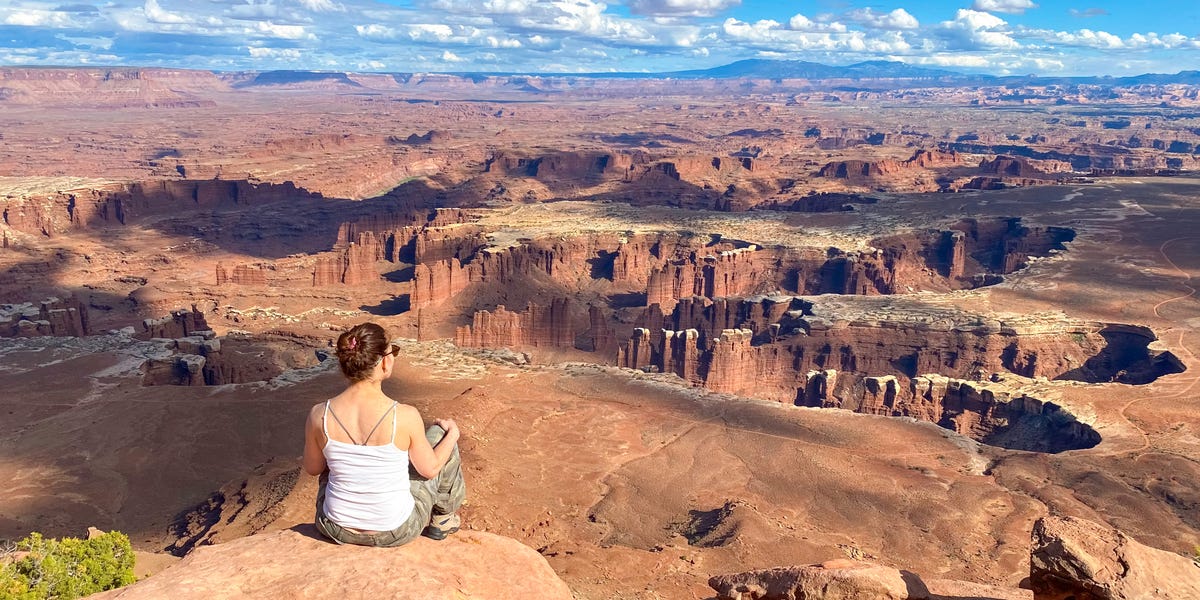
I landed in St. George and immediately understood why people become obsessed with Utah’s scenery. From the plane window, red rock stretched endlessly in every direction — a color palette so different from the Northeast that it barely felt real.
Driving through the state only deepened that feeling. Every road seemed to lead to another dramatic shift in landscape: towering sandstone cliffs, high-desert plains, winding canyons, and stretches of open space so vast they completely reset your sense of scale.
Routes like Scenic Byway 12 are famous for a reason: The drive becomes the destination.
Utah’s beauty goes way beyond its famous national parks
Utah is best known for places like Zion National Park, Bryce Canyon National Park, and Arches National Park, but what surprised me most was how much beauty exists outside the marquee attractions.
Snow Canyon State Park, just outside St. George, combines lava flows, sand dunes, and Navajo sandstone cliffs into a landscape so dramatic it would likely qualify as a national park in almost any other state.
In Utah, though, extraordinary scenery is simply the norm, and there’s too much natural wonder to be contained in the “Mighty Five” of Zion, Bryce, Arches, Canyonlands, and Capitol Reef parks.
Even the stretches between destinations felt cinematic, especially the drive from St. George to Kanab, where towering red cliffs and open desert made every mile feel like part of the experience.
One of the most unforgettable places I visited was Peek-A-Boo Slot Canyon, located in Grand Staircase-Escalante National Monument.
At points, the canyon narrows so tightly that only thin beams of sunlight reach the ground. The sandstone walls tower overhead, making the entire experience feel less like hiking and more like being absorbed into the landscape.
Unlike more photographed destinations like Antelope Canyon, Peek-A-Boo feels quieter and less polished, which somehow makes it even more powerful.
Many parts of Utah feel like a movie set
Part of what makes Utah so visually striking is how familiar it already feels. For decades, filmmakers used the state’s landscapes to define the look of the American West.
Movies like “Butch Cassidy and the Sundance Kid” used Utah’s dramatic scenery as a backdrop, and towns like Kanab became production hubs for generations of Westerns.
Kanab was nicknamed “Little Hollywood” because so many films were shot there, and the Once Upon a Time in America Museum still preserves that history today.
More modern classics like “Yellowstone” (seasons one through three) and “Thelma & Louise” were also filmed here, and the next generation of productions is already taking shape. Kevin Costner recently built a new film studio in St. George.
It’s got ghost towns galore
Utah is home to more than 140 recognized ghost towns, many abandoned after failed farming settlements, flooding, or the collapse of mining industries.
One of the most famous is Grafton Ghost Town, located just outside Zion National Park. Established in 1859 by Mormon settlers, it later became known as a filming location for “Butch Cassidy and the Sundance Kid.”
Today, the town remains remarkably well-preserved, with its 1886 schoolhouse and adobe homes sitting beneath towering red cliffs. Walking through it feels eerie and strangely emotional.
It’s a reminder of the people who once built lives there, only to be driven out by the unpredictable flooding of the Virgin River and other struggles.
The night sky can change you
What stayed with me most wasn’t just the landscapes; it was the feeling of space.
In New York, it’s easy to forget how dark the night sky can actually get. In Utah, the stars felt impossibly bright and endless. Combined with the silence, the open roads, and the constant presence of nature, it created a sense of calm I hadn’t realized I was missing.
When I came home, I was happy to be back with my family, but part of me still missed the red rocks, the endless horizons, and the feeling that something extraordinary was waiting around every turn.
Read the full article here