



Artificial intelligence giant Anthropic is pursuing a strategy of one-upmanship that encourages states to impose increasingly tougher AI guardrails, rather than align around a single set of regulations.
The approach stands in stark contrast to the one favored by the company’s archrival, OpenAI, which has pushed state lawmakers toward common ground on regulating the breakthrough technology.
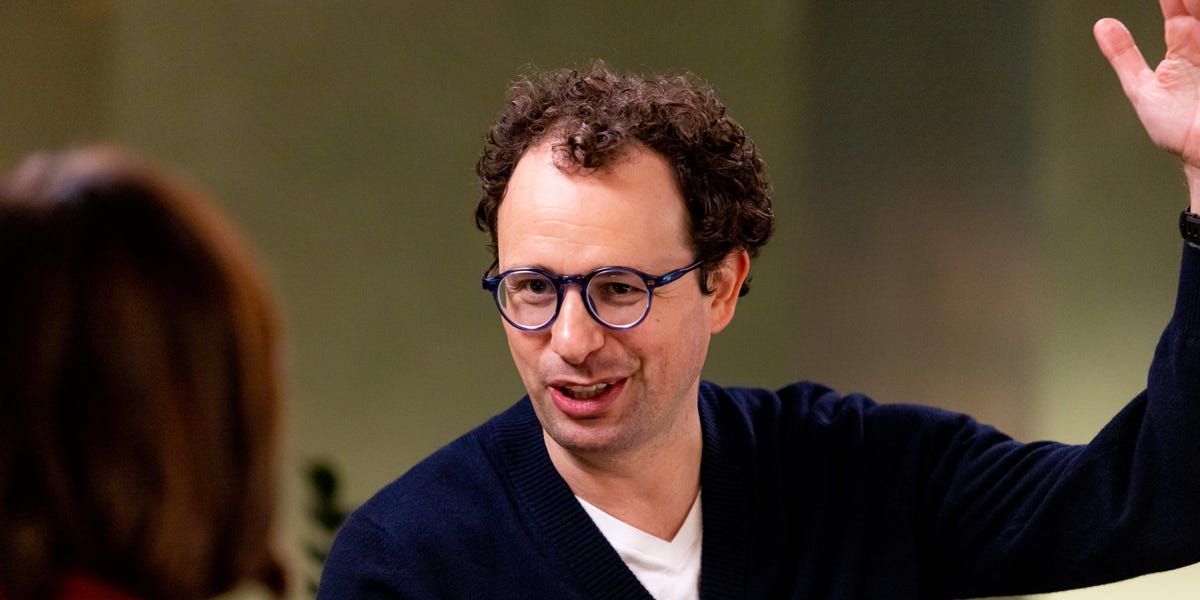
“While there are some in the industry that think of state policy as a way to create a ceiling for federal legislation, Anthropic is not just looking to support the same bill across the country in every single state,” Cesar Fernandez, the company’s head of U.S. state and local government relations, said in an interview with POLITICO — which, like Business Insider, is part of the Axel Springer Global Reporters Network — on Tuesday. “We’re looking for legislation that meaningfully raises the bar on safety for the most capable AI systems.”
Fernandez’s comments came in response to questions from POLITICO about OpenAI’s ongoing campaign to shape states’ AI regulations. The ChatGPT maker’s top lobbyist, Chris Lehane, has coined the term “reverse federalism” to describe its attempts to bypass a paralyzed Congress and build a national AI framework by mirroring bills state-by-state.
The veiled jab at OpenAI is on-brand for Anthropic, whose executives left OpenAI in 2020 over concerns the company wasn’t prioritizing safety. Anthropic has consistently pushed for stronger AI safety rules at both the federal and state level — an effort that some critics, particularly those close to the Trump administration and in venture capital, frame as an attempt to hamstring regulators and lock out competitors.
In a statement, OpenAI spokesperson Liz Bourgeois defended its approach, saying “reverse federalism, where effective state safeguards shape national standards, helps regulators enforce the law, gives the public clearer protections, and allows developers to focus resources on safety rather than conflicting requirements.”
The split between OpenAI and Anthropic’s approach to statehouses comes at a critical time for AI regulation. With Congress reluctant to act and the White House flip-flopping between a light touch and a heavy hand, the AI industry is increasingly looking to states for regulatory clarity. Whether state legislators ultimately coalesce around a single AI safety framework or work to outdo each other over time will have a massive impact on the final shape of AI rules in the U.S.
Similar to Lehane, Fernandez said he wants a federal framework, but that a government response to the risks posed by advanced AI models “can’t wait for action in Washington.”
The Anthropic lobbyist also set his company apart by touting its early inroads into state policy debates. Anthropic was the only leading AI lab to endorse California’s 2025 law to regulate advanced AI models, the first such law in the country.
OpenAI didn’t take a position on the California proposal ahead of its passage. But it has since turned to the law, which aims to foster greater transparency into companies’ safety plans, as an example for other states to replicate.
Anthropic, on the other hand, saw the California law as a springboard to ratchet up its efforts on AI safety. Fernandez said the rapid development of increasingly powerful AI models was the main factor behind his company’s endorsement of more ambitious bills — in New York, Illinois and now Massachusetts — and its move to weigh in earlier in the legislative process.
“Each one of those bills was stronger than the previous bill, and the bills all moved real safety obligations forward,” Fernandez said. “Transparency and self-reporting, we don’t believe are sufficient anymore.”
He pointed to Anthropic’s powerful Claude Mythos model, which the company found to be capable of exploiting security flaws in every major computer operating system during its testing. The cybersecurity concerns raised by Mythos (and its public-facing version, known as Fable) sparked panic inside the Trump administration, which slapped export controls on the technology until Anthropic and the government could address alleged vulnerabilities.
Late last year, OpenAI lobbyists successfully pressed New York Gov. Kathy Hochul to amend her state’s AI safety bill to more closely resemble California’s rules. But to the surprise of some safety advocates, it joined Anthropic in backing an Illinois measure seen as stricter than those in New York and California. That proposal, signed into law this month by Gov. JB Pritzker, requires leading AI companies to submit to annual independent third-party audits of their safety plans — a first-of-its-kind mandate.
Anthropic is pushing the bar further. In late June, it endorsed regulations under development in Massachusetts for an economic development bond bill that Anthropic calls the nation’s strongest state AI safety proposal. The language it supported included a requirement for leading AI companies to hire independent evaluators to assess the potential for catastrophic risks such as the technology assisting in the development of bioweapons, as well as a provision empowering the state’s attorney general to enforce that mandate.
Bourgeois, the OpenAI spokesperson, said the company is still reviewing the Massachusetts proposal, but added OpenAI supports the state legislature’s focus on AI safeguards.
The AI giants have also clashed on the campaign trail. Each is associated with dueling super PAC networks that so far have sunk tens of millions of dollars into political campaigns across the country. And in June, Anthropic started cutting checks directly to California legislators.
“We back candidates for election and re-election when their point of view of AI safety regulation is aligned with our mission to make sure that the transition to a world with powerful AI does well for people in this country and throughout the world,” Fernandez said. “We’re very much supporting candidates where there’s ideological alignment.”
Fernandez said the company isn’t coordinating with employees who also have made contributions to political candidates in California and elsewhere.
“We don’t direct our employees to make contributions, but they work at Anthropic because they’re concerned about the future of AI and where this is headed if there’s not proper safety policy that’s enacted by governments,” said Fernandez. “I would assume that that drives them to engage in the political process.”
This story originally appeared on POLITICO and is courtesy of the Axel Springer Global Reporters Network, which harnesses the resources of the company’s newsrooms to publish ambitious scoops, investigations, interviews, opinion pieces, and analysis. It allows journalists — including those from POLITICO, Business Insider, WELT, BILD, Onet, and Fakt — to collaborate on major stories for an international audience of hundreds of millions across platforms.
Read the full article here