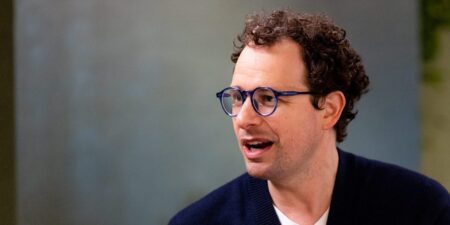




This as-told-to essay is based on a conversation with Kang Gwang-sik, a 40-year-old content creator from South Korea. The conversation has been edited for length and clarity.
I’m the guy on Instagram with $300,000 in debt in South Korea, living on $10 a day. That’s the concept of my content, but it’s also my real life.
My total debt was actually much larger. At one point, it reached close to $1 million.
I ran a company in electric mobility focused on smart charging systems, but it collapsed at the beginning of 2025, and I entered bankruptcy proceedings.
In South Korea, early-stage startups rely heavily on government grants and private investment. When I began my business in 2020, there was a global boom in electric mobility.
However, product development took time, and I spent years — and a lot of money — on research, manufacturing, international certifications, and marketing. As time passed, market attention and investment shifted strongly toward AI-related industries.
Existing investors withdrew, and competition for government funding intensified. Difficulties in securing additional capital ultimately led to the business’s collapse.
The company’s bankruptcy is finished, but my personal bankruptcy is not. About $300,000 remains. That’s the number I live with now.
Going all in on a business idea and failing
Before I started my company, I had stable, full-time work.
I studied regenerative medicine and worked as a freelance stem cell engineer in South Korea from 2016 to 2018. At the same time, I took on other jobs to support myself.
I chose to study this field because of a serious knee injury I suffered during a typhoon in South Korea years ago. Doctors told me I wouldn’t fully recover. I wanted to understand the human body and maybe fix my knee.
I became interested in electric mobility. Because of my knee, walking long distances was difficult, and electric mobility gave me freedom again. What started as an interest became a company. Without realizing it, I was all in.
When the company failed, I stayed home, waiting for bankruptcy court decisions. I was disappointed in myself. I felt gloomy and isolated. In Korea, failure carries a lot of shame. If you fail in business, some people see you as a loser in a very competitive system.
Living on about $10 a day
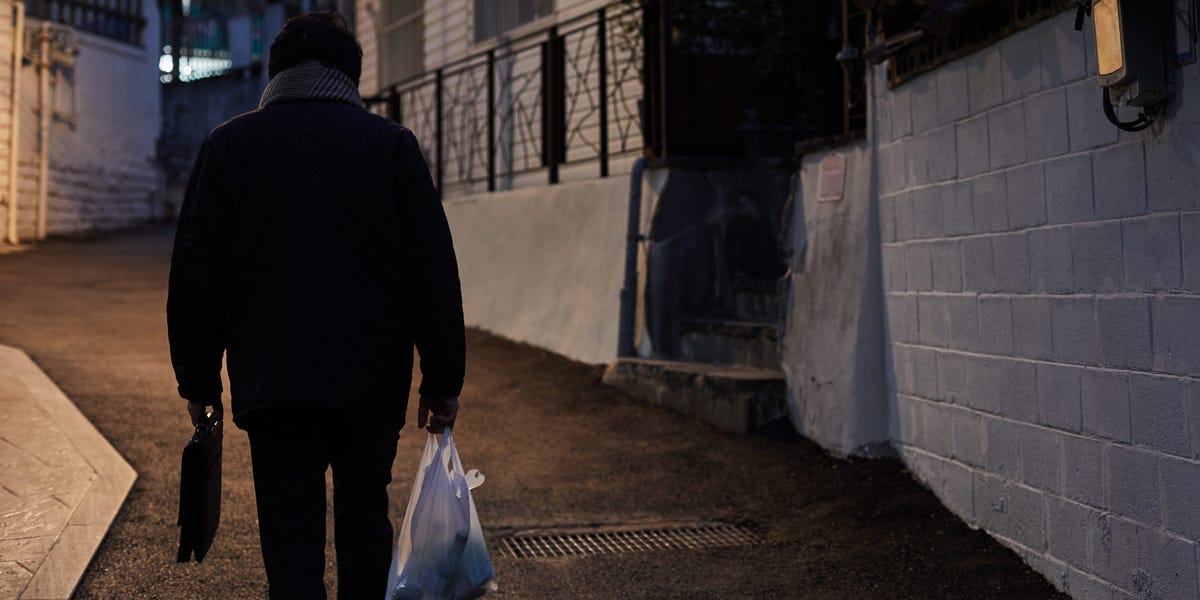
Now I live on about $10 a day. When I returned to work as a physical laborer in May 2025, most of that money went toward transportation and one simple meal.
Sometimes I skipped lunch completely. Whatever was left — usually $2 or $3 — I carefully managed to get through the next day.
Food prices in Korea have gone up a lot, so I learned how to cook cheaply. I make simple Korean dishes — soups made with cheaper cuts of meat, vegetables with chili paste, and basic home food. I share those meals online. People like seeing that survival doesn’t have to be miserable. It can still be warm.
I was injured in an accident at work in December — then I lost my job, and had to recover at home.
I made content to share my journey — and the support has been heartening
My wife changed everything for me. Before the company officially collapsed, I sat her down and told her the truth — that we were heading into a very difficult life. She didn’t blame me. She thanked me for being honest and reassured me that we would face it together.
As part of the bankruptcy process, we had to liquidate most of our assets and move from Busan to Jeju Island to try to spend less.
I started sharing my daily life online. My wife had been creating content online, and one day she encouraged me, saying, “You could do this too.” That made me think, “Maybe I can do this as well.” She became my strongest supporter.
At the beginning, only a few people watched — maybe 100 or 200. But they left comments and encouraged me. They didn’t just watch quietly, but actively helped my videos reach others. That surprised me the most.
My online work generates very little, inconsistent income through occasional brand collaborations and ads. It’s not a solution yet, but it’s a beginning.
Life, even when hard, is worth continuing
Many people in South Korea are struggling right now. After the pandemic, many small businesses failed. Government loans are ending. Bankruptcy courts are crowded with people waiting, just like me.
If I could say one thing to people in a similar situation, it’s this: Don’t disappear. Don’t isolate yourself. Accept that this is where you are right now — not forever. When you accept reality, your mind becomes calmer. Then you can start to think again.
My goal is simple. I want to become financially stable again without hiding my debt. I want to show that recovery is possible, even if it’s slow. That’s why I keep sharing my life.
And real life, even when it’s very hard, is still worth continuing.
Do you have a story to share about working in Asia? Contact this reporter at [email protected].
Read the full article here