



This as-told-to essay is based on a conversation with Michael White, 49, from Boulder, Colorado. In 2023, a driver killed White’s 17-year-old son, Magnus. The essay has been edited for length and clarity, and the details verified.
Eight days after my son Magnus was killed, we held his memorial. By then, I had already learned that dying is a business.
Quickly, my wife and I had to find an attorney, choose between burial and cremation, and decide what would hold our son’s ashes. A police victim advocate handed us a glossy catalog of urns, each costing thousands of dollars. It all felt ridiculous.
Then the financial consequences began to mount: legal bills, lost income, and years of therapy. Losing our son will always be the greatest cost, but nobody really talks about the financial toll that follows.
When the hospital called, my mind went to the worst place
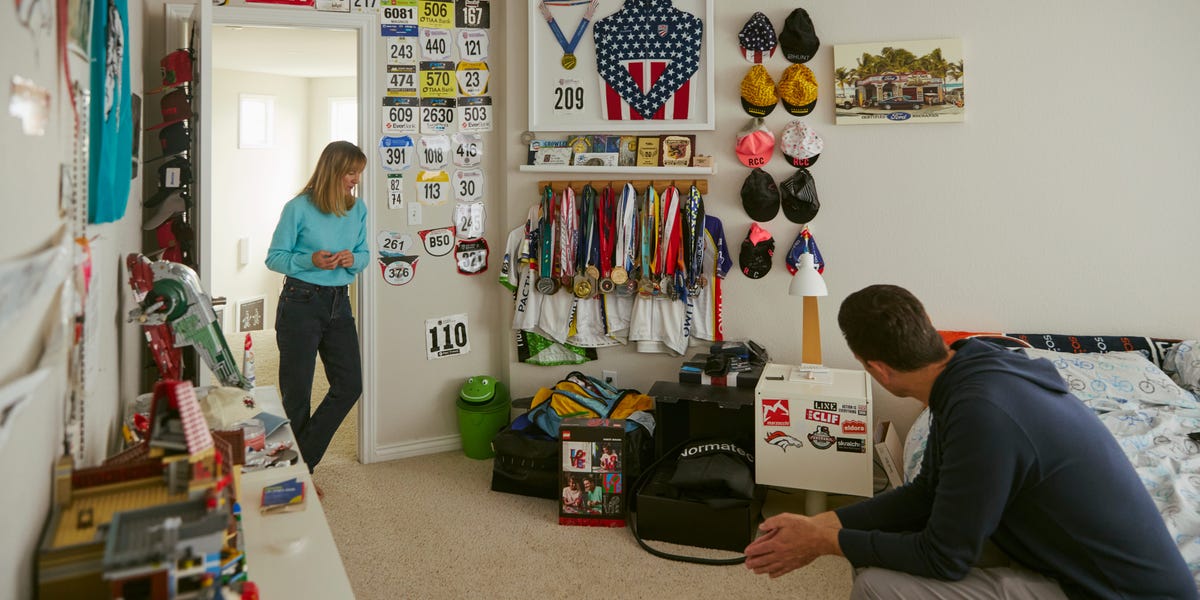
Magnus was my firstborn. When your first child arrives, it instantly changes who you are. As they grow, you learn what makes them happy or sad, and try to help them become their own person. During the last year of Magnus’s life, we really saw that happening.
At 17, Magnus was a world-class athlete with the USA Cycling National Team, but he was still a teenager at heart. He had a close group of friends, could be mischievous, and loved having fun. He was extremely smart, remarkably talented, and had a magnetic personality. He was a special kid.
July 29, 2023, was a beautiful summer’s day and Magnus had gone for a 70-mile ride on a highway not far from our home in Boulder. I brought him breakfast, but he had already eaten. My final words to him were to make sure he ate when he got home.
Like any worried parent, I regularly checked his location using Find My iPhone while he was out on a ride. The last time I looked, he was about 15 minutes from home.
I was in the shower when the hospital left me a voicemail. As soon as I heard the message, my mind went to the worst possible place.
A driver had hit Magnus. He was brain-dead and on life support. My wife, who was in Wisconsin, traveled back using a friend’s private plane service because she couldn’t find a seat on a commercial flight in time. She arrived about an hour and a half before he died.
You expect your parents to pass, maybe your spouse, but nobody anticipates the death of their child.
I couldn’t work while living with grief
Immediately after Magnus died, the doctor signed me off from work. I was a creative director at a major outdoor product company and the family’s breadwinner, earning about $187,000 a year.
A few weeks later, we had one of our biggest financial shocks. Our health plan sent us a letter saying it had paid nearly $137,000 toward Magnus’s medical care and was seeking reimbursement from any insurance settlement we received.
It was devastating. We fully expected the amount to be taken from our underinsured motorist policy. In the end, our attorney negotiated the lien down, and only $5,000 was deducted from our settlement.
In the almost five months it took for prosecutors to charge the driver who killed Magnus with reckless vehicular homicide, we continued to deal with costs that nobody can prepare you for. Colorado pays crime victims for certain expenses, such as counseling and the funeral, which you pay upfront and submit for reimbursement. It felt so transactional, which was really odd.
Returning to work six months after he died in January 2024 was difficult. I used my vacation and sick days to attend court hearings.
Everybody knew what had happened to Magnus, but most of my colleagues were afraid to mention it. They didn’t want to upset me, but the truth about grief is that I was already upset every second. I wanted to talk about Magnus, and I wanted someone to listen. It keeps him alive.
After about nine months back at work, in September 2024, I decided that I couldn’t do it anymore. Shoes and outdoor products no longer meant anything to me. I had spent 25 years building my career, but I couldn’t do the job while living with grief.
My wife also took several months off and has since returned to working at a university. I haven’t earned a salary since leaving my position, so I have lost hundreds of thousands of dollars in income.
We used to contribute to our other son’s college fund. Now we only draw from those savings, and we’re not sure he’ll be able to go.
Every purchase requires more thought than it did when we had two incomes, and we’ve had to cut back on spending. We paid off our car and decided to keep our 2021 vehicle to avoid new monthly costs. We still occasionally travel, because it’s part of our grief therapy, but we cut back on everything from eating out to our hobbies.
Earlier this year, about three years after Magnus died, we received a $25,000 settlement check from the driver’s insurer, and $13,500 from a separate claim for Magnus’ bicycle and other cycling equipment he was using when he got hit. Our attorney took a cut of every compensatory check.
I began attending therapy shortly after Magnus died, and I continue to pay $150 for each weekly session out of pocket. My wife and I also attend trauma therapy together, which Colorado’s crime-victim compensation program reimburses.
I will eventually have to go back to work because we can’t sustain this forever. I just don’t know what that timeline is yet.
You have to protect yourself
I don’t think most people understand the true cost of dying in the US. Much of my time now goes toward the foundation we created in honor of Magnus, The White Line, which aims to protect vulnerable lives on our roads. We have published a guide explaining what victims of road incidents and their families may need to do in the days, weeks, and months after a serious crash or death.
I would encourage families to review the amount of life insurance they carry and to maximize their uninsured and underinsured motorist coverage. You need it when you need it, and you don’t know when that is. Both my wife and I have also purchased additional life insurance policies to give us greater protection.
One of the hardest lessons we learned is that you have to protect yourself. You hope the system will look out for you, but our experience taught us that it may not.
We are telling our story because we want what happened to us to help other families and to make sure that Magnus’ death was not meaningless.
Read the full article here