


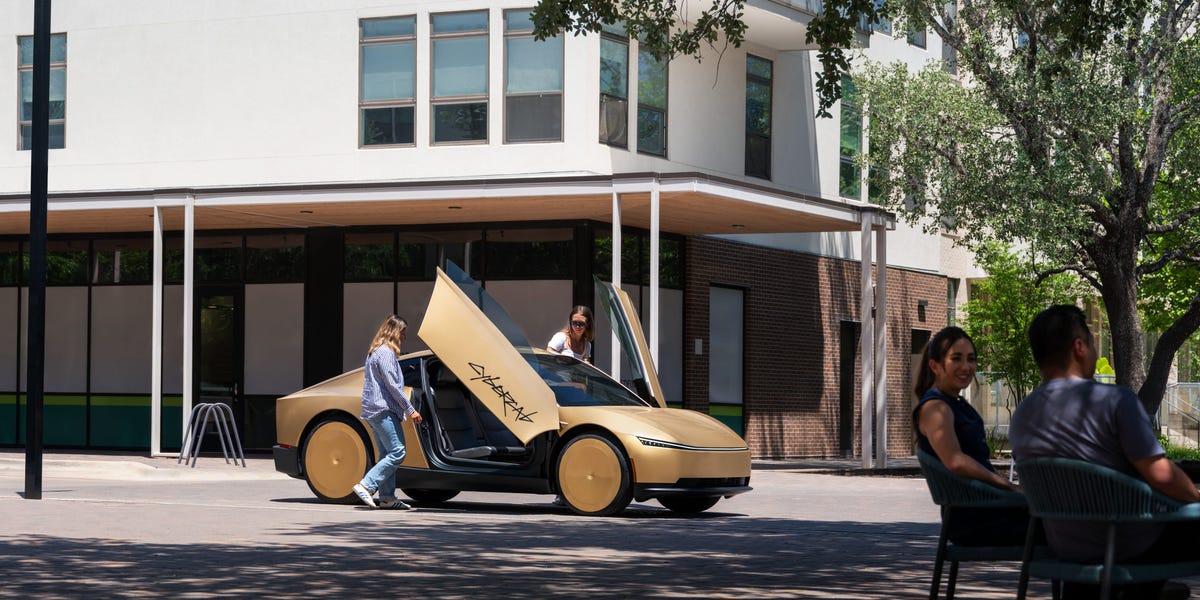
Tesla’s Cybercab is live in Austin. Now, regulators in Washington are asking to check the EV-maker’s homework.
The National Highway Traffic Safety Administration, or NHTSA, opened an audit inquiry late Thursday into Tesla’s Cybercab certification.
The move came hours after Tesla’s commercial deployment of a small number of Cybercabs in Austin, which joined its robotaxi network. Texas DMV records list 45 Cybercabs registered to Tesla. The vehicle has yet to be made available to purchase to consumers.
“NHTSA fully supports the safe development and deployment of automated vehicles,” Jonathan Morrison, the agency’s administrator, wrote in a statement sent to Business Insider. “But as the federal regulator, we need to ensure that all of our laws are followed.”
NHTSA’s announcement doesn’t order Tesla to halt Cybercab deployments — the agency hasn’t made any comment on the vehicle’s safety or compliance. Instead, NHTSA will examine Tesla’s technical data and the processes behind the automaker’s self-certification.
Automakers typically certify their own vehicles’ compliance with federal rules. Tesla told NHTSA that the Cybercab complies with applicable federal safety standards.
The certification could pose thorny questions for Tesla, given today’s vehicle rules. The Cybercab doesn’t have conventional human controls — such as a steering wheel, pedals, or side mirrors — that are required by current federal safety standards.
NHTSA will examine whether Tesla was correct in determining that some of those requirements do not apply to its automated vehicle.
Tesla is not the first company to confront the full-autonomy regulatory challenge. In July, NHTSA gave Amazon-owned Zoox a temporary exemption to deploy its own steering-wheel-free robotaxis commercially.
Tesla is taking a different route: It certified that the Cybercab meets all applicable federal rules, even as NHTSA is still working to update standards, including one governing brake pedals, for driverless vehicles.
Tesla did not immediately respond to a request for comment from Business Insider.
Read the full article here