


Join Us Friday, September 4

At the United States Naval Academy, every midshipman learns to drive.

Their driver’s ed curriculum doesn’t involve slow circles in empty parking lots or parallel parking tests. Instead, the future naval leaders learn how to drive, steer, and navigate a ship by going out on the water and doing just that.

After midshipmen learn the basics of navigation, boat handling, man-overboard maneuvers, and standard commands in the classroom, they put their knowledge into practice on training vessels known as yard patrol craft.

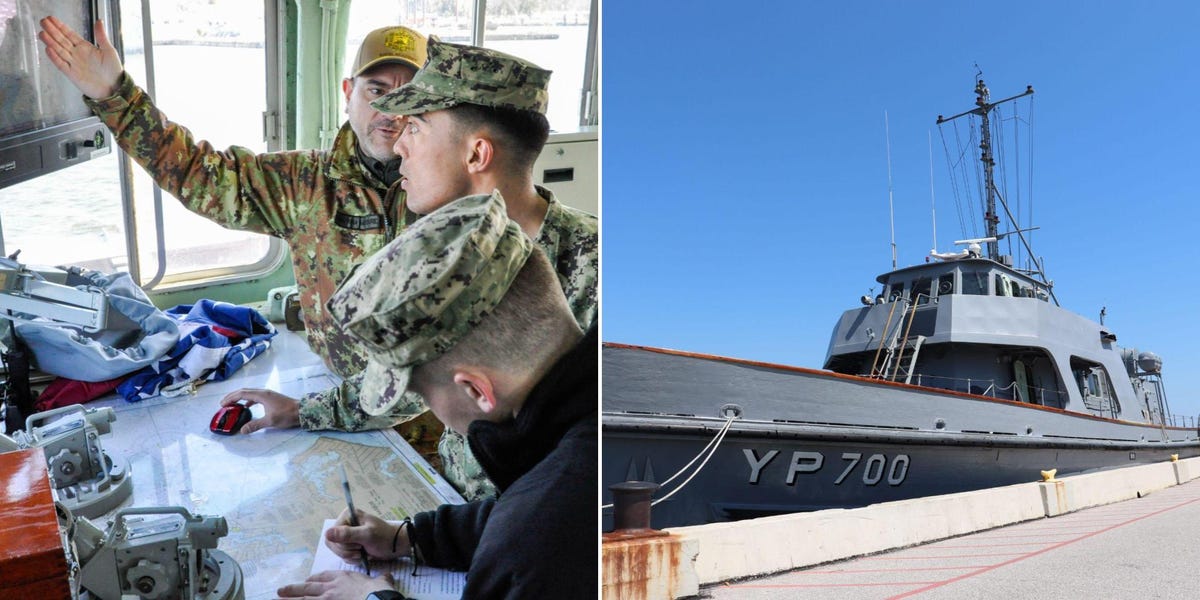
During my visit to the Naval Academy in August, I got to climb aboard the yard patrol craft YP 700 to see how midshipmen learn shiphandling and navigation on the job. Take a look.

Midshipmen at the US Naval Academy practice their seamanship skills on yard patrol boats.

Training is held both in the classroom and aboard yard patrol craft during the school year. In the summertime, midshipmen embark on longer trips where they manage every aspect of the journey, from navigation to cooking.

While underway, midshipmen are supervised by experienced craftmasters, who are responsible for the safe operation of the vessels but largely take a hands-off approach to the training.

I got an exclusive look inside one of these training vessels.

YP 700 measures 108 feet long and can hold around 30 people. With two diesel engines, it can reach a maximum speed of about 12 knots (about 14 mph). It has a range of 1,800 nautical miles and can remain underway for up to five days without refueling.

In July, midshipmen sailed four yard patrol craft to Baltimore and New York City as part of the International Naval Review for America’s 250th anniversary. Aside from special events such as Fleet Weeks, yard patrol craft aren’t usually open for public tours.

My tour started at the bow, where the wildcat, a toothed wheel that grips and moves the anchor chain, helps raise and lower the anchor.

The wildcat is the one piece of machinery that midshipmen don’t operate themselves since doing so incorrectly can, as one craftmaster told me, result in losing a finger. However, midshipmen do practice other aspects of anchoring, such as positioning the boat correctly.

The pilothouse functions as the control center of the ship, housing the main helm, or steering wheel, and navigational equipment.

The main helm controls the ship’s rudder.

Midshipmen also learn to steer the ship using just its port and starboard engines, which are controlled by separate levers.

Midshipmen learn how to maneuver the vessel using the engines if normal rudder steering is lost.

The navigation table houses the Voyage Management System, or VMS, which midshipmen learn how to use during their youngster, or sophomore, year.

The table itself is a holdover from an era when paper charts were central to maritime navigation. Midshipmen today train extensively on electronic navigation systems, though they also learn traditional chart plotting.

The VMS shows a live feed of other vessels in the area using data from the Automatic Identification System, or AIS.

Through AIS, vessels broadcast their name, call sign, speed, course, and other key information that can help other ships contact and navigate around them.

AIS complements radar by providing identification information on vessels transmitting a signal. The VMS displays that data, as well as useful chart information, including shallow or shoal water that could pose a grounding risk.

The boat’s sound tube is a relic from the days before handheld radios, but it still serves an amusing purpose as midshipmen learn the ropes.

The craftmaster serving as my tour guide said he offers the sound tube to midshipmen as a place where they can scream out their frustration and relieve some stress before returning to their duties. He said it works very well.

Below deck, the ship’s craftmaster and other crew sleep in dedicated berths during trips.

Midshipmen stay in bunks, known as racks, on another level further below deck, with six to 12 people to a room.

Midshipmen are in charge of planning and preparing meals in the ship’s galley.

A midshipman designated as the supply officer creates the meal plan and assigns cooking duties.

The galley features all of the basics, including a stove, oven, toaster, and microwave. Sometimes, crews will also bring an air fryer or a grill.

Meals are eaten in seating booths near the galley or out on the deck in cooperative weather.

The galley is the coldest space on the ship in the summertime, so midshipmen often eat their meals downstairs.

A multipurpose common space occasionally serves as a classroom, briefing room, and lounge, but most of the instruction happens on the job.

When the boat is underway, midshipmen learn to expect the unexpected.

Craftmasters will throw a life ring overboard and see how long it takes them to notice, or suddenly declare “Man overboard!” to test their reaction time and knowledge of the correct procedures.

The classroom space on board, it turns out, is barely used at all.


Read the full article here

Share.
Leave A Reply