



I really didn’t know what caring for an aging parent would be like.
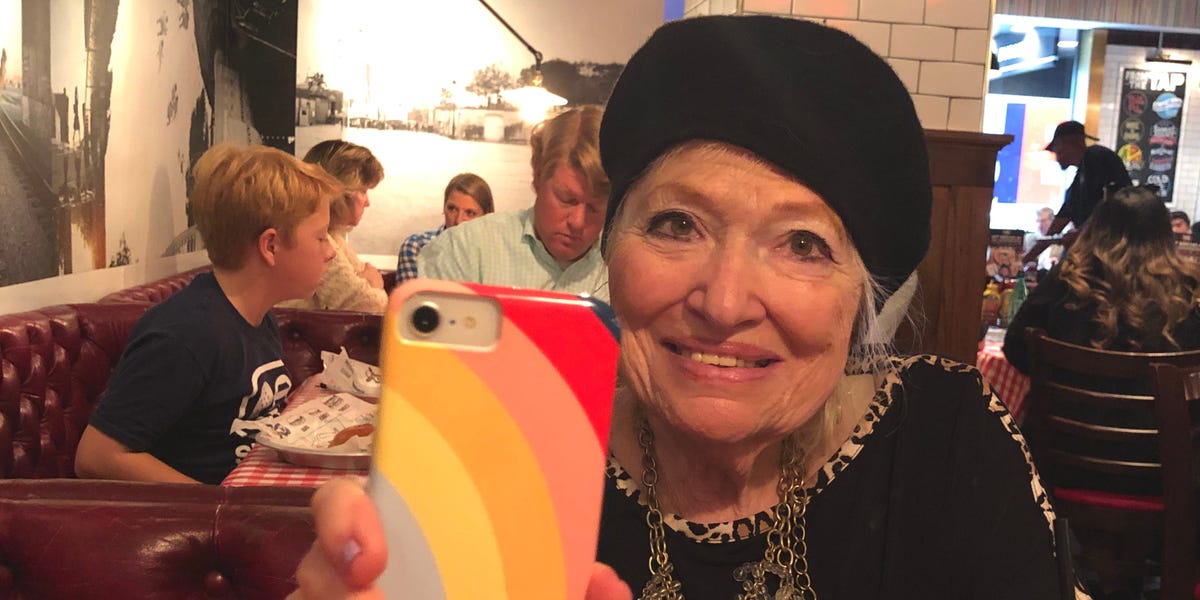
After my father died, my mother continued living alone in New York City. She was in her mid-80s and fiercely independent. She managed all her finances, doctor appointments, and dinner dates with her new boyfriend. She loved her apartment, her lifestyle, her friends, and her iPhone 16, and had no interest in ever leaving. Then her health declined dramatically.
It became clear that staying alone in Manhattan was no longer safe for her without round-the-clock care, which, financially, was not an option. We decided to move her into an assisted living facility in Connecticut, near where I live.
Even though she signed off on the move, she was not happy. I took comfort in believing she would finally have the support she needed with meals, medications, transportation, and daily care. Plus, my son, husband, and I would be able to spend quality time with her.
What I didn’t anticipate at all was how passwords would make such a big impact on my day-to-day life.
Tech has become a huge part of caring for my mom
What should have been a simple task — logging into one of my mom’s health insurance accounts (she has five) to access reimbursement forms for a dental procedure — turned into an hour-long ordeal. I had to overcome a forgotten password, a verification code sent to an old email address, and the realization that I would need to get her on the phone with the insurance company so they could authorize me to speak on her behalf.
Over the last two years, those kinds of tasks have become a defining part of how my mom and I spend our time together.
My mom has never heard of a password manager like Dashlane, nor did she ever use Apple’s version. And she couldn’t set up Face ID (she has Parkinson’s disease and can’t keep her phone still). Instead, she kept every password in a black-and-white composition notebook. For years, that system worked well for her.
She was able to access her bank and investment accounts, as well as multiple insurance portals. She could pay her bills, order household items from Amazon, and send out digital greeting cards for every special occasion.
Then came two-factor authentication. Suddenly, a password wasn’t enough. Accounts wanted codes sent to phones, backup email addresses, security questions, and app approvals. She was lost.
The more time I spend navigating these systems on her behalf, the more I realize that so many technological advancements weren’t designed with people like her in mind.
Managing her digital life is an essential part of her care
When people talk about caregiving, they talk about healthcare. They don’t talk about the moment a parent can no longer figure out why her phone stopped ringing (she accidentally pressed the silent button), retrieve and read a message from her doctor via MyChart (which requires the extra step of logging in and verifying her identity), or deposit a check via her banking app (her shaking hands have made it impossible to hold the phone steady enough to take a photo).
The woman who once managed her own finances, appointments, and social life in New York City now finds herself dependent on me to navigate systems she can no longer manage because of technology that assumes everyone uses a password manager, can retrieve verification codes on multiple devices, and can get the help they need from a chatbot instead of a person. My mom can’t do any of that.
Rather than making life easier, the very tools designed to provide convenience and security have had the opposite effect. Every time my mom has to hand me her phone because she can’t access an account or figure out why something isn’t working, she loses a little more control over her own life. And for someone who spent nearly 90 years managing perfectly well on her own, that loss of independence and confidence is profound.
What surprises me most is how invisible this work is. I imagine there are many adult children like me who are finding themselves in a similar position. We aren’t just helping our parents manage their healthcare. We’re helping them navigate a world that increasingly assumes everyone is healthy enough, physically and cognitively. to keep up. For me, that has become one of the most important responsibilities of caring for my mom.
Read the full article here