




When thinking about the hardest schools to get into in the US, your mind might immediately go to the historic brick walls of Ivy League institutions or to schools at the cutting edge of technology, like MIT and Caltech.
But there is a tiny music conservatory in Philadelphia that is just as selective as these schools.
At the Curtis Institute of Music, which has been operating for over 100 years, fewer than 30 students are admitted each year — and none of them pay tuition.
Only 5% of applicants are accepted
Each year, the Curtis Institute receives over 500 applications, but only 5% are admitted, according to the most recent data from the National Center for Education Statistics’ College Navigator tool.
When Business Insider looked at the hardest schools to get into, based on their admissions rate for the 2024-2025 school year, Curtis ranked 14th in the nation, placing it ahead of Duke, Johns Hopkins, and Cornell.
The school admits the same percentage of applicants as the Massachusetts Institute of Technology, although it has a much smaller applicant pool and fewer seats available.
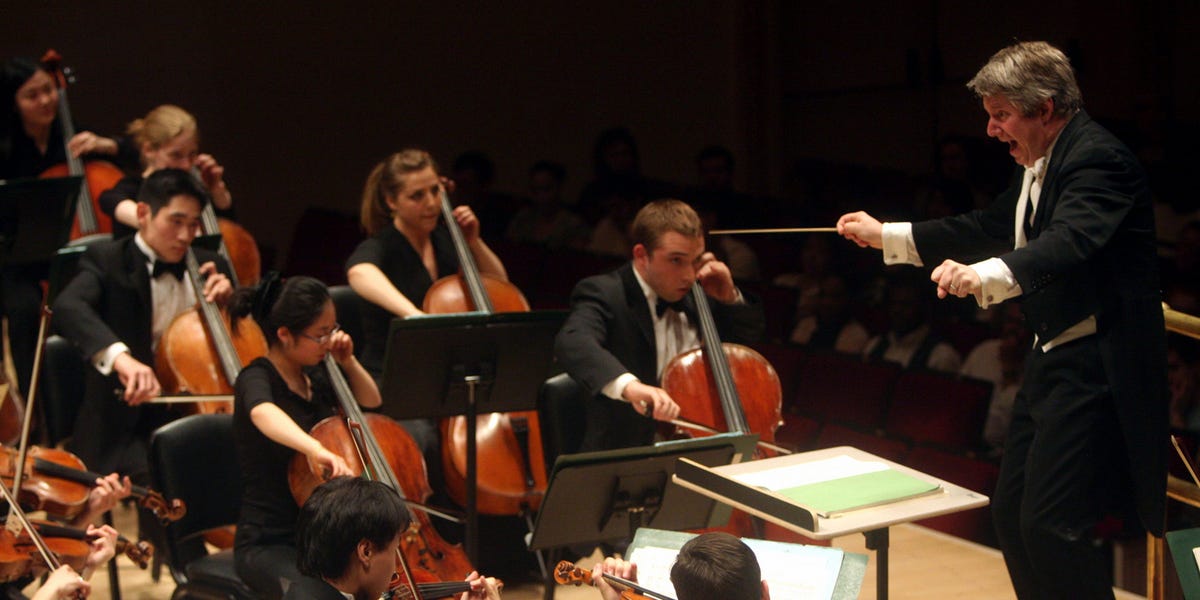
The school ensures that, at any given point, it has just around 160 students, enough to fill a full symphony orchestra and opera, along with select musicians in piano, guitar, composition, conducting, and organ, per the school’s website.
Over 40% of students at the school come from abroad, and musicians come from over 20 countries around the world. The school relies on a rigorous audition process.
“The most important factor is artistic promise,” the school writes on its website. “Though showing technical proficiency in the audition is a requirement, the strongest candidates for admission demonstrate the potential to develop into exceptional artists.”
Famously, Nina Simone was rejected from the program after auditioning at the age of 18. Two days before her death in 2003, Simone received an honorary degree from the institution.
Of all students admitted to the school, over 90% enroll, including 100% of male applicants, according to the National Center for Education Statistics.
Admissions do not have a minimum age requirement (or age limit), and the school, which doesn’t offer preparatory programs, has a section on its website outlining specific academic and enrollment requirements for students under 17.
In April, the school accepted 7-year-old pianist Olivia Li, who will join the school on the same full-tuition scholarship that all students receive.
The school covers all tuition costs
All students admitted into the school receive a full-tuition scholarship, regardless of their financial situation. Additionally, need-based financial aid is available to cover living expenses.
The school has 120 artists and teachers on its faculty, giving students nearly full 1-on-1 support in their instruction.
While the school doesn’t report its students’ post-graduation outcomes, Niche reports that graduates have a 75% employment rate five years after graduation.
Curtis alums often go on to populate the world’s most prestigious orchestras and concert stages, from the Metropolitan Opera to the Berlin Philharmonic.
Read the full article here