



What does it feel like being a marketer about to launch the first FIFA World Cup campaign of your career?
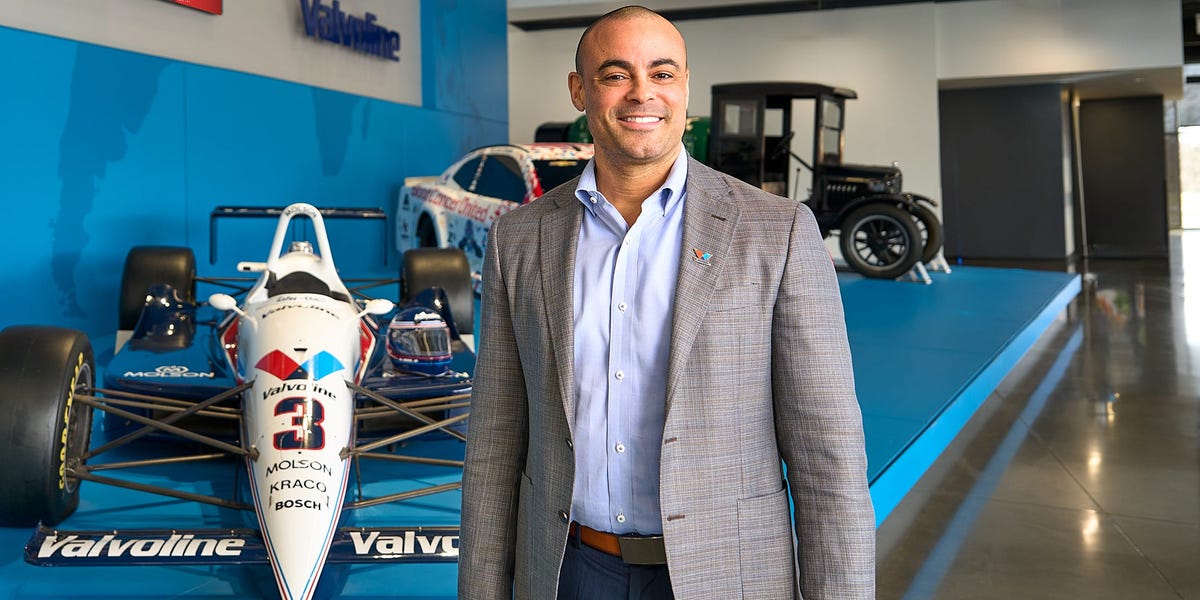
“Excitement. Anxiousness. I can’t believe it. Boy, I hope it works,” Michael Kirtman, chief brand officer of Valvoline Global, told CMO Insider in an interview.
“So, all the emotions I feel.”
Three months into his tenure, Kirtman, a former Procter & Gamble marketer, has been charged with leading the 160-year-old motor oil and lubricant brand’s first-ever FIFA World Cup sponsorship. It’s also the company’s largest global marketing push to date, aimed at expanding brand awareness beyond its North American roots. (Aramco, the Saudi oil company, acquired Valvoline’s global operations in 2023.)
The World Cup is a big stage for a marketing debut.
The World Advertising Research Centre predicts the World Cup — hosted in the US, Canada, and Mexico and starting in June — will drive a $10.5 billion surge in global ad spend. Brands will look to capitalize on the tournament’s feel-good factor, large live-TV audiences, and favorable kick-off times for US viewers.
FIFA said 5 billion people engaged with content from the Qatar 2022 World Cup across linear TV, streaming, and social channels, with over 1.4 billion viewers tuning in to watch the final between Argentina and France.
Valvoline’s main World Cup ad — “The original motor oil for the driven” — follows a father-daughter trip to a soccer match, intercut with clips of other fans making their own journeys and mechanics ensuring the cars, buses, and motorcycles get them there reliably and safely.
Kirtman said he hopes the key takeaway consumers will have after watching the ad is: “I understand what Valvoline does, who they are, and if I use their product, I never have to worry about, ‘Does my car get me to where I need to go?'”
For Valvoline, sales, volume, and profit will determine whether the campaign was a success.
“I think impressions and clicks are vanity KPIs a lot of the time,” Kirtman said, referring to key performance indicators. “They make us feel good, but rarely do they really correlate to real business.”
Kirtman said the company is spending half of its media budget on TV, and the rest on digital. It kicks off in Mexico on Thursday and will launch in other countries, including the US, China, India, and Saudi Arabia, shortly after.
Scenario planning during unpredictable times
The geopolitical environment has been “top of mind” in the planning stages leading to the campaign launch, Kirtman said.
Research released by the U.S. Travel Association earlier this month found that international World Cup visitors are concerned about safety, costs, and visa requirements. Meanwhile, the ongoing conflict in the Middle East has pushed up oil prices and could make travel difficult for some overseas supporters.
“Will there be some customers that make the choice not to come to the World Cup now? For sure,” Kirtman said. “I have to be flexible about what the implications of that are.”
He added that he’s focused on “controlling the controllables,” such as which media channels the brand appears on in certain regions and the timing and tone of its communications.
“What it requires is constantly looking at the data to understand what’s going on globally,” Kirtman said.
He said he hasn’t been tempted to cut back Valvoline’s World Cup ad budget, though.
“When you’re a brand that has the pride to lean in during a time like this, I think it pays dividends to your stakeholders,” Kirtman said.
Read the full article here