

Is the wait finally over at Berkshire Hathaway?
Warren Buffett spent much of his last decade as CEO hoarding phenomenal amounts of cash, as he waited for stocks, acquisitions, and even buybacks to become cheap enough to satisfy his hunger for bargains.
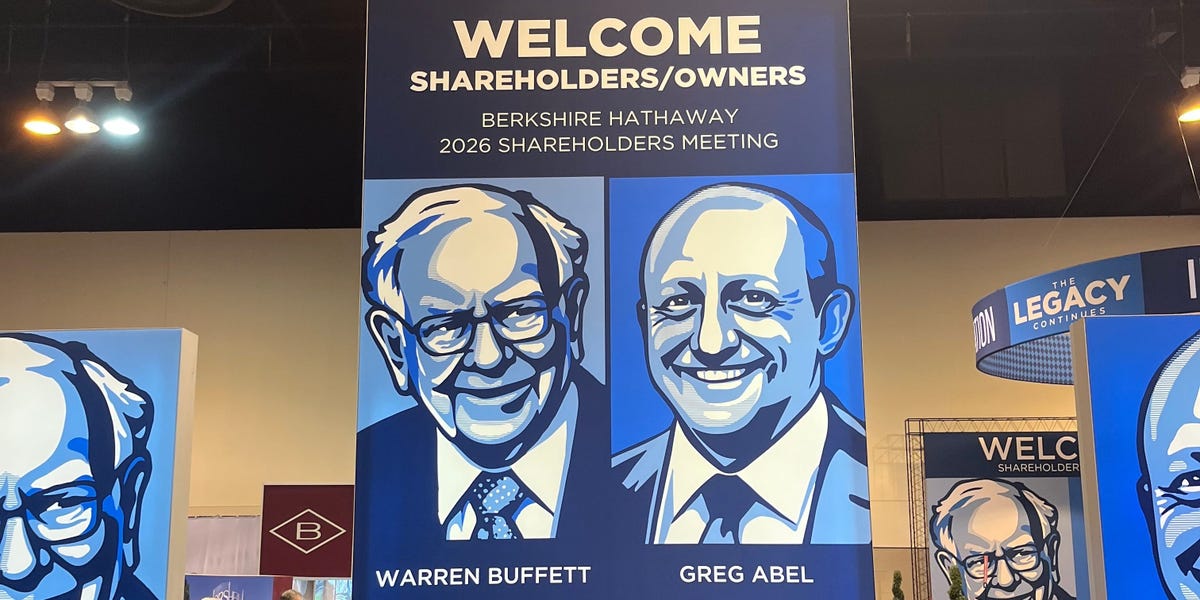
Greg Abel, who succeeded the legendary investor at the turn of the year, might not have quite so much patience, based on Berkshire’s second-quarter earnings report on Saturday.
Michael Burry, the value investor of “The Big Short” fame and a longtime Buffett disciple, said in a Substack note on Sunday that his “biggest fear” for Berkshire was that Buffett’s successor couldn’t resist swinging before the “fat pitch” arrives.
“I believe this fear has come true,” Burry wrote, adding that while only a little of Berkshire’s cash hoard has been spent, “these first steps look to be more framing moves than investment moves.”
Burry’s worry appears to be that Abel is deploying Berkshire’s cash not based on fundamentals, but because he wants to reassure shareholders that he’s the right man for the job and Berkshire is on the right track.
Abel and Burry didn’t immediately respond to requests for comment from Business Insider.
Cash is flowing out
Berkshire’s earnings revealed that its cash pile shrank from a record $380 billion to $365 billion in the three months ended June 30.
A key driver was Berkshire spending a net $20 billion on stocks, investing $23.5 billion while selling only $3.7 billion. It had been a net seller of stocks for 14 consecutive quarters, and the last time it spent this much on stocks was in the first quarter of 2022.
Abel also repurchased $4.6 billion of Berkshire stock, marking the company’s largest quarterly buyback since 2021. Buffett refrained from any repurchases during his last six quarters as CEO.
Moreover, Berkshire spent another $3.4 billion or so on buybacks between July 1 and July 29, based on its average stock price and how much its share count declined during that period. That puts it on track for another busy quarter for buybacks, despite Berkshire stock marching to all-time highs in recent days.
Abel has also been active on the deal front this year. Berkshire closed its takeover of OxyChem for roughly $9.4 billion in cash on January 2 and its acquisition of Taylor Morrison for $6.8 billion in cash on July 24.
Berkshire once again being a net buyer of stocks, ramping up its buybacks to multi-year highs, and closing a couple of sizable acquisitions is notable. But it doesn’t necessarily mean Abel has kicked the company into high gear.
Buffett kept busy
For one, Buffett told CNBC in July that he “initiated” the purchase of Alphabet stock last year. That could mean he’s also responsible for Berkshire purchasing another $10 billion of Alphabet stock in a private placement in June, at around a 6% discount to the market price.
Following the purchase, Berkshire holds a roughly $29 billion stake in the Big Tech titan and key player in the AI boom, assuming it hasn’t altered its position. It listed Alphabet as one of the top five holdings in its stock portfolio at the end of June.
Buffett was also CEO when the OxyChem deal was struck last year, and he’s made other acquisitions in recent years, including Alleghany and Pilot.
Meanwhile, Abel has pledged to follow Buffett’s strategy of disciplined capital allocation, and indicated that he consults with Buffett — who remains Berkshire’s chairman — on every major decision.
It’s safe to assume that Buffett, who turns 96 on August 30, will continue to have a strong influence on Berkshire while he’s still alive.
After all, he transformed it from a failing textile mill into a $1 trillion conglomerate over six decades. He did so by acquiring businesses such as Geico and BNSF Railway, and building huge stakes in companies such as Apple, Coca-Cola, and American Express.
Berkshire still had a larger cash pile at the end of June than it did a year earlier, showing that Abel only made a small dent in the money mountain.
Without the $10 billion Alphabet deal, Berkshire’s stock purchases would have been less than in the first quarter, suggesting that Abel wasn’t scooping up stocks left and right last quarter.
On the other hand, Berkshire sold an unusually large $24 billion of stocks in the first quarter as it was offloading Todd Combs’ positions after he departed his role as one of Buffett’s two investment managers.
It might have been a net buyer of stocks that quarter in the absence of those disposals, which would have made last quarter seem like less of a sea change.
Abel is starting to make his mark, but he’ll have to deploy a whole lot more cash to move the needle at Berkshire.
It remains an open question whether he’s forging a different path than Buffett, and whether Burry is right that he’s less patient and more pandering than his predecessor.
Read the full article here