



The US and Israel’s war in Iran is producing notable combat firsts, from first uses of certain weapons to first-of-their-kind combat engagements.
The US launched Operation Epic Fury on Saturday, launching joint strikes across Iran with Israel. The massive campaign has killed dozens of Iranian officials, including Supreme Leader Ayatollah Ali Khamenei, and dealt tremendous damage to the country’s armed forces.
As of Wednesday, the US military, including ground forces, aircraft, and warships, had struck more than 2,000 targets.
Iran’s counterstrikes have sparked air defense battles across the Middle East, with US and Israeli forces, as well as American allies and partners, getting involved in shooting down Iranian missiles and drones and even combat aircraft.
America’s top general said on Monday that “this operation had several combat firsts,” though he declined to go into specifics. Here is some of what we’ve seen so far.
Weaponry firsts
The US has been launching new ballistic missiles and one-way attack drones at Iran, using the war as a proving ground for some of its experimental weapons.
On the first day of the war, US Central Command said that its Scorpion Strike task force had used one-way attack drones for the first time in combat. The task force, which was established in December, made its combat debut with the Low-Cost Unmanned Combat Attack System (LUCAS) drones made by the US defense SpektreWorks.
These drones are based on Iranian-made Shaheds, which have seen major use by Tehran in Middle East conflicts and Russia in the Ukraine war.
“These drones were originally an Iranian design. We took them back to America, made them better, and fired them right back at Iran,” Adm. Brad Cooper, the head of CENTCOM, said in a video address on Tuesday.
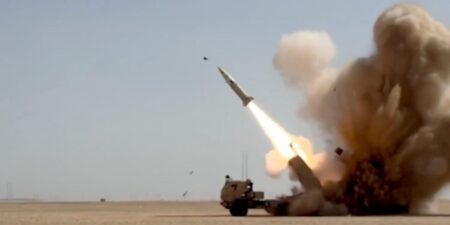
Other notable first uses of weapons include combat use of the relatively new Precision Strike Missile, a short-range ballistic missile that entered service over two years ago and can be fired from the M142 High Mobility Artillery Rocket System, or HIMARS. Lockheed Martin manufactures the PrSM, and each missile is estimated to cost about $1.6 million on the low end. These missiles are meant to replace older ATACMs.
Cooper called the use of the PrSM “a historic first” and “an unrivaled, deep-strike capability.”
Combat engagements
The Iran war has also seen combat firsts, both in the air and at sea.
On Wednesday, the Israeli military said that an F-35I “Adir” shot down an Iranian Air Force Yak-130 over Tehran, marking the stealth fighter’s “first shootdown in history of a manned fighter aircraft.”
While Lockheed Martin’s F-35 Lightning II is operated by about a dozen countries and has been in service for over 10 years, it’s previously only intercepted missiles and drones in combat. Notably, British Royal Air Force F-35s scored their first combat kill against drones in this fight, which they are not offensively involved.
The shootdown of the Yak-130, a light combat aircraft, is also the first time in more than 40 years that Israeli fighters have downed a manned enemy aircraft.
Similarly, it had been decades since a US submarine sank an enemy ship in combat. On Wednesday, however, Secretary of Defense Pete Hegseth announced that an American submarine had sunk an Iranian warship. Video from the Pentagon captured the strike on the vessel.
Gen. Dan Caine, the chairman of the Joint Chiefs of Staff, said during a press briefing that the weapon was a single M48 heavyweight torpedo.
The last time an American submarine sank an enemy vessel was during World War II.
The Iranian navy has been a primary US target in Operation Epic Fury. President Donald Trump and other officials have said one of the objectives of the war is to decimate Tehran’s naval forces.
An ongoing war
Trump and other US officials in Washington have provided varying objectives and timelines for Operation Epic Fury. On Wednesday, Hegseth said the war “could last eight weeks.” Trump has said the campaign is likely to go from four to five weeks, but he was prepared “to go far longer than that.”
The costs of this ongoing conflict have been debated, and there is a wide range of available estimates. Per a Center for Strategic and International Studies think tank report published Thursday, the first 100 hours of the operation were estimated to cost $3.7 billion, or $891.4 million per day, primarily driven by expenditures of expensive munitions.
Six American military personnel have been killed since Operation Epic Fury began. Other troops have suffered from shrapnel injuries and concussions.
Read the full article here