





Tech creators are getting the star treatment.
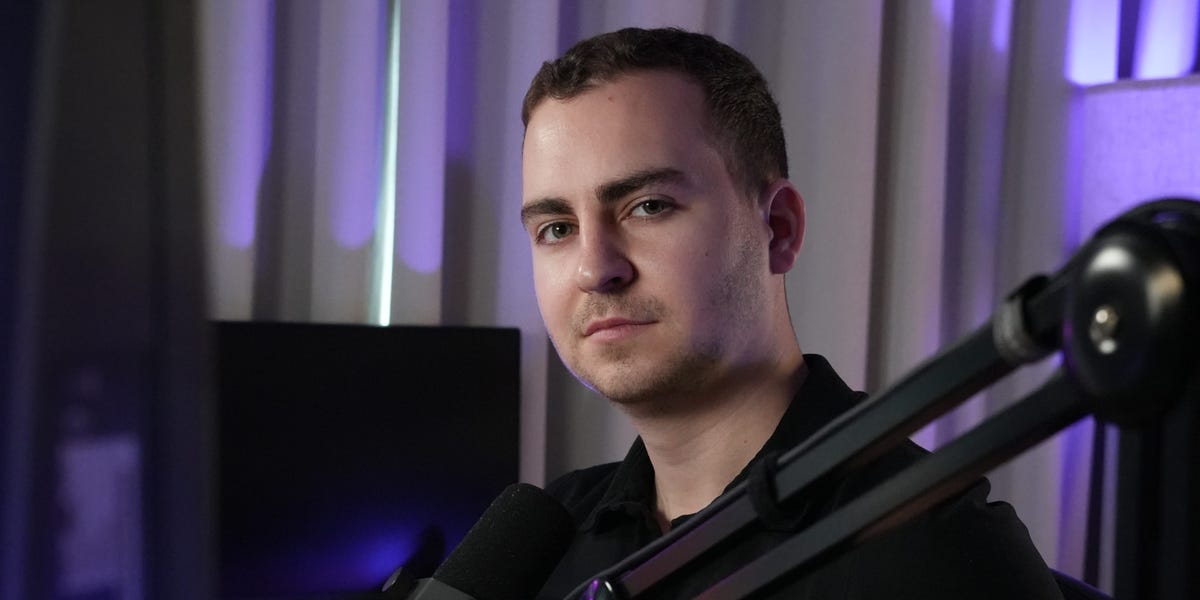
Reign Maker Group, a collection of brand, media, marketing, and talent agencies, is launching a new management firm for tech creators with YouTuber Tech with Tim, Business Insider exclusively learned.
The idea behind Kernel Management is to match tech creators with brand sponsors, help them build businesses outside YouTube, and connect them with each other through monthly meet-ups.
Kernel signed Tim Ruscica, the creator behind Tech with Tim, who will also become an equity partner in Kernel and mentor clients. He’ll work with Jonathan Chanti, the CEO and cofounder of Reign Maker Group; while Damian Skocylaz, president of Reign Maker Talent, will oversee company operations.
Chanti said he expects to sign 30 to 100 clients this year. Among other criteria, he’s looking for creators with at least 70,000 YouTube subscribers, a sign they’re putting in the time to build a consistent audience.
Other agencies in the space include The Drive Agency, whose roster includes tech creators like Jean Kang and Mariana Antaya, and Creator Authority, which works with B2B influencers in tech and other categories.
Chanti cited creators including Delia Lazarescu, an AI tech educator with 387,000 Instagram followers who goes by Tech Unicorn, and David Ondrej, who posts AI software tutorials to his 362,000 YouTube subscribers, as the types of people Kernel is looking to sign.
Tech companies want creators to promote AI
Big AI players like OpenAI, Anthropic, and Microsoft are seeking help making their products and services look cool. CoreWeave, an Nvidia-backed cloud platform, increased its marketing spending by 700% in 2025 to $144 million.
Software companies that used to advertise in trade publications or at conferences are now looking to partner with creators, said Patrick Zielinski, CEO of The Drive Agency.
“Every AI company has raised an infinite amount of dollars, and they’re trying to find customers. So, if you’re a voice in the space, then you can capture some of that,” said Avi Gandhi, founder of Creative Logic, which advises companies on the creator economy.
Ruscica said his own inbound requests from brands have doubled in the past six months. He said he’s been offered $40,000 for a single video and more than $1 million for a long-term deal.
“The amount of money being pumped into this space is just insane,” he said.
Meanwhile, the rise of vibe coding, where non-techies are using AI tools to write code, is expanding the audience for tutorials.
“We need more engineers using their influence to work with these brands, and these brands also need really credible people,” Chanti said.
Agencies that focus on a particular category, like sports or music, are common in Hollywood but newer to the creator economy. Beyond tech, Chanti is eyeing other creator categories to build businesses around, including basketball and finance.
Tech creators have distinct needs
On the supply side, Chanti’s view is that there’s a shortage of experts who have strong video and communication skills. Some tech creators also need help choosing brand deals that won’t hurt their professional reputations. Kernel wants to identify and guide them.
“Some of them don’t know how to say ‘no,'” Chanti said of tech creators weighing brand deals. “It’s a bigger risk if you align yourself with the wrong opportunity. The stakes are high.”
Ruscica started coding at age 12 and describes himself as a self-taught developer. He posts two to three tech tutorials a week to his roughly 2 million subscribers on YouTube. He said he saw a void in the market for an agency that can serve tech specialists like him.
“We have our own way of doing things,” he said. “It can be hard to trust a third party. And it’s hard to find an agency that has a deep technical expertise.”
Still, some creators told CNBC they won’t take sponsor deals that involve AI because the tech has been associated with job displacement.
Tech companies also face a wary public.
About 70% of Americans worry AI will reduce job opportunities, according to a March Quinnipiac University poll. It also found 74% believe that the government isn’t doing enough to regulate the technology.
Read the full article here