




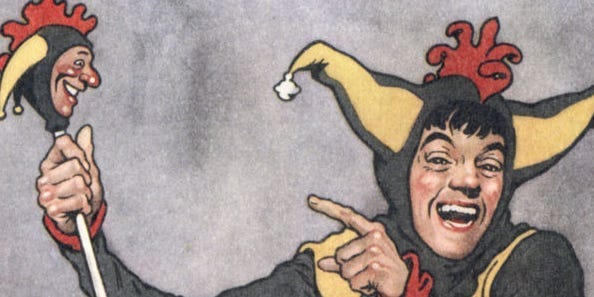
Have you jestermaxxed recently? Have you or someone you know been frame-mogged by an ASU fraternity leader? Did it cause your cortisol levels to spike?
If you’ve been spending too much time online lately, you’re likely seeing strange warpings of the English language.
Me? I think it’s great. We need some new words! But also, be mindful that these new silly words aren’t necessarily spreading organically. Some people are making money off their spread.
The sudden virality of these words comes as a 20-year-old looksmaxxing livestreamer who goes by “Clavicular” has broken containment of the relatively small corner of the internet for the looksmaxxing community. Suddenly, these words seem to be the latest obsession of the overly online crowd.
And with that comes a whole new way of speaking.
For now, don’t worry about who or why Clavicular is. You can read this article about him, or wait until The New York Times publishes its story (a reporter was with him last weekend to write an expected profile). The thing is, for our purposes, the details about him don’t really matter — he’s a 20-year-old looksmaxxer who also livestreams on Kick. That’s all you need to know. It’s like the origins of the “67” meme: Sure, there’s some obscure backstory with a line from a rap song, but the meme is really about how it means nothing. (I reached out to Clavicular, but didn’t hear back.)
The output — these wacky phrases that are wrenching the English language to its logical conclusion of rot — is what is really important here. I suspect that long after we forget about the guy, we’ll still be using these new terms like “mogged” and “maxxed.”
(For the record, “mogged” is looksmaxxing forum lingo that’s been around for a while and means to be better looking or better than someone else. It’s now being used as a suffix, like “frame-mogged” for someone who has more impressive shoulders.)
There’s no question that this vernacular has broken containment to normies. Whether that’s good or bad is a matter of opinion.
There’s also a business reason that suddenly you’re seeing these wacky phrases everywhere, and it’s not just organic meme adoption.
A lot of the most over-the-top posts about “jestermaxxing” and “frame mogging” are coming as captions to video clips from third parties known as “clippers.”
Clippers are people who post short clips on social media from longer content like podcasts, livestreams, gaming, or even TV shows and movies. These clippers can have a financial motive: They can get paid by creator programs on platforms like TikTok, X, and Instagram Reels if their posts go viral. And they can also be paid by content creators themselves to promote their podcasts, livestreams, or other products.
Clippers are incentivized to find the most ridiculous moments in a livestream and slap on the most clickable, enticing caption or commentary for their posts on X and other social media platforms. This has created a kind of house style all its own — note the off-capitalization and tendency to end in a question.
The internet is always giving us new words and new terms. Sure, “jestermaxxing” will eventually sound old and cringe (perhaps soon, even), but this is the beautiful bounty of online communication. New ways of communicating and expressing! In this case, it also seems relevant to keep in mind that the new memewords are being pushed by people who are chasing dollars, not just lols.
Read the full article here