Air travel is only getting more complex due to the Iran war.
Eleven days since the first strikes, some flights have restarted after the UAE partially reopened its airspace. However, cancellations and rising ticket prices spell headaches for travelers.
Dubai is leading the restoration of flights in the region.
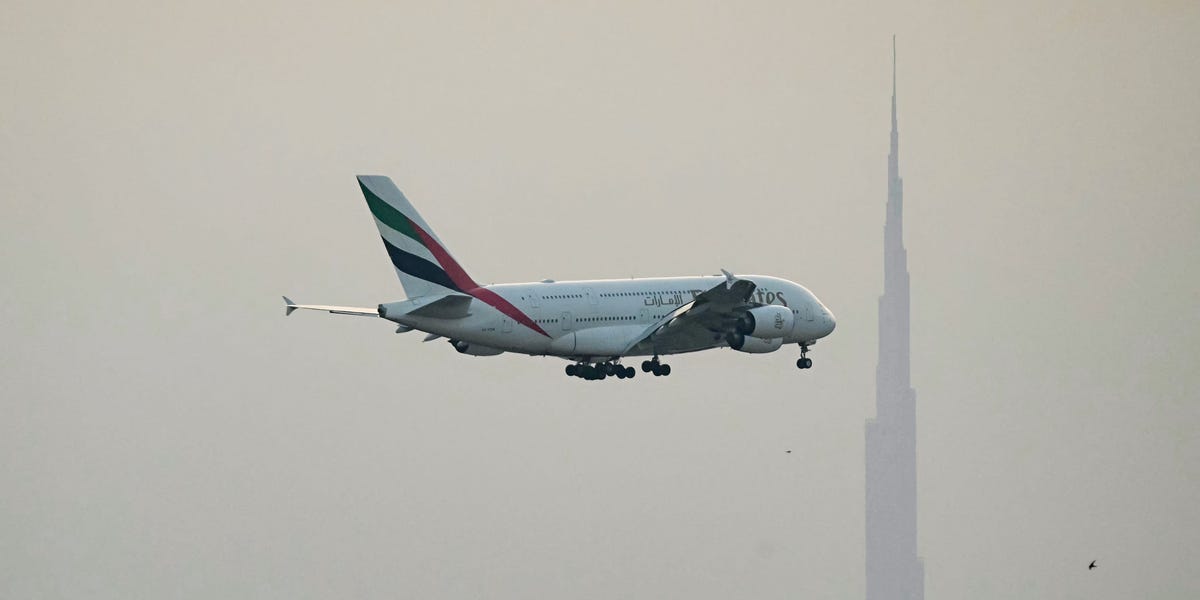
Its airline, Emirates, operated less than 60% as many flights on Wednesday as on February 27, according to data from Flightradar24. That’s compared to 11% and 17% for Qatar Airways and Abu Dhabi’s Etihad Airways, respectively.
Emirates said last Friday it “anticipates a return to 100% of its network within the coming days.”
However, it still may not be plain sailing for customers. Flights into Dubai are often forced to circle around before landing due to Iranian drones or missiles.
Early on Wednesday, four people were injured when two drones fell near Dubai International Airport, the world’s second busiest airport for international passenger traffic last year.
Hours later, several inbound flights were again forced to enter holding patterns for 55 minutes.
“Safety, as ever, remains paramount as is our duty of care,” Emirates said in its statement.
Meanwhile, British Airways has canceled flights to the Middle East until at least March 28 — and to Abu Dhabi until “later this year.”
KLM, the Dutch flag carrier, canceled all flights to Dubai until March 28.
Rising ticket prices
Passengers flying in and out of the Middle East aren’t the only travelers affected, either.
“In general, it is likely airfares will increase in the short term, depending on the duration of the war,” Hans Jørgen Elnæs, an aviation analyst and advisor, told Business Insider.
Jet fuel is getting more expensive as oil prices have experienced huge volatility. Brent crude was around $90 a barrel on Wednesday morning — up 50% since the start of the year.
The Gulf airlines have become popular for offering stopovers between Europe and Asia, but many travelers are now looking for direct flights instead.
High demand and lower capacity have led to a “significant spike” in airfares on these routes, Elnæs said. “These ticket prices are not sustainable over time, in my view,” he added.
Thai Airways is raising ticket prices by 10% to 15% due to “overwhelming” demand and rising fuel costs, Chief Financial Officer Cherdchom Therdthirasak said Wednesday.
Also, Malaysia Airlines last week deployed additional flights from Kuala Lumpur to London and Paris.
The Middle East is also a vital air corridor for overflights, but airplanes have been forced to reroute north over the Caucasus or further west over Saudi Arabia.
Until at least next Wednesday, the European Union Aviation Safety Agency has banned European operators from flying over the region — including Saudi Arabia and Oman, whose airspace remains open.
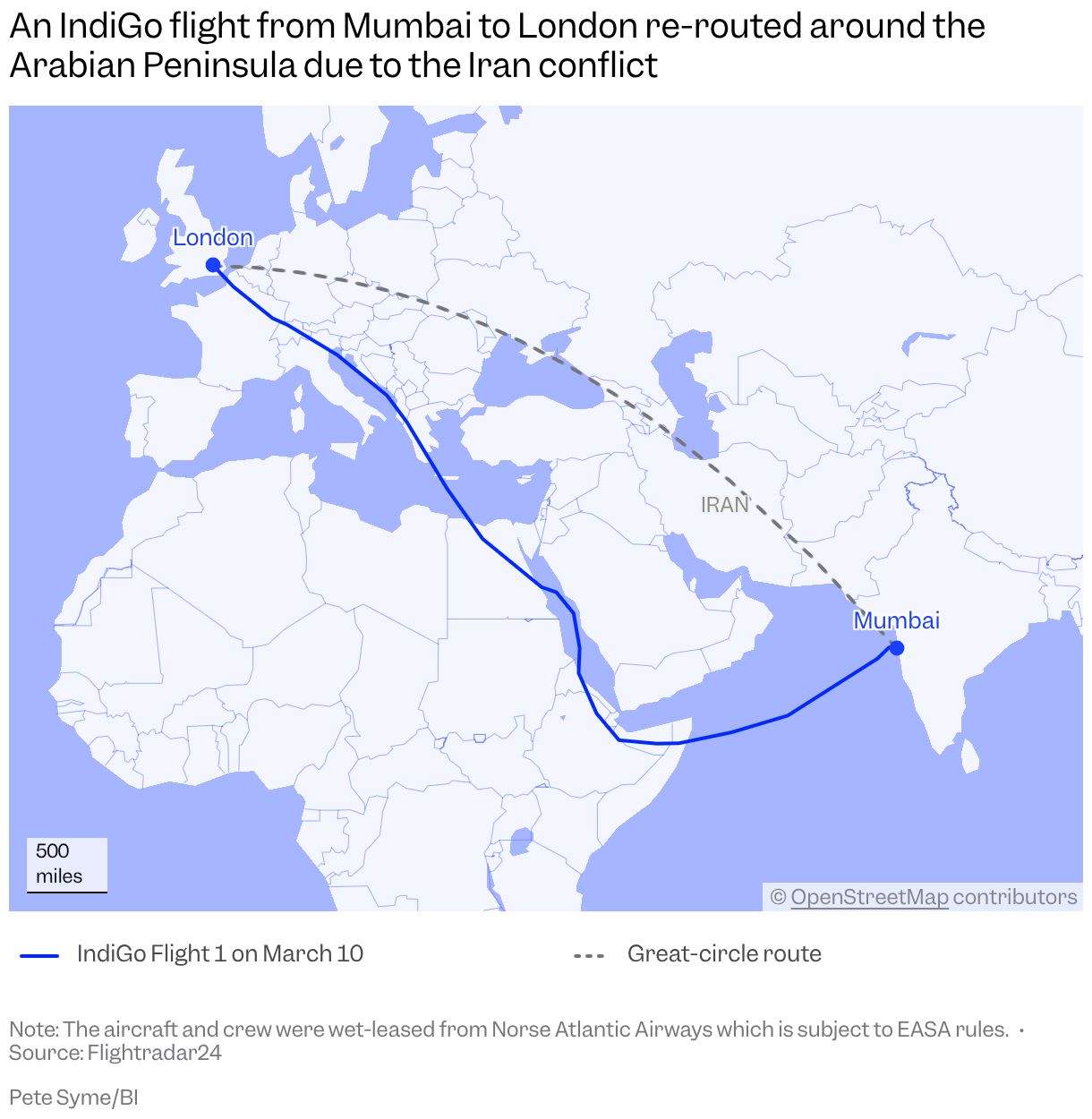
The Indian budget airline IndiGo is taking some particularly long detours; its flight from Mumbai to England is up to two hours longer than before.
That’s partially because it leases airplanes and crew from Norse Atlantic Airways for this journey. As it is a Norwegian airline, the EASA rules require it to fly over East Africa to avoid the Arabian Peninsula.
Some travelers look elsewhere
The World Travel & Tourism Council said Wednesday that it estimates the conflict is already negatively impacting the Middle East to the tune of at least $600 million a day in international visitor spending.
“It is too early to define the long-term impact on the Gulf region’s airlines and tourism. But in the worst case, if the war continues over time, it will hit hard on airlines, tourism, and GDP,” Elnæs told Business Insider.
“If airfares increase too much, it will hit demand, so the airlines need to find a balance here.”
The conflict has already prompted people to find new ways to travel between Europe and Oceania, such as taking a layover in the US. This is known as the Southern Cross Route and was formerly popular in the mid-20th century.
“Each day this week, we have booked over 1,000 people from Australia and New Zealand to Europe. Last year, we booked less than one a day,” United Airlines CEO Scott Kirby said at a Harvard event last Thursday, according to CNBC.
Some Europeans are also reconsidering where to vacation over the spring vacation period.
“We’ve seen, certainly, there’s a big collapse in bookings to the Middle East, and a big surge in bookings on short-haul airlines within Europe,” said Ryanair CEO Michael O’Leary.
Due to their cheaper tickets and strategy of hedging against fuel-price increases, such low-cost airlines often gain market share during geopolitical crises, Elnæs told Business Insider.
Read the full article here