





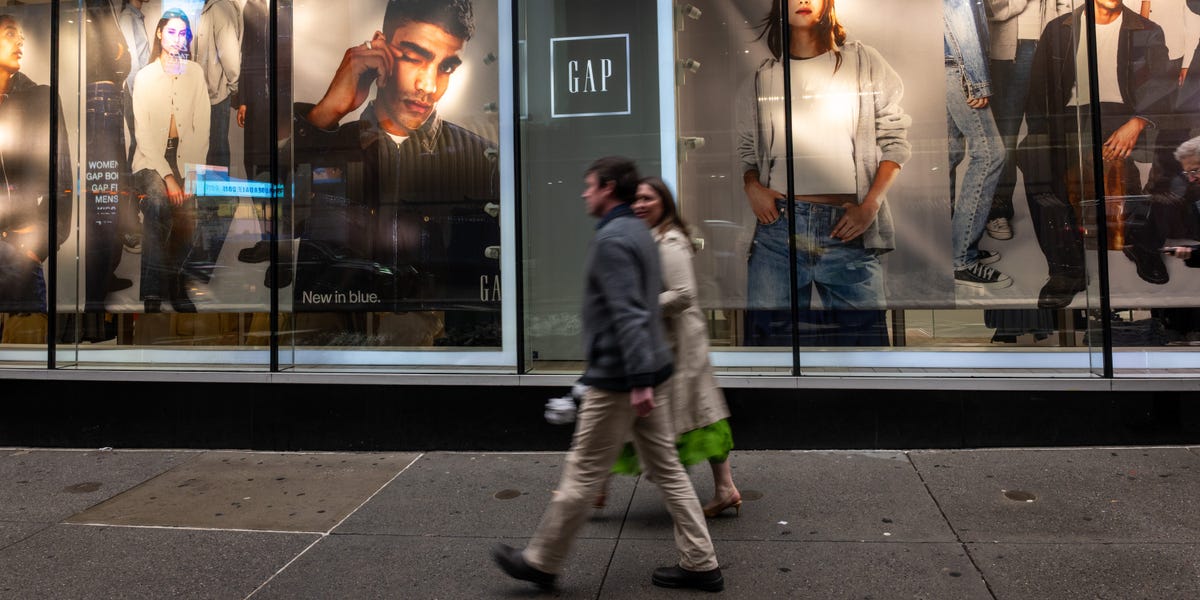
Danielle Shaw, a 31-year-old living in Los Angeles, said her mom used to dress her in Gap clothes as a kid — and that was her only memory of wearing the brand until about two years ago.
“I went into Gap, and I honestly became obsessed with everything that I tried on,” Shaw told Business Insider.
Shaw said she stocked up on basics like sweatsuits and T-shirts. She left with three or four pairs of denim because the fit and price point were “amazing.” The brand is now a staple in her wardrobe, and she said her friends have bought in, too.
Shaw isn’t the only zillennial embracing the 57-year old brand for the first time. A new wave of shoppers is discovering Gap after years of declining relevance. TikTok is full of influencers showing off their Gap hauls, while buzzy partnerships with artists like Katseye and Young Miko have breathed new life into the brand, once known to be the epitome of American basics.
Founded in 1969 with a simple idea to help customers find a pair of jeans that fit, Gap is leaning back into its roots: affordable, well-fitting essentials.
Gap’s focus on younger customers — its target shopper is 25 to 35 — appears to be paying off. Sales rose 5% last year to $3.5 billion, cementing its comeback after years of flat or declining growth. Comparable sales were up 7% in the fourth quarter, marking Gap’s ninth straight quarterly increase. Parent company Gap Inc. is riding the momentum too, posting its second year in a row of revenue growth and one of its highest gross margins in 25 years.
Gap’s global brand CEO Mark Breitbard returned to the brand in 2020 and has been on a mission to return to basics, reconnect with once-loyal millennials, and simultaneously win over Gen Z.
Now he wants everyone to know: Gap is back.
“It’s been a full return to relevance of the brand,” said Breitbard, who’s been in leadership roles at Gap Inc. — the parent company of Gap, Old Navy, Banana Republic, and Athleta — on and off since 2009.
Back to the basics
After its ’90s peak, Gap Inc. shares hit roughly $52 in 2000, a level it hasn’t reached since. Gap’s namesake brand started to falter in the 2010s and entered a roughly decadeslong slump in revenue.
As Zara and H&M pushed further into trendy fast fashion and others doubled down on athleisure or premium denim in the mid-aughts, Gap landed in the awkward middle and lost its selling point. Many industry insiders thought that Gap Inc.’s brands couldn’t be turned around, UBS analyst Jay Sole said.
Breitbard said the brand used to have awareness and affinity — and people missed the old Gap.
“We moved into this period where we were over corporate and too many products in the store, and too many ideas, and too much discounting — and not enough of our playbook,” said Breitbard.
Breitbard said his 2020 tenure began with a major cleanup from the inside out: rounds of layoffs to reduce bureaucracy and reset leadership, store closures in unprofitable markets, a narrower assortment of styles, and a dramatic upgrade in product quality.
The sweats and jeans that once made the brand famous are now “central” to its comeback, Breitbard said.
That renewed focus on classic American style is a major reason the strategy is resonating, Bill Kenney, CEO of brand agency Focus Lab, told Business Insider. Rather than trying to reinvent itself — like when it briefly changed its logo in 2010 — Gap is leaning into what worked all along.
“They’re not trying to tell 17 different stories,” Kenney said.
The power of viral partnerships
Breitbard said that the brand grounds its purpose in “great storytelling” around big product ideas every season. That includes partnerships with popular artists, which have had a strong impact, especially with younger consumers.
Breitbard said that 2023, Gap’s first year returning to positive revenue after its slump, marked the true turning point.
From there, the momentum built with a LoveShackFancy collaboration. By 2024, Breitbard said, a steady “drumbeat” of moves followed.
Lily Comba, founder and CEO of creator marketing agency Superbloom, told Business Insider that she noticed a change when Fabiola Torres was hired as the brand’s chief marketing officer that year.
It began with Gap’s spring 2024 linen campaign featuring Tyla. In August 2025, the brand followed up with its “Better in Denim” partnership with Katseye — a TikTok-ready moment that featured the girl group performing to 2003 hit “Milkshake.” It arrived on the heels of Sydney Sweeney’s controversial American Eagle ad, and it positioned Gap as a lighter, more inclusive voice in the denim category.
The Katseye campaign appeared to pay off in store visits, as Gap saw positive visit growth across most of the six-month period from August to January, according to data from analytics platform Placer.ai.
Part of what makes Gap distinct, Breitbard said, is that “we bridge gaps” (no pun intended). Some of its best-selling styles are worn by both mothers and daughters, he said.
For the holidays, the multi-generational choir featured in the “Give Your Gift” campaign reinforced the message that Gap is an American brand, Comba said.
Most recently, its partnership with Puerto Rican Gen Z artist Young Miko felt especially well-timed, Comba said, tapping into the cultural momentum sparked by Bad Bunny’s halftime show. She said the choice to team up with Young Miko was “exactly what Gen Z wants.”
“That’s the beauty of Gap,” Comba said, adding that, “they’ve always made denim; they’ve always made sweats; they’ve always made linen; but it’s just how they’re communicating is evolving.”
Although Gap’s turnaround is in full swing, Sole, the UBS analyst, said it has to meet the moment in more ways than its marketing. Shoppers want to know they’re getting good value for their money, he said.
Gap will have to deliver items that match the price point and identity it has built if it wants to retain the customers it’s attracted.
“They have money in their pocket, they’re willing to pay, but they want to have real value,” Sole said.
Read the full article here