




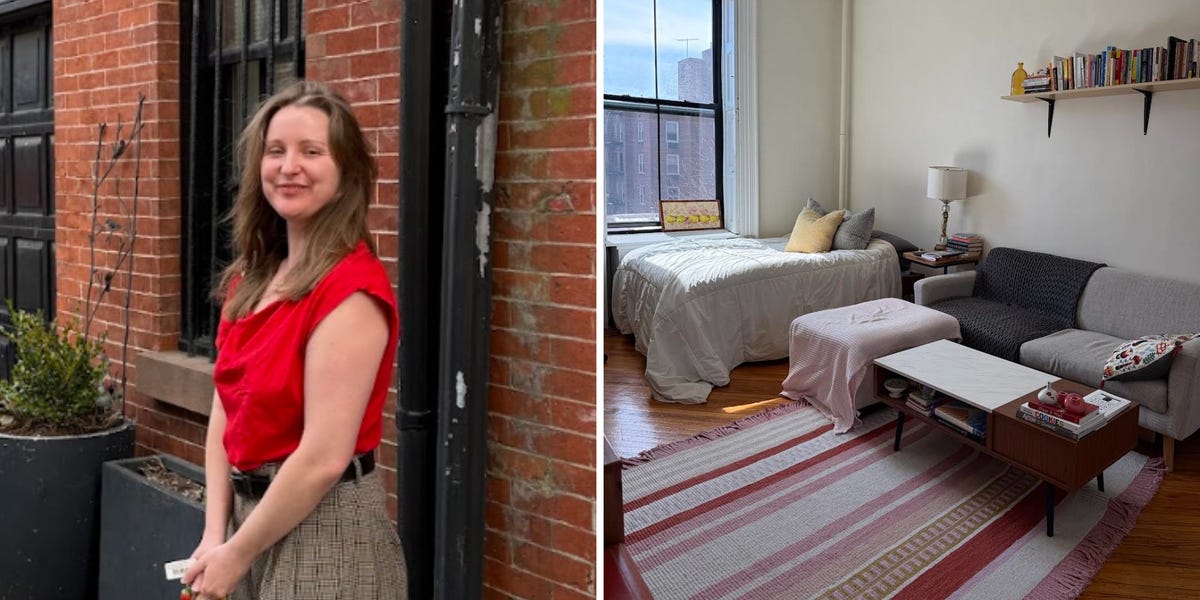
When I was planning my move to Brooklyn and touring a 410-square-foot space, the first thing I noticed was the lack of, well, space. The place looked small in photos on StreetEasy, but this was something else altogether.
Every section of the studio — from the bed area to the kitchenette to the entryway — was a mere few paces from each other. Yet, the rent was under $2,000, and about $200 less than what I’d been paying to live with a roommate in Manhattan.
As soon as the light came pouring through the towering window overlooking the tree-lined streets dotted with gardens and brownstones nestled in the romantic neighborhood of Brooklyn Heights, I knew this studio was the one.
My application was approved, and after a few months, I was surprised by how little the lack of space bothered me — and by the way it transformed my relationship to spending and owning things.
Small living made me confront my previous spending habits
I brought a few necessities to my new space: bookshelves for my walls, a kitchen cart I found on Facebook Marketplace, the bed from my old apartment, and my sister’s TV and coffee table.
My Instagram algorithm seemed to sense that I’d just moved: I saw a constant stream of drool-worthy bed covers, art, and vintage furniture, and it was tough not to tumble down “new apartment essentials” or “new apartment decorating” rabbit holes.
If I were still in any of my previous homes, I would’ve hit “purchase” on a plethora of trending items, from new, fluffy pillows for the couch to sweaters that popped up on ads without hesitation.
My former roommate and I split the cost of many furniture items, and had space for (almost) all of the stuff I could want. However, I was now footing the bills for furniture and decor alone — and I had far less square footage to work with.
The urge to buy everything almost overtook me when I remembered that I quite literally didn’t have the space. Pretty quickly, it became clear that my shopping habits would have to change.
I carefully invested in a new couch and rug — essentials and about all the space could hold. Otherwise, I told myself I wouldn’t buy any more furniture.
After I put a hard stop on buying for my apartment, I started pausing before buying other things, like seasonal clothing or superfluous decor and accessories.
Over time, as my spending habits shifted and I accumulated less, I became more confident that everything in my space was chosen with care, and less crowded with mindless stuff.
By spending less money on rent and material goods, I’ve been able to budget for other things, like travel. Cutting back allowed me to take more trips, including last-minute vacations with friends and even a solo visit to Seoul, which was something I likely wouldn’t have budgeted for in the past.
Best of all, my apartment feels like my own
I used to spontaneously spend money on trendy sweaters or splurge on a cool chair I saw at a great price point — but I think that habit created more confusion and chaos around what I actually like.
Having a smaller space has forced me to make more intentional decisions, and my taste and style have sharpened as a result.
I’ve now been in my apartment for about two years, and more than anywhere else I’ve lived, my space feels like me, from the pieces of art I’ve collected on my travels to the glass flower, handmade by my best friend, that hangs in my entryway.
I’m still excited for a future season of life when I’m actively accumulating new art or vintage furniture, but it’s been a surprising relief to know that that’s not my reality right now.
Learning to cut back on what I bring into my space and be inventive with what I already own — as opposed to constantly fixing, rearranging, and reordering — has brought me a more authentic, full-body sense of joy.
And now, when I’m with friends looking at art, or checking out a hip new furniture store, there’s no tingling feeling I get when thinking about swiping my card. My space is good as is, and so is my wallet.
Read the full article here