



Ukrainian President Volodymyr Zelenskyy’s surprise dismissal of his reformist defense minister has sent shockwaves through the country, causing unease and anxiety as Kyiv enjoyed a wave of fresh momentum on the battlefield.
Ukrainian defense industry sources described the removal of 35-year-old Mykhailo Fedorov last week, after just six months on the job, as a major disappointment for the country’s powerhouse military-technology sector, expressing concerns about serious problems down the road.
A Ukrainian defense tech company representative who asked only to be identified as Anton said that Fedorov “was driving innovations, visionary goals, and very brave practical operations that gave President Zelenskyy his cards.”
Anton said that Fedorov was proactive rather than reactive in his efforts to substantially overhaul Ukrainian weapons development, tactics, and doctrine, adding that “he was fulfilling today’s needs and gaps while building tomorrow’s relevance and superiority to ensure our victory.”
A reformist approach to a grinding war
Fedorov, who previously served as Ukraine’s minister for digital transformation and is known for his Silicon Valley-style approach to the war, was appointed by Zelenskyy in January to oversee the defense ministry.
He quickly pushed to dramatically reform Ukraine’s military, including placing greater emphasis on deploying drones and reshaping the contracting system. Fedorov also sought to overhaul the defense industry to increase development and make the procurement process more transparent and efficient.
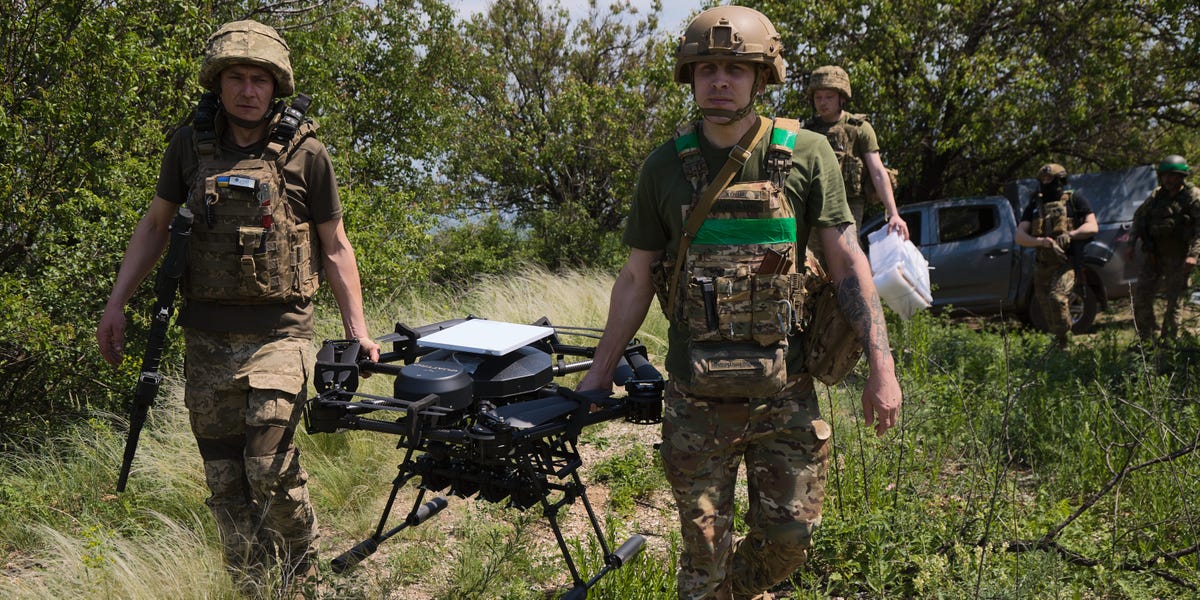
Russia’s invasion has turned Ukraine into a central hub for robotics and drone innovation. Hundreds of companies are building new technologies — from drones to electronic warfare devices — for the military, and many have their eyes set on future exports.
During Fedorov’s tenure, Ukrainian firms enjoyed a much more transparent procurement process with the government, Anton said. He described collaborating with the defense ministry as a “professional and very productive” dialogue, “something we never could imagine before.”
He said that Fedorov transformed the defense industry to meet the challenges of a changing battlefield, one that is becoming increasingly autonomous.
Since January, Ukrainian forces have been significantly ramping up their long-range drone strikes on Russian oil facilities and have used mid-range drones to hammer Russian logistics in the rear. The two campaigns have given Kyiv a sense of optimism and stymied Moscow’s battlefield momentum while fueling its own.
Defense manufacturers see Ukraine’s victories over the past few months as a testament to the drone-forward approach of Fedorov and his team.
The CEO of robotic systems maker Ark Robotics said that “policies supporting rapid deployment, streamlined procurement, and continuous battlefield feedback created the conditions for rapid technological progress.”
Losing the pace of innovation
Fedorov’s emphasis on rapid technological change and decentralized innovation sometimes clashed with the military’s more conventional command structure under Gen. Oleksandr Syrskyi. Zelenskyy said the rift between the two had become a problem.
Zelenskyy omitted Fedorov from his government in a major reshuffle last week. The former defense minister said he was pushed out, and while he declined a government advisory role, it’s unclear whether he could stay on in another capacity.
The dismissal caused confusion and anger among Ukrainian civilians and soldiers, and has stoked anxiety within the defense industry over the future of procurement and manufacturing priorities.
As defense minister, “Fedorov built a system where only equipment that actually worked and delivered results made it to the front,” a Ukrainian manufacturer said, adding that “he created a competitive environment: manufacturers competed on quality, lowered their prices, and still met the front’s real needs.”
They said they worry about a potential backslide to “manual, top-down control.”
Another Ukrainian manufacturer said they are “deeply concerned” as a producer, not only because of Fedorov’s dismissal but also because Kyiv has gone through three defense ministers in a little over a year.
“This creates an unpredictable frame for work,” they said. “Changing a minister and his team usually takes time to adjust all processes. This means that the adoption of necessary decisions can be slower for some time. Thus, this can affect our work as well.”
Zelenskyy said that he asked Maj. Gen. Yevhen Khmara, the acting head of Ukraine’s SBU internal security agency, to lead the defense ministry in the interim.
Khmara previously led the SBU’s elite Alpha unit, which has been the tip of the spear for Ukraine’s deep strikes into Russia, so drone innovation may remain a priority for the defense ministry.
The Ark Robotics CEO said it remains to be seen whether Ukraine has the “institutional, strategic commitment to realize the same vision going forward and accelerate the changes” that Fedorov started.
Proper policies will enable defense innovation to move at the rapid pace required in a modern war, they said. “Our take is that being radical in implementing widespread use of unmanned systems is an existential question for Ukraine.”
Without Fedorov at the helm, Ukrainian defense manufacturers don’t see their efforts completely collapsing. However, they are worried about a potential change in pace that could prove harmful at a pivotal moment in the war.
“What happens to the industry, army, and country without Minister Fedorov?” Anton said. “Heaven will not fall on earth; the industry will work, as we all have a strong motivation to win this war, or at least not to lose.”
“We will continue doing our best, as well as the guys in the trenches,” he said, but there’s a risk that “we will lose the pace of development.”
Read the full article here