





Could the next media powerhouse be a sports team?
The Kansas City Chiefs are making a big push into branded entertainment, but with a twist: The team has ambitions to compete with traditional media companies. That means it’s not just about using shows to reach fans and promote the team, but also about selling advertising to other brands.
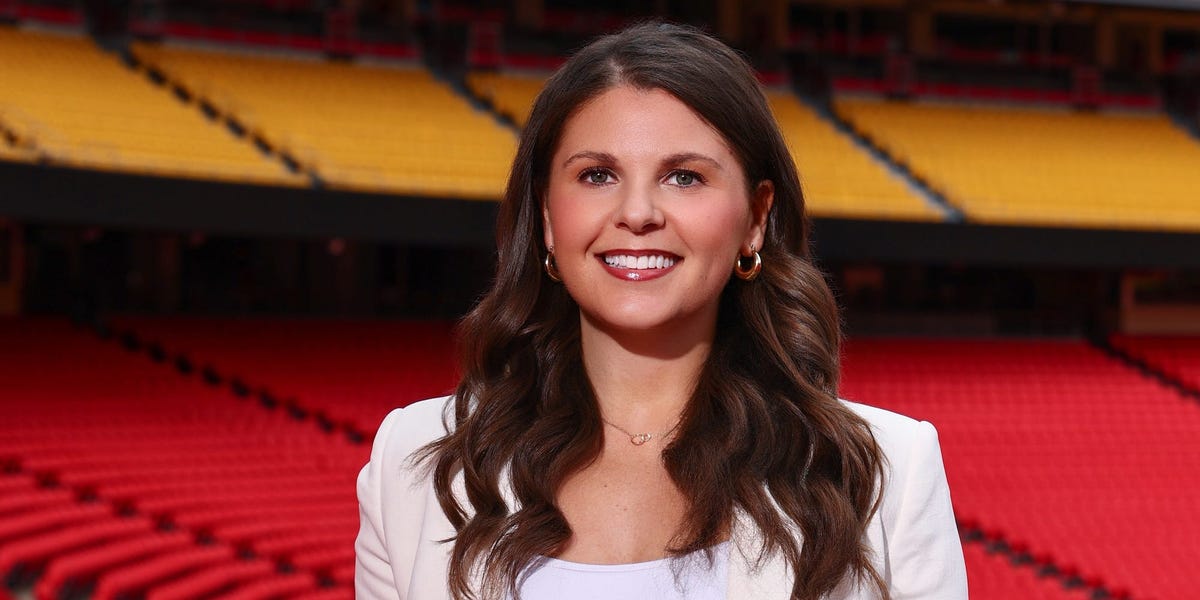
Leading the initiative is Lauren Denowitz, the Chiefs’ VP of brand marketing and football development.
“It is our goal to become a publisher that not only publishes but acts like a true publisher, where if you’re looking for food content, you don’t just have to call the classics in the food space — an Eater, what have you — you can call the Kansas City Chiefs,” Denowitz said. “We’re open for business.”
Denowitz joined a year ago and reports to CMO Lara Krug. Both worked at AB InBev, where Denowitz spearheaded a push into Hollywood-style content. She realized that 75% of the Chiefs fans lived outside the team’s home market, helped by the Taylor Swift effect and star quarterback Patrick Mahomes’ long run. The team’s local marketing efforts weren’t enough to reach all those fans, but digital content could.
“We had a diverse group of fans who had varied interests, and they were all over the country,” she said. Digital content was a way to reach people wherever they were.
Brands getting into entertainment is an established trend. For most, that means making shows or movies to reach consumers as they tune out ads. If brands make money from these projects, it’s generally through sales to distributors like streaming services.
The Chiefs’ ambitions to put ads from other brands in shows would be a stepped-up effort. If successful, it could provide a blueprint to other teams, given sports’ increased relevance to advertisers as one of the last remaining ways to reach consumers en masse.
“What the Chiefs are trying is novel in a good way, with a birthright because of the role sports play already,” said Jae Goodman, cofounder of Superconnector Studios, which helps brands like LVMH crack the entertainment code.
The Chiefs want the content to be self-funding
So far, the Chiefs’ strategy has produced “El Offseason,” a micro series for Spanish-speaking fans; “KC Wolf Jamz,” an animated series for kids; and “Secret Chiefs,” where incognito celebrity fans eat their way through tailgates.
The series live on digital platforms like YouTube and Instagram, where their target audiences spend a lot of time. All are what Denowitz calls “helmets-off” shows about the culture around sports. (The Chiefs also have an in-house production company, 65 Toss Power Trap, that’s focused on making content for die-hard fans, and Foolish Club Studios, whose mandate is to make inspiring shows and films to sell them to distributors.)
Denowitz believes that because there’s a large audience for the kind of content she’s making, she’ll be successful in selling sponsorships, brand integrations, and programmatic ads. And with marketers under the gun to show their spending has a financial impact, that revenue can help offset the Chiefs’ production costs.
“We know that marketing can be more than just a cost center,” she said. “Data collection, money, is something a CFO or president understands. If I can show that there’s true dollar ROI here, which I truly believe that there will be, that’s the North Star.”
Filmed entertainment has become a standard part of the marketing playbook as brands fight for people’s attention. It’s not hard to see a sports team extending its already deep relationships with advertisers to video ads.
The model isn’t for every brand, though. It’s possible to imagine a supermarket chain making a TV series that carries ads for its products, but it’s hard to imagine a Starbucks-produced show running ads for other brands.
“The Chiefs has a brand that is a hot sports franchise that has other brands already sponsoring the team in other ways,” said Daniel Rosenberg, a founder of Piro, a branded entertainment studio. “Now they’re just extending it to content. It’s a very sophisticated move for them.”
Brands are looking for new ways to engage fans
Denowitz knows she can’t simply show up and ask brands to spend their media dollars with the Chiefs. Some brands’ marketing operations remain siloed. Teams historically talk to a brand’s sports sponsorship team, while media buying is handled by a separate team with its own incentives. The Chiefs haven’t formally started going to market as they work on packaging their assets to sell like a publisher.
“One of the biggest challenges facing sport is that media and sponsorships are managed differently across every team, every company,” Denowitz said. “We need to educate ourselves on how to talk about what we’re creating, talk like a publisher, and then we have to go find the right people to have those publisher-like conversations with.”
The Chiefs’ timing is good, though, as those silos are starting to come down and brands are looking for new ways to connect with sports fans, Goodman said.
“Just hanging a banner is not going to cut it anymore, so the idea you can tell your story alongside the Kansas City Chiefs is very compelling to me as a marketer,” he said.
David Levy, co-CEO of Horizon Sports & Experiences, said the most important thing for ad buyers will be to see that the shows are genuinely entertaining and deliver a return on investment.
“Maybe in the beginning they’ll take a leap of faith, but over time, they’re going to want to see an ROI,” he said.
Read the full article here