




Private companies penalized for their student-loan collection tactics may be making a comeback.
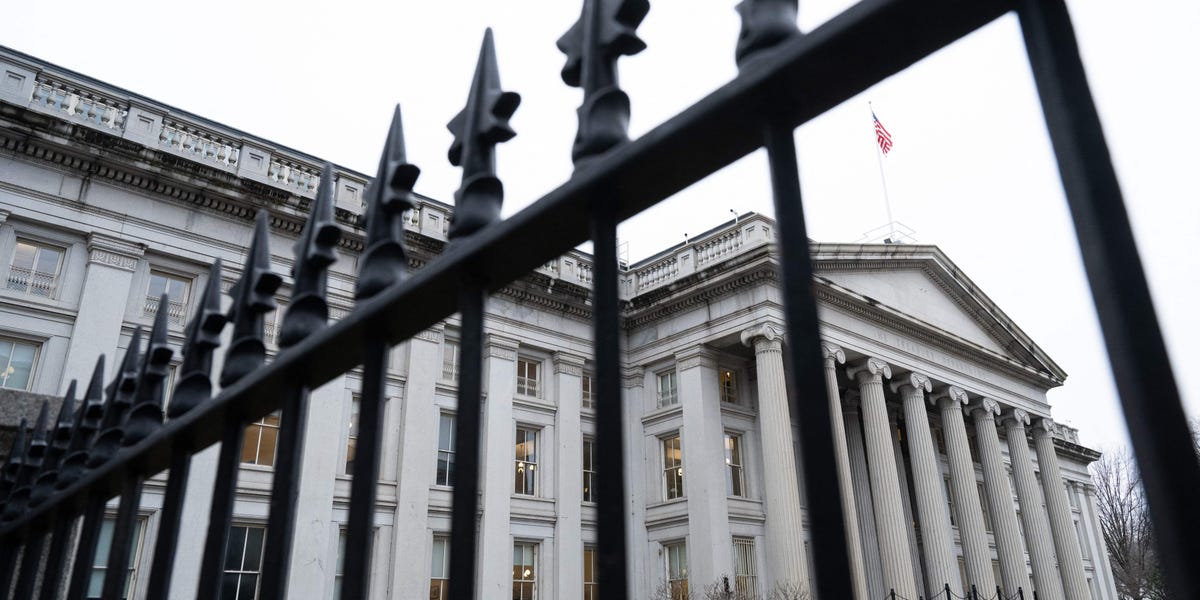
As President Donald Trump transfers federal student loans from the Department of Education to the Treasury Department, defaulted borrowers will be routed through the Treasury’s “Cross-Servicing program,” which uses private contractors to collect federal debts. Two agencies in that system, Pioneer Credit Recovery and Transworld Systems, were previously sued or fined by federal watchdogs for “misleading” or “abusive” practices.
Lawmakers and administration officials in Trump’s first term pushed to terminate contracts with private collectors over high costs and accusations of predatory behavior. Former President Joe Biden ended their contracts in 2021. Now, with student-loan defaults at a record high, education policy experts say bringing private collectors back could expose borrowers to higher collection fees, confusion, and greater risk of falling back into default.
More than 10 million student-loan borrowers are in default or delinquency, Department of Education data shows. Involuntary collections, which include wage garnishment and federal benefits seizure, have been paused since January while the department prepares for major repayment changes. The department has not specified when the pause will lift, and did not comment in time for publication on the extent to which Pioneer and Transworld would be involved in collections once they resume.
“No reasonable person would expect that these companies are going to be doing what they’re supposed to be doing and going to be effectuating borrowers’ rights,” said Bonnie Latreille, a former official in the Education Department’s Federal Student Aid office.
The Trump administration says that the Treasury is best equipped to manage collections. Treasury Secretary Scott Bessent said in a March press release that the agency has “the unique experience, the operational capability, and the financial expertise to bring long overdue financial discipline to the program and be better stewards of taxpayer dollars.”
A troubled student-loan collection history
The Consumer Financial Protection Bureau, which began supervising private collectors in 2013, found that they made various misrepresentations to defaulted borrowers, such as implying they’d be sued when that wasn’t certain, and pushing more expensive repayment pathways.
Lawmakers later said private collection agencies “receive more than ten times as much” money for steering borrowers into their preferred repayment option, despite high redefault rates. “The Department is rewarding these agencies for behaviors that work in opposition to the prospect of student borrower success,” they said.
In 2017, the CFPB sued Pioneer for engaging in “deceptive” and “abusive” practices and violating consumer protection laws, including by steering borrowers into costly forbearances instead of more favorable income-driven repayment plans. The court ordered the company in 2024 to pay $100 million to affected borrowers. Also that year, CFPB fined Transworld $2.5 million for filing debt collection lawsuits without proof that the debt was owed.
Transworld said at the time that it settled with the CFPB to avoid costly litigation. Navient, which oversaw Pioneer, denied any wrongdoing.
Because the Treasury already uses these companies to collect other payments, like taxes, using them is “the most straightforward way” to resume collections on defaulted student loans, said Colleen Campbell, former executive director of Federal Student Aid’s loan portfolio management office under Biden. Simplicity for the administration doesn’t necessarily mean clarity for borrowers.
“It just gets a little bit more complicated when there are more entities and agencies involved in what happens with the borrower,” Campbell said.
Collecting on defaulted student loans requires specific knowledge of student-loan borrowers and policy, said Sara Partridge, the associate director of higher education at the left-leaning think tank the Center for American Progress. There’s no evidence the Treasury has the necessary expertise to oversee these agencies, she said.
With private collectors returning, borrowers could face high collection fees, a harder time getting complaints resolved, and potential redefault, higher education policy experts said.
Campbell added that private companies were previously criticized for their variable fee structures. For example, the conservative think tank American Enterprise Institute said in a 2018 report that “harsher penalties are imposed on borrowers who quickly repay their loans in full after defaulting than on those who engage in a lengthy, bureaucratic ‘rehabilitation’ process but make no progress in paying down their debts.”
Another concern is potentially poor coordination between agencies as the transfer happens, Campbell said.
“What you don’t want is for somebody to go through all of the steps of getting out of default, only to have them feeling like they’re lost in the process yet again because of the handoffs that have to happen between vendors,” Campbell said.
Partridge added that the shift could make it harder for borrowers to get repayment help because two agencies would be responsible for managing accounts.
The Department of Education did not specify a timeline for the transfer to the Treasury, which will begin with defaulted borrowers before expanding to the broader federal loan portfolio. Undersecretary Nicholas Kent said during a fireside chat in April that it’s “undeniable” that the Treasury is well-equipped to manage federal student loans.
“We want to make sure that we’re developing best practices, along with our Treasury colleagues, to be able to service that debt in a much more effective way than we ever have,” Kent said.
Read the full article here