





I’ve never been much of a numbers guy. Until recently, my approach to money was what I’d call vibes-based accounting: save a bit each month, contribute to my 401(k), try to cook at home instead of ordering in, and occasionally ignore my better judgment in favor of martinis and Cos shirts.
Then I had a baby.
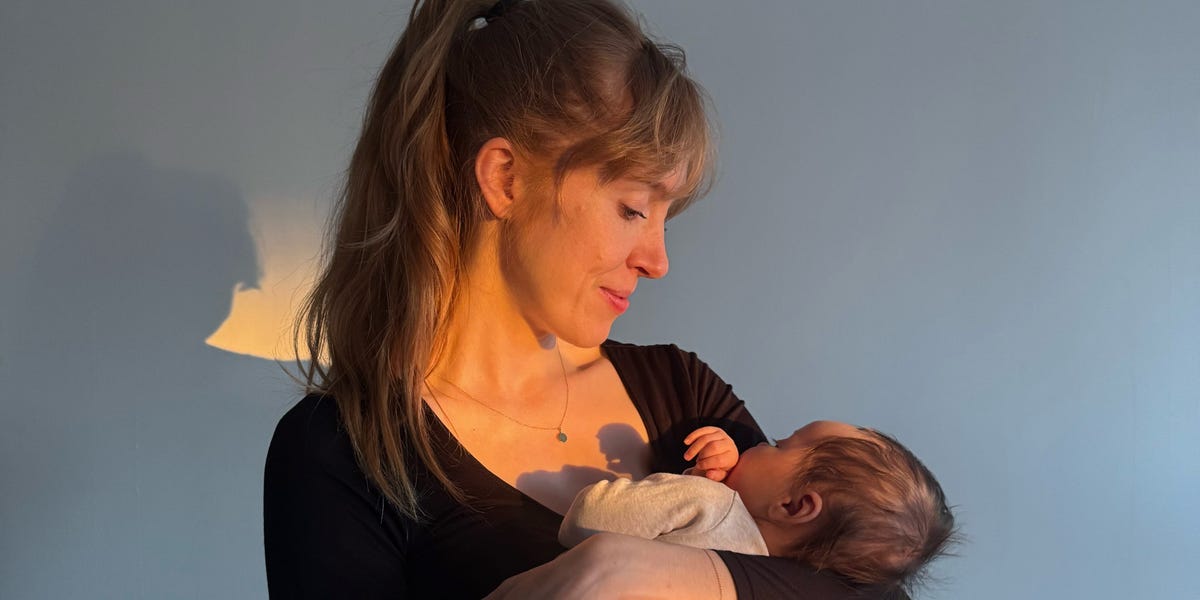
Since my daughter was born in January, every dollar feels higher-stakes. A $43 Thai takeout on Uber Eats? That’s 200 diapers or several cans of formula. Or money that should probably be going into some kind of account because apparently responsible parents are constantly opening accounts.
I’m also staring down a roughly $40,000 hospital bill for a relatively uncomplicated birth and an eyewatering monthly sum for New York City daycare. Surely a Trump Account should rank lower on the list of priorities.
This month, my husband and I resolved to do some research because Trump Accounts — government-backed investment accounts seeded with $1,000 for eligible babies — launch on July 4.
After calling some experts, we decided to go for it, and today we downloaded the glossy new gold-themed Trump Accounts app. Here’s how it worked.
What is a Trump Account?
The big selling point is that eligible children born between 2025 and 2028 receive $1,000 from the federal government in an investment account that grows over time.
Families can contribute additional money, and outside donors — including employers and philanthropies — may contribute too.
The accounts aren’t quite like 529 college savings plans. They’re more flexible, but also less tax-advantaged in some ways. The money can’t be touched until the child turns 18. The child — not the parent — ultimately controls the money. And unlike emergency savings, the funds are locked away during the years when many families arguably need money most.
Why I’m opening one, but not contributing my own money just yet
My husband and I are both 34. We have student debt and almost no savings. We don’t have family money or trust funds. Like a lot of millennials, we’re trying to build stability while also raising a child in an increasingly unforgiving economy.
So, before signing up, I wanted to know whether opening a Trump Account was actually financially responsible.
Ray Boshara, a senior policy advisor at the Aspen Institute Financial Security Program who has spent decades researching child savings accounts, argued the value of these accounts may not just be financial.
“We have a lot of research evidence showing that when kids have an asset in their name for their future, they develop what’s called a college-bound identity,” Boshara, whose 2-week-old grandson is newly eligible for a Trump Account himself, said. “They have a future orientation.”
Research on child savings accounts has found that even relatively small amounts of money earmarked for a child’s future can influence educational expectations and long-term planning.
So, while $1,000 is not going to transform my daughter’s financial future, Boshara said the idea that she could grow up knowing money had been set aside in her name — however modest — could have meaningful, intangible benefits.
Shane Sideris, a financial advisor at Hello Nectarine, told me eligible families should probably claim the government’s free $1,000 contribution. But beyond that, he said parents like us should prioritize debt repayment, emergency savings, and retirement first.
“As a parent, you should always put your own oxygen mask on first,” he told me. “The most important thing you can do for your child is make sure you’re never a financial burden to them.”
I downloaded the glossy, gold-themed app on launch day
The Trump Accounts app hit the Apple App Store on May 28 with the tagline: “Invest in your child’s future.”
The vibe is luxury-coded — serif fonts and gold accents throughout. A notification about data sharing appears under an illustration of a gold-embossed envelope that’s slightly open. The prompt to turn on notifications comes with a gleaming gold bell.
The sign-up page guides you through a hypothetical child’s investment growth. First, a smiling 1-year-old appears next to “$1,000.” Then the app flashes forward to a 5-year-old with “$4,800,” a teenager with “$68,800,” and finally an 18-year-old with “$112,000.” (A footnote explains those projections assume parents contribute $50 a month for five years, then $5,000 annually for the next 13.)
Once I clicked through, another gold bell appeared on the screen. “Stay tuned for an invite,” the app told me. “We’re rolling out Trump Accounts in waves.”
To actually open the account, I was redirected to the IRS Trump Accounts portal and prompted to log in through ID.me, the identity verification platform used by the IRS and other government agencies.
The verification process was similar to setting up a banking app. I uploaded photos of my driver’s license, then recorded a short live video selfie to confirm my identity.
After that, I entered my own information — name, address, and Social Security number — followed by my daughter’s details.
The final screen asked whether I wanted to opt into the pilot program providing eligible children with the government’s $1,000 contribution. I hit yes. (That was the whole reason I was there.)
A green confirmation bar appeared: “Your application was submitted.”
How I feel now that I’ve signed up
I still don’t know whether we’ll contribute beyond the initial $1,000.
Right now, our priorities are daycare, debt, and building the kind of emergency savings both experts told me matters more — at least 3 to 12 months of living expenses that we don’t dip into.
Still, I’m glad I opened the account, not because I think it will magically secure my daughter’s financial future, but because becoming a parent has thrown my vibes-based accounting into sharp relief. Maybe I could be a little more deliberate about dollars.
And if nothing else, I figured I probably shouldn’t turn down free money from the government while paying New York City daycare prices.
Read the full article here