



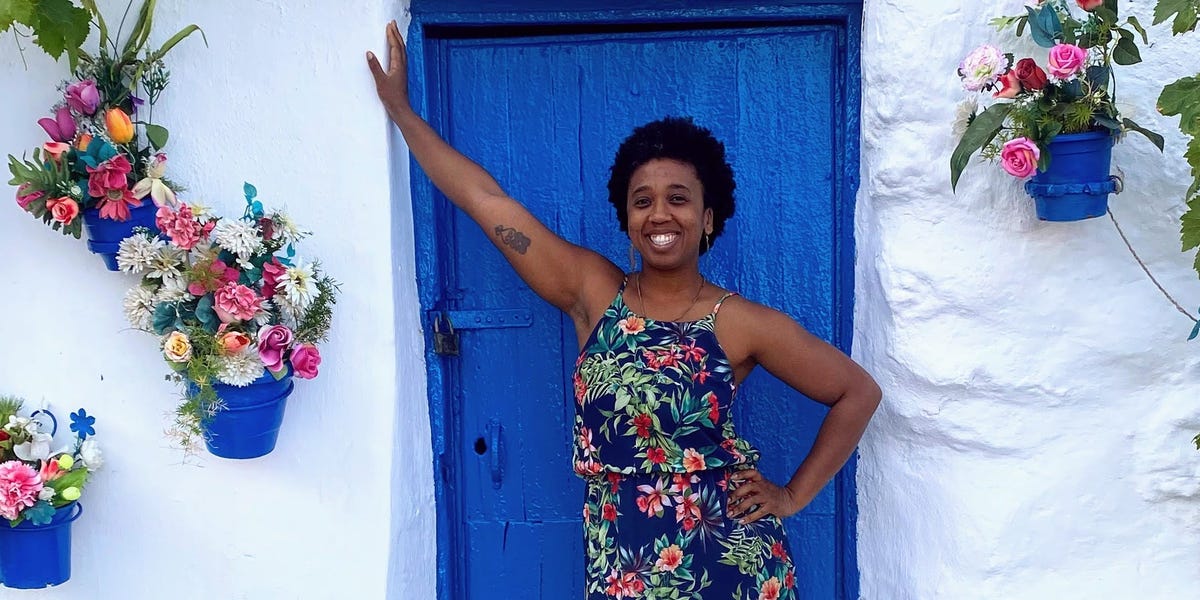
When I moved from California to Spain in 2019, I knew my life would change — but I didn’t expect how deeply it would shift the way I moved through the world.
During my first few weeks as a language assistant, a Spanish teacher I worked with invited me for a drink in Cartagena’s city center on a Thursday afternoon. As we walked through the marble streets, I was surprised to see the plaza filled with people.
Beyond restaurants and bars being packed, the streets themselves were buzzing with couples on benches, families walking with no particular destination, and friends lingering at terrace tables. It felt like everyone had gathered for an event in the middle of a workday, but there wasn’t one.
This was just how people often spent their free time — outside, together, and unhurried. Even years later, there’s still so much of this local lifestyle I’m happily learning to embrace.
It took me a while to get used to having more slow, meaningful meals
In the US, workday lunches are typically a quick affair. It’s common for people to head out for a quick, 30-minute meal or just scarf down something simple, like a sandwich and chips, at their desk.
Lunchtime in Spain is far different, and one of the first times I noticed was while I was working at an elementary school. From 11:30 a.m. to noon, during the kids’ recess, I’d head to the staff room with my Tupperware of pasta for lunch.
One day, a fellow teacher stared at me with the most confused look, then calmly asked if I was planning to eat everything I had brought. I was taken aback, since I wasn’t sure what else I could’ve packed to tide me over until school ended at 2 p.m.
What I didn’t yet know was that recess is actually a time for teachers to have a light snack, or “aperitivo.” For my colleagues, lunch is later, starting after work at 2 p.m., so it’s not rushed — sometimes, it stretches until 4.
After shifting my eating schedule, I realized again just how different this meal is here when my friend invited me over for lunch.
When I arrived, her table was lined with small bowls of olives, bread, and olive oil. After snacking, our main course was served: yellow rice mixed with vegetables, similar to a paella.
The food was delicious, but the most memorable part of the meal was how we spent the time together. Our focus wasn’t on eating, and there was no sense of urgency to get back to work.
Although food was the reason we gathered, the company, the conversations, and the laughter truly completed the meal and made time slow down. This was the most present I had ever felt at a meal.
Now, when I have lunch with my Spanish partner, it’s an intentional break in the day that lasts about two hours from prep to finish.
I’ll often put together a salad with seasonal fruits and vegetables that’s drizzled with top-notch extra-virgin olive oil. My partner usually cooks something garlic-rich, like pollo al ajillo (garlic chicken).
Taking time to prepare the food helps us slow down and use the meal to connect with each other and disconnect from the busyness of the day.
Dinner in Spain carries the same intentionality as lunch — slow, social, and designed to foster genuine connections. Whenever I dine out with friends, time becomes irrelevant.
Spanish restaurants typically start filling up around 9:30 p.m., and the tradition of “sobremesa” kicks in — people linger at the table long after the meal ends, enjoying drinks, conversation, and connection.
Vacations have also become a priority and a typical part of life
In Spain, vacation time feels like an essential part of the year. Part of it is that, generally, full-time workers here are legally entitled to at least 30 calendar days of paid leave.
In the US, by contrast, there’s no federally mandated minimum, so PTO varies widely. The average private-sector employee receives about 11 paid vacation days (plus several paid sick days) after one year on the job.
While living in the US, extra paid time off was something I had to earn after hours and hours of work. Although I was adamant about taking all of my vacation days, not everyone I worked with did the same.
Meanwhile, during late July and August, particularly in the region of Andalucía where I live, it’s not uncommon to walk through the city and find several shops and stores closed. Many people are simply on vacation, often for two- or three-week stretches.
When the city empties, it reminds me to unplug too. Whether it’s spending hours at the beach, taking a trip, or allowing myself a day without plans, Spain’s vacation culture has taught me to slow down, cherish downtime, and focus on being present rather than busy.
All in all, Spain’s slow pace has helped my life feel richer
Living in Spain has made me appreciate the simple moments in life. Meals are less about calories and more about connection. Vacations aren’t a break from life but a vital part of it.
Some of my fondest memories aren’t of wild nights out. Instead, the moments that end my day with a smile are memories of hiking with friends, dancing in the plaza with strangers, and sitting at a table long after the plates and glasses are empty.
The slower rhythm embraced by locals reminds me daily that joy comes from relationships and presence, not hustle. For me, the richness of life in Spain is in its simplicity.
Read the full article here