



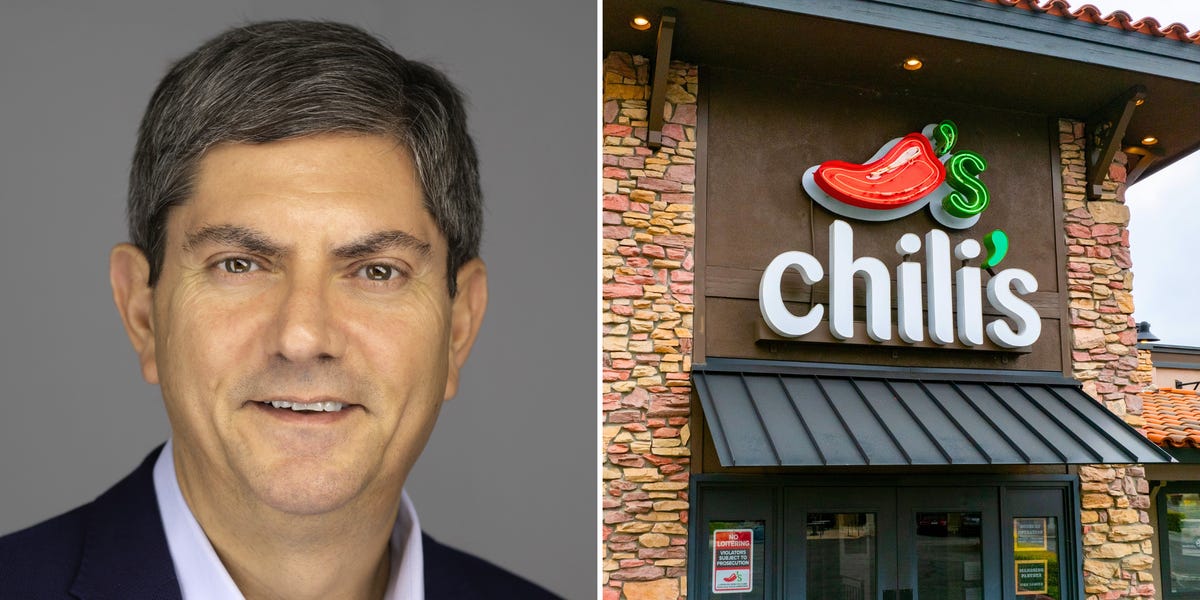
Chili’s has pulled off one of the biggest turnarounds in casual dining, and CEO Kevin Hochman says the strategy behind it isn’t complicated.
The chain has had steady sales growth over the past four years since Hochman took over as president of parent company Brinker International, which also owns the Italian casual-dining chain Maggiano’s.
“It’s two things,” Hochman told Business Insider of the company’s growth. “We have a saying here: marketing brings them in, and ops brings them back.”
In other words, flashy ads and viral menu items like the chain’s cheese-pulling mozzarella sticks and Triple Dipper appetizer combo, which accounted for 14% of Chili’s total sales in early 2025, are a good way to bring customers through the door.
Hochman said these kinds of organic trends are a key part of the brand’s marketing engine, noting that viral posts from microinfluencers and content creators can often drive new customers to try the items themselves.
“The marketing has to be exciting,” Hochman said. “And then the operators are in charge of creating that experience.”
Focusing on the fundamentals
Hocham isn’t focused on chasing gimmicks like drone delivery, which chains like Dave’s Hot Chicken and Chipotle have been experimenting with in recent months, Restaurant Business reported. Instead, Hochman said his focus is on the fundamentals that make the in-restaurant experience attractive to new and returning customers.
That includes food quality, speedy service, clean restaurants, and a seamless checkout experience.
Hochman said some of those changes included a new seasoning shaker with larger holes to cut down on the time it takes to season fries, simplifying the menu to improve consistency, and using iPads to improve order accuracy and speed up service.
“These are the things nobody talks about,” he said. “But the everyday stuff, that makes us better and better, that’s kind of been our secret sauce.”
Consistent execution at the operational level means food customers receive in restaurants matches what they see in ads and on social media, he said.
“When you see the burger or chicken sandwich for $10.99 on the screen, and the fries are crisp and hot and steaming with seasoning, and then you come in, and it looks exactly like that… you’re like, ‘Wow, that was a great value. I’m going to come back,'” he said.
Defying industry trends
In its most recent earnings report released on April 29, Chili’s said comparable restaurant sales rose 4% in Q3, compared to the same quarter in 2025, building on a 31% jump a year earlier and extending its streak to 20 consecutive quarters of growth.
That performance stands in contrast to much of the casual-dining sector over the past year, though some chains that previously struggled are now beginning to show signs of a turnaround of their own.
For example, Applebee’s reported a 0.4% decline in comparable domestic same-store sales for Q4, but sales rose 1.3% for the year.
Red Robin also reported a 0.3% year-over-year decrease in comparable restaurant revenue in 2025. However, the chain’s adjusted earnings before interest, taxes, depreciation, and amortization were up 53% from fiscal year 2024.
Many competitors have leaned on heavy discounting, increased menu innovation, or buzzy deals like Red Lobster’s Endless Shrimp or Lobsterfest to drive traffic.
Some of that strategy is working — Red Lobster’s CEO, Damola Adamolekun, reported in February 2026 that sales are up 10% year over year after the chain declared bankruptcy in 2024.
Taking on its rivals in the value wars
In its fight to retain loyal customers, Chili’s has also encouraged diners to compare its products directly with its competitors.
At a pop-up event in April, the chain asked attendees to compare its crispy chicken sandwich — now available in more flavors and as part of its $10.99 3-For-Me meal — with a “fast food rival,” identifiable as McDonald’s.
“If you go to a competitor and the same burger is a dollar less than ours, but it doesn’t look like it did in the ad, it doesn’t matter whether it was a dollar less,” Hochman told Business Insider. “In my mind, that’s money I should have spent somewhere else.”
“If we can have a superior product that tastes great and is a great value, people are going to come,” he added. “And then if we can execute it, they’re going to come back.”
Read the full article here