





The US has been using critical munitions at such a high rate against Iran that it could face risk in a future war — especially with China, defense experts warned.
US forces “heavily used” seven key munitions in the 39 days of its air and missile campaign against Iran before a fragile ceasefire went into effect, two warfare experts at the Center for Strategic and International Studies said in a new report.
The US military “has enough missiles to continue fighting this war under any plausible scenario,” they wrote, looking at munition stockpiles. “The risk — which will persist for many years — lies in future wars.”
The problem is how many munitions have been used and how long it takes to replace them.
“These missiles will also be critical for a potential Western Pacific conflict,” CSIS researchers Mark Cancian and Chris Park said.
“Even before the Iran war, stockpiles were deemed insufficient for a peer competitor fight. That shortfall is now even more acute, and building stockpiles to levels adequate for a war with China will take additional time.”
Reduced stockpiles also affect supplies to Ukraine and allies, and ultimately, “the United States will compete with those countries that also want to replenish and expand inventories,” they said.
Depleted stockpiles
The seven key munitions, long-range ground attack munitions or air and missile defense munitions, “have been highly effective in fighting this war, and expenditures have accordingly been high,” the experts said. The report found that the US may have expended more than half of its prewar inventories of four of the munitions.
On defense, the US had around 360 Terminal High Altitude Area Defense, or THAAD, interceptors before the war, depleted by previous conflicts, and used about 190 to 290 during it, the researchers estimated, relying on publicly available information, including Pentagon budget documents.
PAC-3 interceptors for the popular Patriot air defense system have also been used at a high rate, with the US starting the war with around 2,330 and using up to 1,430, though it may still have older versions.
The interceptor missiles have seen surging demand globally, and there were concerns about their stocks even before the war. Ukraine has already warned of critical shortages and raised concerns about how the US use against Iran will affect its supply.
The US had more than 400 warship-launched SM-3 interceptor missiles before the war and has used between 130 and 250. Use of the SM-6 has been lower, with up to 370 used out of about 1,160.
For offensive strikes, the US had around 90 Precision Strike Missiles (PrSMs) before the war and has used an estimated 40 to 70. It’s a newer munition that saw its first combat use in this conflict.
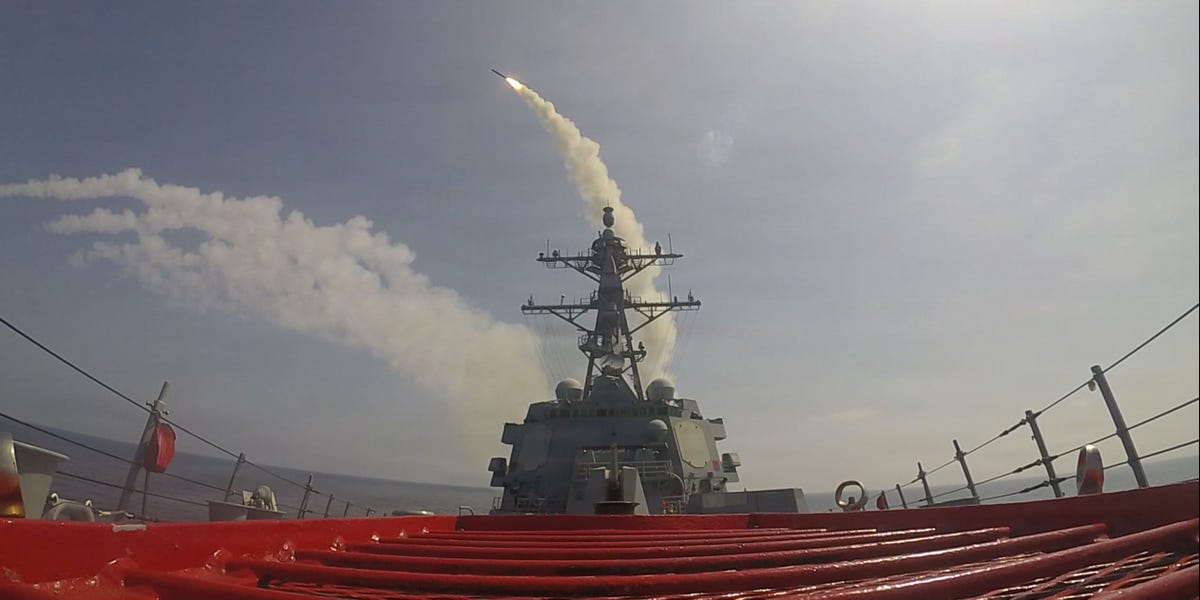
Another munition is the Tomahawk land-attack cruise missile, for which the report estimated the US had more than 3,000 in its inventory before the Iran war and used more than 850 in the conflict.
And the US had more than 4,000 Joint Air-to-Surface Standoff Missiles (JASSMs), a long-range cruise missile, in its inventory before the war and has used around 1,000, the report said.
Replacing them is slow
The US has been moving to boost production. The White House in March announced plans to quadruple the output of some key weapons, and manufacturers have outlined increases.
Lockheed Martin said it will raise THAAD interceptor production capacity to 400 a year from 96 over the next seven years, and Tomahawk maker RTX said it will increase annual production to more than 1,000 and boost SM-6 production to more than 500 a year. There are also plans to increase production of Patriot PAC-3 interceptors by 2030.
Lockheed Martin has also increased PrSM production and has agreed to quadruple production.
The CSIS report warned that “until this increased production becomes available, the United States will face choices on allocating production to meet demands.”
Much of that expansion depends on new funding from Congress, and production will still take time.
Based on the five-year average production rates, the report presented estimates for how long it would take to replace the weapons. For JASSMs, the researchers estimated 48 months; 42 months for PAC-3s; and 53 months for THAAD. The shortest was Tomahawks at 47 months.
“Many of these systems are constrained by production capacity, so manufacturing lead time is even longer,” they said.
Franz-Stefan Gady, a defense expert at the Center for a New American Security, also warned on Wednesday that it would take four to five years to replenish US precision munition stockpiles. Others have likewise been sounding the alarms, many long before the war even started.
The US could be vulnerable in future wars
The US still has enough munitions to sustain operations against Iran, the experts said.
But many of the munitions being depleted are critical for a fight against a peer adversary like China, especially for countering ballistic missiles, where the US has few alternatives.
For the seven key munitions assessed, “large numbers are also needed for a future conflict in the Western Pacific. Many allies and partners use these systems as well, creating competition for output,” the researchers said.
In a war with China, the US would need sufficient long-range strike to overwhelm and penetrate Chinese defenses, as well as significant defenses to counter its substantial missile arsenal.
This assessment, like others before it, said that a high-intensity fight with China could consume US munitions even faster than the war with Iran.
The US military can shift assets back to the Pacific after the Iran war and rebuild inventories, “but restoring depleted stockpiles and then achieving the desired inventory levels will take many years.”
“Prewar inventories were already insufficient,” the CSIS report said. “The levels today will constrain US operations should a future conflict arise.”
Read the full article here