




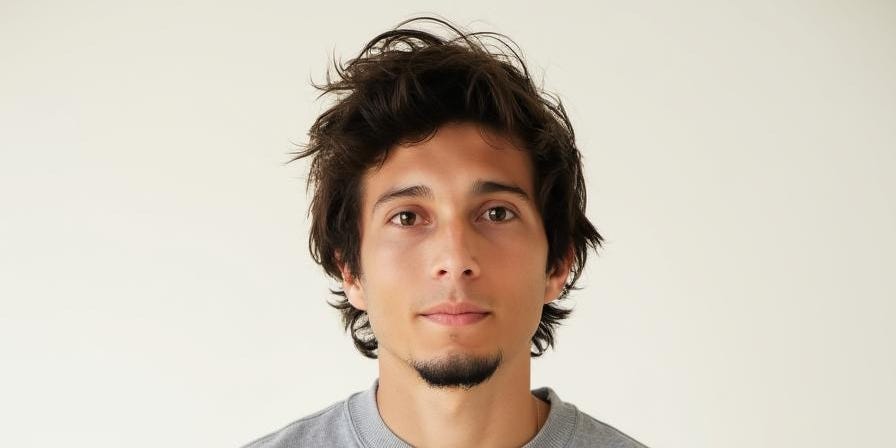
This as-told-to essay is based on a conversation with Jake Castillo, the 31-year-old CMO and cofounder of Cal AI, based in Los Angeles. Cal AI is an AI-native app co-founded by a tiny team of Castillo and three others. The lean team quickly scaled to millions in monthly revenue, leading to its acquisition by MyFitnessPal less than two years after launch. His words have been edited for length and clarity.
Imagine holding your breath for two years, and then finally exhaling. That’s how I felt when the app I cofounded in 2024 was acquired by MyFitnessPal at the end of last year.
Cal AI, our AI calorie tracking app, launched at the end of April 2024, and I joined as one of the cofounders at the beginning of May. There were four of us on the founding team, and in the early days, we wanted to succeed more than we wanted to breathe.
In the AI era, anyone can build a product, so our execution speed became everything to us. We didn’t need millions of dollars to grow a business that makes millions; we just needed to be very scrappy and trust our instincts. That took us a long way.
Influencer marketing was our fastest path to growth
We decided to work with health and fitness influencers on social media as our main marketing strategy since that was an immediate distribution channel.
They were already creating videos on what they eat in a day, how to lose weight, and low-calorie snack-type content. It made for a super-easy integration by showing how CalAI was used in those videos and guaranteed us immediate views.
Influencers get free access to the app. Early on, we didn’t operate off a fixed budget. Instead, we reinvested aggressively into influencer deals as we saw them working. If we had $1,000 available and a strong opportunity, we’d allocate it there. We prioritized putting capital into channels that were directly driving growth.
We also tried using non-influencer user-generated content, which is people posting about our app without having an existing audience. We had to rely on the algorithm to get views, so we quickly moved away from focusing on that strategy.
Once we realized the influencer strategy we were implementing worked well for this product and we were seeing growth, we trusted our guts and doubled down.
We went from one influencer to onboarding 20 a week
At the start, we had one influencer partnership, then three. Then once we saw the direct effect it was having on our business, we set out a goal to sign 10 a week, which doesn’t sound like much, but it was crazy.
I was on the phone all day, every day, and soon we started to reach our goal of 10 influencers a week. At this point, we have over 160 influencers signed, but that number fluctuates every day.
Read more from our Tiny Teams series for an inside look at how small teams use AI to do big things
Speed is our biggest advantage in the AI era
I’ve heard people say the only differentiator between your product and other apps now is taste. I actually disagree with that. I think AI can do a lot of the taste-making for you. I really believe the only moat we can create is speed.
AI can increasingly guide what to build, what to cut, and even how things should look. Which is why we believe speed is the more durable advantage: how quickly you can ship, learn, and iterate.
We tried not to take any payouts for the first year because we wanted to invest everything back into the business. This allowed us to hire more influencers and keep moving quickly on our marketing strategy to get ahead of the competition.
If similar apps are always chasing us, our strategies, and our features, they will keep chasing us if we keep our pace. I think it just comes down to that.
Trust your instincts because the simplest strategy is usually the best one
A lot of times, people try to overcomplicate things, and often, the simplest solution or strategy is the best and fastest approach.
Whenever a new idea comes up, we always think about what it’s going to complicate. We think about this on both the marketing and product side, and if the answer is yes, it would complicate things; we would usually not pursue it.
A lot of our decision-making comes down to trusting our gut and intuition, too. That’s one thing I definitely want to shout out my cofounder, Zach, for. He’s so confident in his gut. If he’s got a hunch, he’s like, “Yeah, let’s run with it.”
We’ve scaled our team but have kept the same lean mindset
The team is larger now after the acquisition, but we still don’t want to get unnecessarily bloated, and we try to keep our management structure pretty flat and super high agency.
We want everyone to feel like they can be a decision-maker and have an impact, and that there’s no bureaucracy to navigate to get things done. The second too much bureaucracy enters, we’re going to slow down, and if speed is our only moat, slowing down is not an option.
Some of our first hires are now in leadership positions, which has been great. I no longer have to wear all the hats of the accountant, the legal representative, the marketer, and the COO. We now get to delegate those roles and responsibilities.
The MyFitnessPal acquisition taught me to always keep the door open
The MyFitnessPal acquisition talks started a while ago, and continued off and on until around the end of last year, when it really started to pick up steam. We agreed to terms, completed due diligence, and ultimately closed the deal in December of last year, which was surreal.
Even if a conversation doesn’t seem like it’s going anywhere, you should always leave the door open — you never know how it might evolve. If we had closed that door with MyFitnessPal when the deal made less sense, we might have missed out on this opportunity, but we kept it open.
Do you have a similar story to share? Contact this reporter, Agnes Applegate, at [email protected].
Read the full article here