



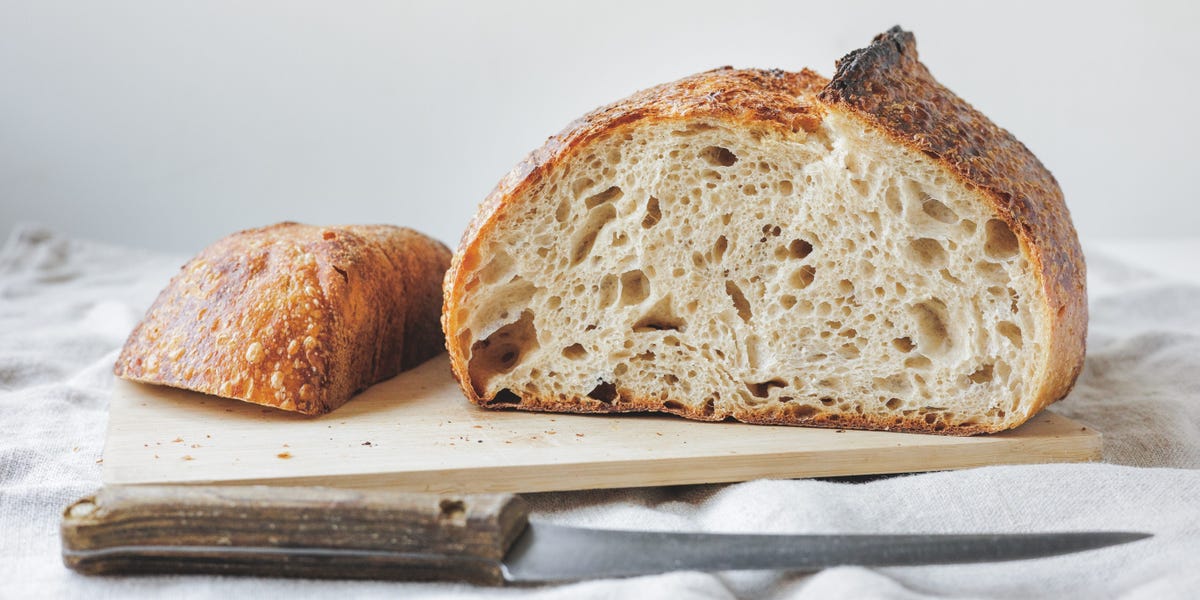
Seven years ago, I started making my own sourdough bread.
In addition to being a relaxing hobby that’s taught me the importance of patience, making bread also keeps me from spending ridiculous amounts of money on loaves from the grocery store.
However, baking sourdough is pretty different from other types of bread. This is partially because sourdough requires a starter — a fermented mixture of flour and water that creates its own yeast and bacteria.
The process of creating a starter, and eventually bread, isn’t foolproof and can take beginners a little while to grasp.
Here are five things I wish I’d known before making sourdough bread for the first time.
A sourdough starter needs to be fed like a pet
To keep a sourdough starter active, it has to be fed regularly using flour and water. However, I didn’t realize this until I inherited my first one.
How often it’s fed depends on where it’s stored. For example, if I leave the starter on the counter, I feed it once every 12 to 24 hours.
When I keep it in the refrigerator, however, I can feed it less, typically about once a week. This schedule also varies depending on how often I bake.
The starter can be preserved in a few different ways
When I first started making sourdough, I didn’t know I could store my starter for a while without feeding it.
Turns out, it can be left in the freezer for up to a year. Another more reliable, long-term storage option is to dehydrate the sourdough starter.
This would’ve been good to know when I let mine go bad because I went on a work trip and couldn’t find a friend to feed it for me.
A starter can be brought back to life
Luckily, even if the starter looks grim, it’s still possible to bring it back to life.
To do this, I feed mine filtered water and flour and wait a few days to see if bubbles start to form. It may take a while to get the cultures moving again, especially if the starter has been freeze-dried or dehydrated.
When it bubbles up and doubles in size, I know I have a pillowy, healthy starter to resume baking with.
Discard doesn’t actually need to be discarded
I didn’t realize until far into the process that sourdough discard can be used for other recipes. I figured the term indicated the runoff’s value.
However, it can either be composted or used in other recipes like flatbreads, pastries, rolls, waffles, muffins, and more.
When making sourdough, patience is key
Throughout the process, it’s important to remember that fermentation takes time. Living cultures need the ideal environment to engage, grow, and develop a strong and active formula.
My sourdough hobby definitely hasn’t satisfied any need for instant gratification. But it has tested my patience, indulged my mad-scientist alter ego, and encouraged a certain level of imagination in the kitchen.
This story was originally published on March 13, 2025, and most recently updated on March 9, 2026.
Read the full article here