





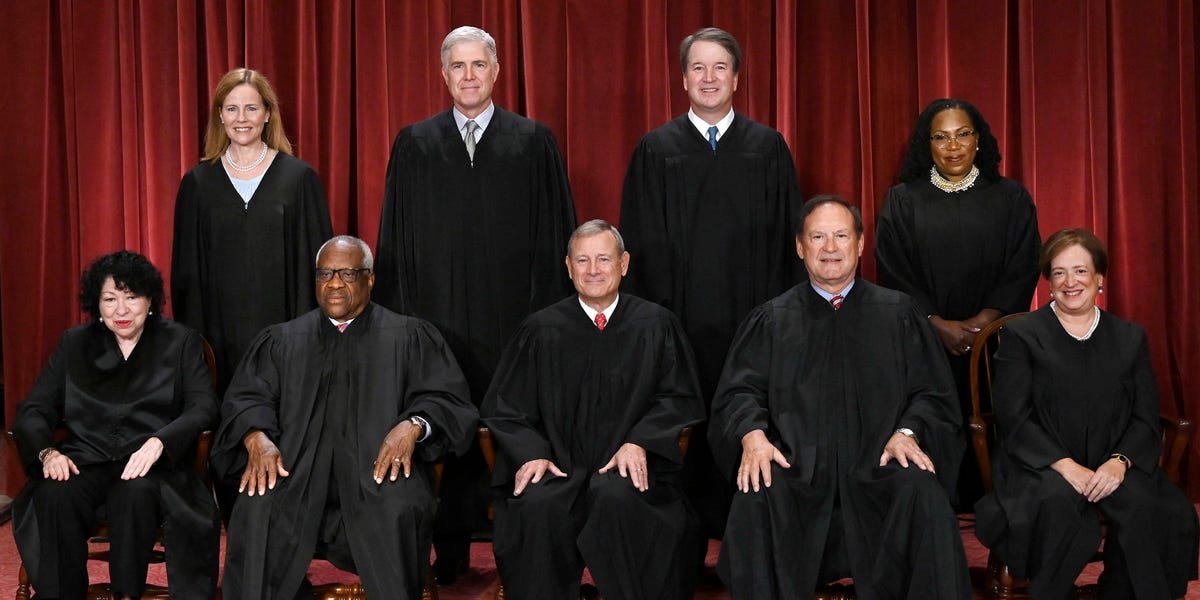
Financial disclosure laws apply to justices, but with some caveats. All federal employees (including judges) have to disclose “income, dividends, most capital gains, significant debts, the purchase or sale of land, and gifts, among other things,” per the Brennan Center.
However, Supreme Court justices aren’t beholden to the code of conduct for other federal judges, the “Judicial Conference’s interpretations of the ethics law.”
In 1991, the justices agreed to follow these lower-court rules, but it was voluntary. Then, in 2023, the Court adopted its own formal Code of Conduct for Justices, but it did not include a mechanism for enforcement.
This means it’s a bit of a legal gray area if they don’t follow the code. On occasion, justices have been called out for being less than forthcoming with gifts and perks they receive.
For example, in 2024, Justice Clarence Thomas faced ethics questions for failing to disclose luxury trips funded by billionaire GOP donor Harlan Crow, including travel on his private jet.
In response, Thomas said he thought he didn’t need to report the trips because he believed they were considered “personal hospitality” as he was friends with Crow. He later said he would comply with newer, stricter guidelines about personal hospitality.
He’s not the only one who’s received perks. In 2024, Justice Ketanji Brown Jackson received Beyoncé tickets worth almost $4,000. Jackson reported the tickets in her financial disclosure form.
Read the full article here