




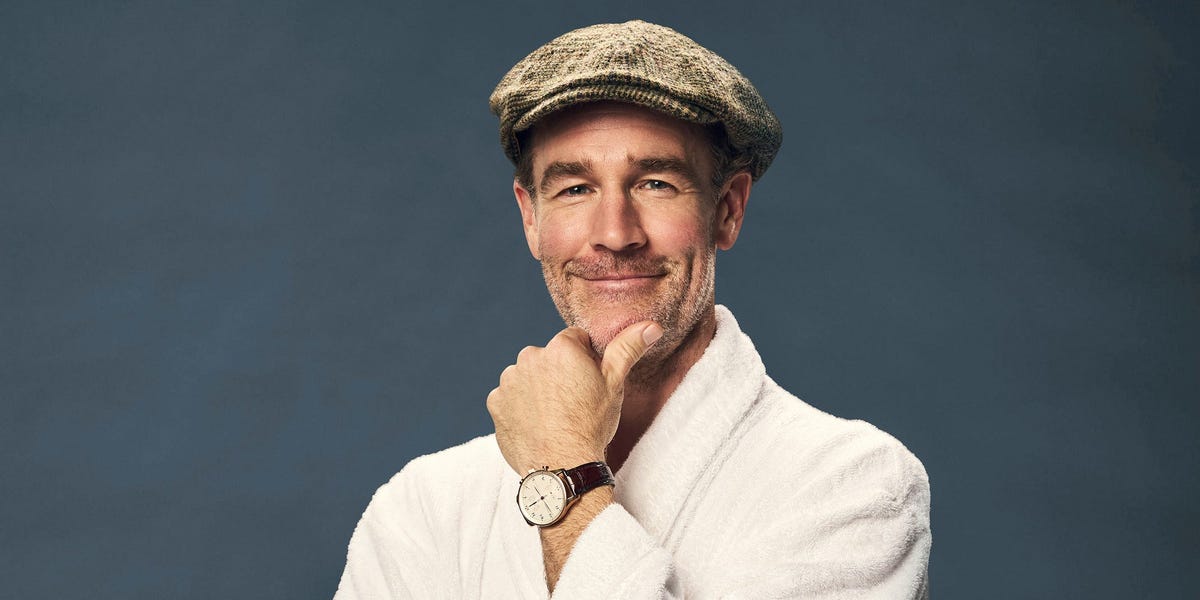
James Van Der Beek has died at 48.
In 2023, the “Dawson’s Creek” star learned he had stage 3 colorectal cancer at 46. He publicly shared his diagnosis a year later.
Van Der Beek’s death comes weeks after a report revealed that colon cancer has become the leading cause of cancer death in people under 50. In 2020, Chadwick Boseman also died from colorectal cancer, at 43, and Catherine O’Hara, who died from a pulmonary embolism last week at 71, had also been diagnosed with rectal cancer.
After announcing his diagnosis, Van Der Beek spoke about the importance of getting screened, as rates continue to rise.
Symptoms are often subtle
Some of the most common symptoms of colon cancer include rectal bleeding, changes in bowel movements, bloating, and abdominal pain.
However, they can be subtle, as was the case with Van Der Beek. “It didn’t feel like a real symptom of anything,” he previously told Business Insider. “It wasn’t anything that made me rush off to go get screened.”
Because colon cancer symptoms overlap with GI issues like IBS or hemorrhoids, some people also get misdiagnosed for years — especially if they’re young and fit.
Joshua Demb, a researcher who studies early-onset colon cancer and is an assistant professor at the University of California, San Diego, previously told Business Insider that the key is noticing which symptoms feel unusual for you. Even slight stomach pain or bloating can be worth checking out if you otherwise never experience it.
Healthy lifestyles don’t guarantee prevention
While exercising and cutting back on ultra-processed foods are some of the best ways to reduce your overall cancer risk, they’re not guaranteed to prevent colon cancer.
Van Der Beek said his diagnosis shocked him because he was “doing all the biohacking things,” including eating a balanced diet. “I was doing sauna, cold plunge, weightlifting, Pilates,” he said. “I would dance and also do football training.”
Colon cancer patients who previously spoke to Business Insider expressed similar surprise at their diagnoses, including a personal trainer who ate clean and a marathon runner. It makes it all the more prudent not to assume that an active lifestyle, whole foods-focused diet, and lack of severe symptoms mean you’re in the clear.
Get screened if you notice changes
After his diagnosis, Van Der Beek became a spokesperson for Guardant Health to promote the Shield blood test, a less invasive alternative to getting a colonoscopy.
From his own colonoscopy experience, he said the procedure could put some people off of screening. “I did not find a colonoscopy to be all that pleasant,” he said. “For people who are in a job where they can’t take that kind of time off of work, it can be a challenge.”
Other at-home tests like Cologuard and the fecal immunochemical test (FIT) are alternative options for people at or above 45, the recommended screening age for colon cancer.
That being said, colonoscopies are still considered the gold standard in colon cancer screening because they can offer a chance to spot and remove potentially precancerous polyps.
However one decides to get screened, Van Der Beek hoped to inspire more people to do it in the first place.
“That’s my biggest message,” he said. “Get screened.”
Read the full article here