




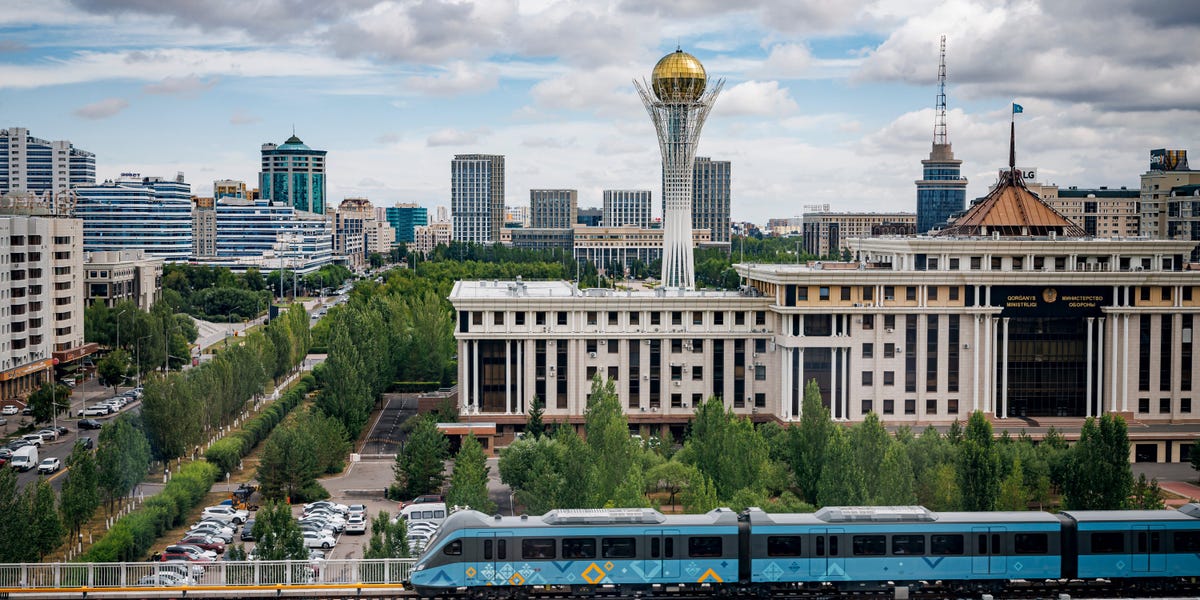
Astana is more than 6,000 miles from Silicon Valley, but some of tech’s biggest names are bullish on the Kazakh capital.
On Sunday, former Coinbase tech chief and Andreessen Horowitz partner Balaji Srinivasan said that his live-in startup community has officially opened in Kazakhstan, in another vote of confidence for the Central Asian country.
“Kazakhstan is a high-tech country that recently ranked #1 in the International Physics Olympiads. It’s full of confident, smart, young people. And it’s now recruiting global talent from around the world,” Srinivasan said in an X post on Sunday, announcing the launch.
In August, he reopened Network School, his community for founders, crypto enthusiasts, and digital nomads, in Astana after its previous base in Malaysia was shut down. Srinivasan has described the school as “Silicon Valley outside Silicon Valley” and said that he wants to build it in a “techno-optimist country” that is affordable, meritocratic, and attractive to global talent.
Srinivasan isn’t alone in his enthusiasm for Kazakhstan.
During a visit to Astana last week, Binance founder Changpeng Zhao said he was “particularly impressed” by the scale of Kazakhstan’s technology, education, and infrastructure projects.
The crypto exchange signed three agreements with Kazakhstan’s government, including exploring a Kazakhstan-based stablecoin and potentially building some Binance regional operations and infrastructure in the country.
In 2024, Telegram founder Pavel Durov said he visited the country and called it the “economic powerhouse of Central Asia.”
“The beauty of Kazakhstan can only be rivaled by its ambitions,” he wrote on his personal Telegram channel. “The country attracts international companies and tech startups with business-friendly policies and favorable taxes.”
Telegram has deepened its presence in the country — it has opened its first regional office in Kazakhstan and launched an AI lab in Astana to tap into the country’s supercomputing infrastructure.
Venture capitalist Tim Draper and former Google China president Kai-Fu Lee have also praised the country’s potential as an entrepreneurship and AI hub.
Safe haven
To be sure, some of Kazakhstan’s biggest boosters have turned to the country after having problems with regulators elsewhere.
Telegram’s Russian-born founder, Durov, has spent years clashing with Moscow over government access to the app and is now facing terrorism-related charges in Russia. He also remains under formal investigation in France after his 2024 arrest over alleged criminal activity on Telegram.
Binance’s Zhao pleaded guilty in the US in 2023 to violating anti-money-laundering laws and stepped down as CEO as Binance paid more than $4 billion to settle federal charges.
Srinivasan also relocated Network School to Kazakhstan after running it in Malaysia for two years and facing regulatory challenges earlier this summer.
Still, Kazakhstan is actively courting this newfound attention from tech leaders.
In the last two years, the country introduced digital nomad and “Neo Nomad” visas aimed at foreign tech workers and remote professionals.
In May, President Kassym-Jomart Tokayev ordered further immigration reforms designed to attract highly skilled workers, entrepreneurs, and foreign investors. Astana Hub, a futuristic-looking techno-park where the Network School is located, also offers tax incentives to qualifying tech companies.
“Artificial intelligence develops where there are talented people, bold ideas, and an environment in which they can be realized,” Zhaslan Madiyev, the country’s deputy prime minister, said in a July press release. “We are building exactly such an ecosystem in Kazakhstan.”
Read the full article here