






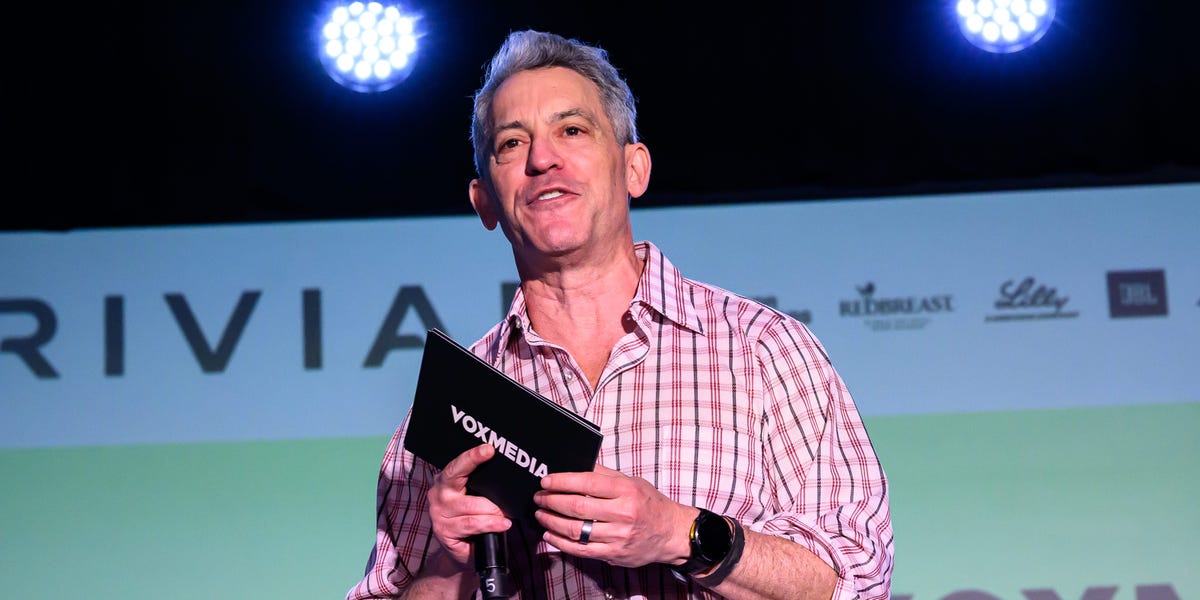
Jim Bankoff spent nearly 20 years building Vox Media. Now he’s selling a big chunk of it to James Murdoch, one of Rupert Murdoch’s sons, who is acquiring Vox’s podcast network — along with New York Magazine and Vox.com for a reported $300 million.
I’ve talked to multiple media operators who were interested in Vox’s podcast network — including Versant CEO Mark Lazarus — but not in the rest of the portfolio, which includes sites like The Verge, Eater, and The Dodo.
So what does it mean if podcasting — a business where people talk, and, increasingly, look at a camera — is more appealing than a bunch of text-based websites, many of which you’ve heard of?
I posed that question to Bankoff, who says I’m wrong — he insists there are lots of people interested in lots of his properties.
But the fundamental answer is that his podcasting business is profitable and fast-growing, and you can’t necessarily say that about all of his other assets. You also can’t say that about many other formerly high-flying digital publishers, which makes me wonder if this is one of the last big sales the industry will ever see.
By the way, I am deeply conflicted here: I worked for Bankoff for years, and now work with the podcast network he’s selling to Murdoch. And if you listen to our entire conversation on my Channels podcast, some of our working relationship will be evident.
The following is an edited excerpt of our chat.
Peter Kafka: My understanding is that you folks talked to multiple buyers who were interested in Vox Media’s podcast business, but weren’t interested in other parts of the company. And at some point, you added New York Magazine and Vox.com to the package, and that’s what James Murdoch bought.
What does it tell us about media if the thing most people wanted was a podcast network?
Jim Bankoff: Well, not exactly. Some of that is right, some of it isn’t.
We were approached from the outside, originally, about the podcast network. We’d always kind of contemplated that Vox.com was part of that because Vox, so much of what Vox does is podcasting.
“Today Explained” is a very popular podcast.
It’s a Top 10 podcast, but there are some other big ones in there, and there’s also a massive YouTube channel. I think the majority of its revenue comes from things other than what I’ll call text space.
But yes, we got some outside interest. We didn’t take it too seriously at first, but then we thought to ourselves, “Wow, this is a different kind of business, a growth business, and maybe it should have, in business speak, its own capital structure, its own ownership structure. Maybe we should think about that.”
And we did. The fact that New York Magazine came along was initially their idea.
James Murdoch’s idea.
Yes. And we walked through the logic of it, and it made particular sense for the kind of company they’re creating.
So we got our heads around it, and the process moved kind of quickly at that point. The part that wasn’t exactly accurate is I think there’s interest in literally every single part of the business. But we’re not looking to just break things up for the sake of breaking things up. We don’t expect to break things up beyond what we did today.
What I was trying to get at is that it seems like the thing media buyers were most interested in was the podcast network. I’m wondering why you think that appeals to them more than other properties.
I question the premise.
But I grant you that it’s an exciting property and there’s some obvious reasons. First of all, it’s an extraordinarily high-growth property, which makes it attractive — upwards of 40% per year for quite some time.
What’s driving that? Audio, video?
All of the above. It taps into what we call the creator economy. Vox Media Podcast Network approaches it in a certain way, though, which I think is about as kind of premium, as thoughtful as you can get. It’s a highly curated network that still has scale — No. 6 on the Podtrac rankings.
We’re not after scale for scale’s sake, but we are after quality scale, and that’s what we’ve achieved. And I think that’s part of what made it so interesting to people.
What changes at the properties that aren’t getting acquired?
I think they’re going to do very well. There’s a lot of excitement over there.
Each one of those brands are in really good shape and getting stronger. Like most media brands, they had to go through changes, particularly [ones] brought upon by the changes of Google Search.
But they have gone through that now.
It’s a self-sufficient media company?
Absolutely. And having said that, they’ll have plenty of options for where to take it from there. Each one of those brands, while getting some benefit from being together, have their own business strategies, have their own audiences. They can go to market together from a sales proposition and get plenty of scale. But they’re all in a position to really thrive.
Read the full article here