




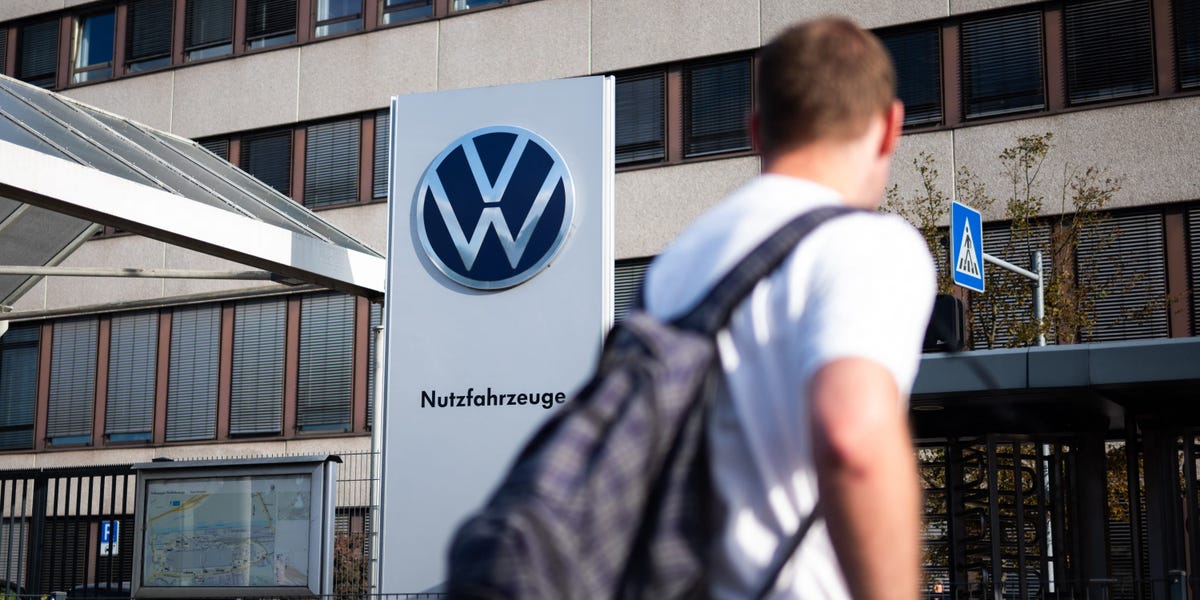
Volkswagen plans to cut roughly 50,000 more jobs worldwide.
On Thursday, the company’s supervisory board approved its “Future Plan 2030,” a 12-part restructuring effort that Volkswagen calls the “most extensive transformation program” in its history.
Volkswagen said a “fundamental adjustment” of its global workforce — including management roles — will be necessary beyond its existing cost-cutting programs. It did not say where the positions would be eliminated, when the reductions would happen, or whether they would come through layoffs, buyouts, or attrition.
The job cuts are one piece of a much broader reset. Volkswagen plans to halve its model portfolio by 2035 and reduce the complexity of its vehicle offerings by about 75%. It also aims to sell about 9 million vehicles annually and reach a 9% operating margin by 2030.
That will mean fewer models and variants, higher volumes for the cars it keeps, and lower costs across its sprawling group of brands, which includes Volkswagen, Audi, Porsche, Škoda, Seat, Cupra, Bentley, and Lamborghini.
The company has been facing steep competition from lower-cost Chinese automakers, especially on its home turf in Europe. The expensive transition to electric vehicle development, US automotive tariffs, and high energy prices are not helping either.
It’s part of a larger trend in the auto industry: Car companies have gone through a decluttering era as they try to reduce costs as they face the compounding headwinds.
Volkswagen is one of the most dramatic examples.
On Thursday, the automaker said its European factories have capacity for more than 500,000 vehicles beyond current demand. That leaves the future production plans for four German factories — Emden, Zwickau, Hanover, and Neckarsulm — uncertain from 2031 through 2034. Volkswagen said it is considering alternative uses for the plants.
The new workforce reduction comes on top of existing programs. In 2024, Volkswagen AG agreed with labor representatives to cut more than 35,000 jobs at its German sites by 2030.
Volkswagen didn’t immediately respond to Business Insider’s questions about how its new global target overlaps with those earlier planned reductions.
Read the full article here