

Join Us Thursday, August 20

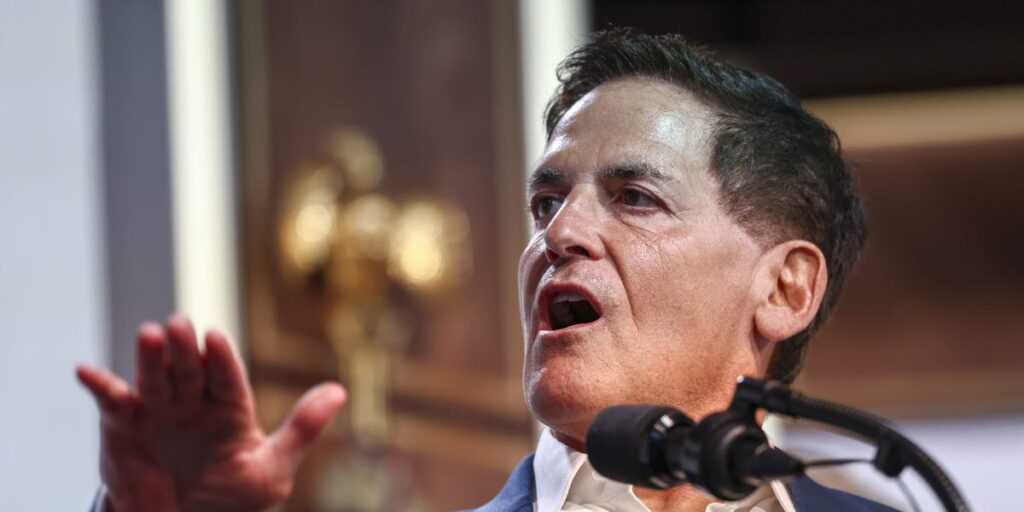
Mark Cuban went on a healthcare posting spree on X on Wednesday, pushing back on predictions that AI will replace medics and saying that doctors should be helping patients use AI in their treatment.

Across a flurry of posts, the billionaire entrepreneur argued that AI cannot replicate doctors’ real-time observation, communication, empathy, and judgment when a patient’s condition suddenly changes.

“No chance radiologists get replaced,” Cuban wrote, though he predicted every radiologist would eventually use AI.

Cuban later amended his argument. AI will replace many tasks performed by doctors, he wrote, not because machines can practice medicine independently, but because clinicians spend so much time on what he called “bullshit administrivia” created by healthcare conglomerates.

His proposed solution was blunt: “Replace the middlemen with AI.”

Later in the same day, Cuban also proposed a new role for doctors in an AI-heavy healthcare system: helping patients use the technology.

He said private-practice doctors could sit down with patients and configure tools such as Claude, ChatGPT, Gemini, and Grok with personalized instructions, skills, and prompts.

The LLM could then share the results with the doctor, allowing physicians to interact with both the patient and the patient’s AI.

Cuban’s focus on healthcare intermediaries is not new. In 2022, he cofounded Mark Cuban Cost Plus Drug Company, an online pharmacy built around transparent pricing and bypassing traditional pharmacy benefit managers.

The venture has made disrupting healthcare’s opaque drug-pricing system one of Cuban’s signature business projects.

Cuban’s latest posts build on healthcare warnings he made last month. He said AI could create an arms race between providers and insurers, with doctors using agents to improve care while conglomerates deploy their own to “delay and deny.”

He has also urged employers to run healthcare contracts through chatbots to identify hidden costs and unfavorable terms.

His comments came as AI’s role in medicine is moving beyond chatbots. On Wednesday, Moderna and Merck said their experimental personalized mRNA cancer vaccine, intismeran, had met key endpoints in a Phase 3 melanoma trial.

The treatment uses genetic sequencing and algorithms to help select tumor mutations for a vaccine tailored to each patient, an example of AI supporting medical treatment rather than replacing the clinician.


Read the full article here

Share.
Leave A Reply