




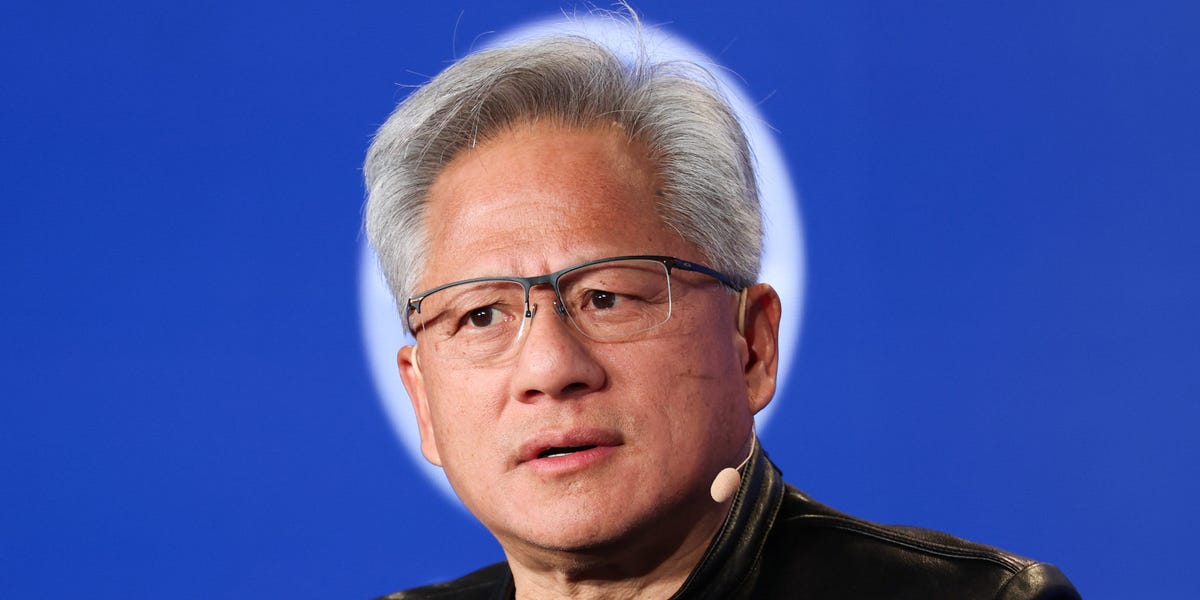
Even as companies like Cloudflare and Snap cite AI as they lay off thousands of employees, Jensen Huang told graduates on Sunday that there’s no better time to “begin your life’s work.”
Speaking at Carnegie Mellon University’s 2026 Commencement, the Nvidia CEO made his case that AI will be a net positive for humanity, including for those newly starting their careers.
“Now it’s your time to realize your dreams, and the timing could not be more perfect,” he said.
The 61-year-old tech mogul — who now has an estimated net worth of nearly $186 billion — graduated from Oregon State University with a degree in electrical engineering in 1984. He later earned a master’s in electrical engineering from Stanford. He launched Nvidia in 1993, just as the internet revolution was taking off.
He told the new grads that AI was closing the “technology divide,” allowing anyone to build something useful. This, he said, meant there would be many new opportunities for young people in the coming years.
Jensen’s optimistic remarks contrast with public anxiety over the impact of artificial intelligence.
A Pew Research Center study found that about half of Americans felt the increased prevalence of AI in their daily lives made them feel “more concerned than excited.” Many Americans across the country, meanwhile, are resisting new data centers in their communities, which are essential to powering AI products like chatbots.
At least a dozen major companies have cited increased efficiency from AI as a factor in their decision to lay off employees this year. AI has also made job-seeking more difficult by prolonging the interview process and making it tougher for new grads to land work. The unemployment rate for new grads reached a 4-year high at the start of 2026.
Worries about the impact of AI are fueled in part by the people behind the technology. Anthropic CEO Dario Amodei, for example, warned last year that AI could wipe out 50% of white-collar entry-level jobs. Elon Musk told Joe Rogan in February that humans faced a “20% chance of annihilation.”
Negative public sentiment could play a role in the coming midterm elections, during which AI regulation will likely be a major topic of debate.
In recent weeks, Huang has sought to counter such dire predictions. On a podcast earlier this month, he said AI leaders should be more “mindful” of how they talk about the technology.
“These kinds of comments are not helpful,” Huang said on the “Memos to the President” podcast. “They’re made by people who are like me — CEOs. Somehow, because they became CEOs, you adopt a God complex and, before you know it, you know everything.”
He added, “I think we have to be careful and really ground ourselves to talking about the facts.”
To the new grads at Carnegie Mellon, he had a simple message: “AI is not likely to replace you,” acknowledging anxieties about the job market. “But someone using AI better than you might.”
Read the full article here