

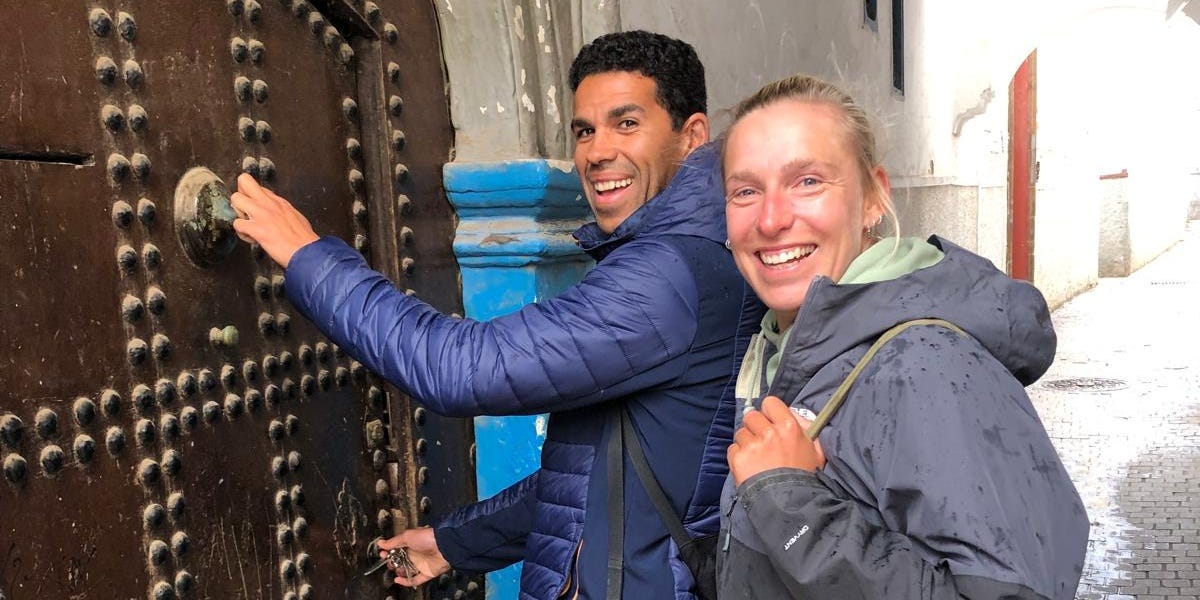
This interview is based on a conversation with Nina Ottevanger, 31, a surf instructor and co-owner of Ilyana Surfhouse, a small business in Rabat, Morocco. It has been edited for length and clarity.
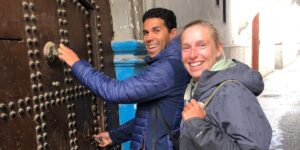
Eleven years ago, I was traveling in Morocco with two friends. While in Rabat, we wanted to surf and found a place online. We were greeted by a man named Ilyass. The main group had already left, but he offered us a private lesson. Something clicked between us.
He shared his number in case we wanted to go out that evening, but we chose an early night so we could continue traveling the next morning. I texted to say I hoped our paths crossed again, and we kept chatting. He suggested I finish my trip with a return visit to Rabat, which I did, and we hit it off.
I’d just finished my second year studying international tourism and leisure management at a university in the Netherlands, where I’m from, so starting a long-distance relationship had to feel right. Thankfully, it did. I saw Ilyass in Rabat every few months during study breaks.
In 2016, he took a job managing a surf camp on Morocco’s Atlantic coast. I found a six-month internship at another nearby surf camp. Sharing an apartment gave us a taste of normal life together.
But I still had one year left in school, part of which I spent in Bali, writing my thesis and doing market research for a retreat.
One foot in the surf, one foot in Western Europe
Ilyass had worked at his uncle’s hostel and surf school in Rabat, where he’s from, for years, but always wanted his own business. I’d been looking for a way to swap the Netherlands for somewhere I could be outside year-round. Running a B&B had always appealed to me, so we dreamt up a surf concept. But we had neither the money nor enough experience to build it.
The following year, I graduated and got a job at a travel agency in The Hague, and Ilyass moved to the Netherlands. We got married on Kijkduin beach in 2021.
Ilyass realized he wasn’t built for cold winters, so I quit the agency and joined him at a beach club and surf school in The Hague. We agreed to work there in the summer and spend winters in Morocco developing our business.
Ilyass’ students in the Netherlands wanted to come to Morocco for lessons, and many booked without knowing where they would sleep. They trusted us.
For three years, we ran Ilyana, a mashup of our names, as a surf school, arranging accommodation through local homestays. But splitting the year between two countries tired us out. It was hard to build a life when we were only there half the time.
Renovating an abandoned riad
In 2024, we started searching for a riad — a traditional Moroccan house built around a courtyard — on the ocean side of the medina, so guests wouldn’t have to carry their boards far.
We found a very rundown one with no bathrooms. Except for a few birds, it had been abandoned for over 20 years, but it had gorgeous features, including traditional tiling. It was priced higher than other riads in the medina, but we later learned that the original details made it more valuable. We wanted to restore that beauty.
We bought it outright, paying 40% with our savings and 60% with loans from family and friends. We started renovations in April 2025.
At first, my parents thought we were mad, but they were convinced when they saw it. My dad, who had worked on similar projects, helped me sketch every room and design the architectural plans.
We project-managed the renovation ourselves, using local plumbers, electricians, and builders. We estimate we spent €75,000, or about $86,800. After five months of working day in, day out, we welcomed our first guests in October.
The five guest rooms at Ilyana Surfhouse sleep 16 people, with rates starting at 500 Moroccan dirhams, or about $53, per night, including breakfast and dinner. Ilyass’ mother cooks dinner, his sister makes breakfast and welcomes guests, and his brother helps teach surf lessons.
We’re happy with how the business is going. Our hope is that the house will be paid off with our profits within eight years.
Making the most of Rabat’s surf scene
It’s been a huge and satisfying lifestyle change. We live in wetsuits and do much less than before. We keep more at the end of the month because there’s less to spend on. On Sundays off, we go to the beach and find our whole friend group there. We laugh, share food, and chill.
Morocco is getting more expensive, though, especially Rabat. A simple life here is affordable, but anything considered elite or luxe, like yoga or Pilates, costs much more than in the Netherlands.
We chose Rabat because it’s where my husband grew up and because of the surf scene. Here, you’re in the water with 10 or 20 people, not hundreds. Our friends are teachers, engineers, shop owners, and barbers, and we want to show people a normal life, not a surfer’s paradise.
We’re a great team. We each have our own specialties and love swapping stories at the end of the day. It’s important that we’re husband and wife, too, so we make time for fun things just the two of us.
Editor’s note: Ottevanger did not share the price they paid for the property. Comparable riads in Rabat’s medina are listed for roughly $230,000 to $550,000, according to current listings on Moroccan property site Avito.
Read the full article here