



Retail is a tough business.
One day, your favorite brand can be riding high and enjoying strong sales from loyal customers, while the next it’s fighting for survival and fending off creditors.
Emerging trends, changing shopping patterns, and new e-commerce players are increasingly reshuffling the game.
Here’s a look back at some of the retail brands whose stores once greeted thousands of people each day.
Some are now consigned to retail’s history books, while others still exist online. Either way, they’re a tiny fraction of what they once were.
What stores do you miss most? Tell us in the comments below:
Blockbuster
Blockbuster started in 1985 and acquired the Sound Warehouse and Music Plus music chains to create Blockbuster Music in 1992. Then Netflix happened. There remains one single Blockbuster video rental store in Bend, Oregon.
Thom McAn
Thom McAn was a chain of shoe stores that peaked in the 1960’s and closed up shop by 1996. The brand’s shoes continued to be available at Sears and Kmart.
Kinney Shoes
First opened in 1894, Kinney Shoes had 467 stores at its peak, all of which shuttered in 1998.
Warner Bros. Studio Store
Warner Bros. Studio Store competed with the Disney store until the company closed all of its locations in 2001.
Zany Brainy
Zany Brainy filed for bankruptcy in 2001 and closed all locations in 2003. The educational toy retailer’s founder, David Schlessinger, co-founded the discount company Five Below.
Ames Department Store
Debt and poor sales forced Ames Department Store into bankruptcy twice, and in 2002, the remaining Ames stores closed.
Imaginarium
Imaginarium was an educational toy store in the 1980s. Stores started closing in the 1990s, and by 2003, parent company Toys R Us closed all remaining locations.
Hecht’s Department Store
Hecht’s was purchased by Macy’s in 2005, and all locations were either turned into Macy’s stores or closed.
Marshall Fields
Federated Department Stores bought Marshall Fields in 2005 and converted the stores to the company’s more recognizable flagship brand, Macy’s.
Gadzooks
Gadzooks was a teen clothing store that was around from 1983 to 2005. It filed for bankruptcy in its final year and was purchased by Forever 21, which then closed all of the stores.
Kaufmann’s
In 2006, Macy’s retired the Kaufmann’s name, and the brand disappeared.
Tower Records
Tower Records couldn’t keep up with the rise of digital music, and all stores in the US were closed in 2006.
Media Play
Media Play was a big box store that sold books, movies, software, toys, and video games. It closed in 2006.
Discovery Channel
Discovery Channel’s 103 stand-alone stores closed in 2007.
KB Toys
KB Toys announced it would be going out of business in 2008, and by early 2009 all locations were closed.
Sharper Image
Sharper Image declared bankruptcy in 2008, but the company still sells merchandise through its website, catalog, and third-party retail partners.
Levitz Furniture
Levitz Furniture declared bankruptcy twice — first in 1997, and then in 2005. It closed all of its stores in 2008.
Linens ‘n Things
Linens ‘n Things had more than 500 stores in 2006, but by the end of 2008, they were all closed. The company still does business online.
Mervyn’s
Mervyn’s once had almost 200 locations in the western US. In 2008, the company declared bankruptcy and closed all of its stores.
Limited Too
Limited Too’s success began dwindling in the early 2000s, and all stores were eventually rebranded as Justice by 2008.
Tweeter
Tweeter filed for bankruptcy in 2008, and all of its stores were closed by the end of the year.
Circuit City
Circuit City filed for bankruptcy in 2008 and shuttered all stores the following Spring.
Steve & Barry’s
Steve & Barry’s filed for bankruptcy in 2008 and closed all of its stores in 2009.
Filene’s and Filene’s Basement
Filene’s Basement’s parent company went bankrupt in 2009, and by 2011 all of its stores were closed.
B. Dalton Books
B. Dalton was acquired by Barnes & Noble in 1987, which officially closed the bookstore in January 2010, except for a single location in Oviedo, Florida.
Waldenbooks
Waldenbooks merged with Borders in 1994, and all Waldenbooks stores closed when Borders Group liquidated in 2011.
Borders Books & Music
Borders Books & Music stores closed shortly after the company liquidated in 2011.
CompUSA
CompUSA started in 1984, but by 2007, Best Buy and other superstores had taken over, and the last CompUSA closed in 2012.
Sam Goody
Sam Goody music stores suffered from the rise of digital media, and most Sam Goody stores were either ultimately shuttered or converted into other brands like FYE by 2012.
A&P
A&P filed for Chapter 11 bankruptcy in 2010 and again in 2015, closing its stores that year.
Sports Authority
Competition drove Sports Authority into bankruptcy in 2016, when it closed all its stores and sold its website to Dick’s Sporting Goods.
Sport Chalet
Sport Chalet, which first opened in 1959, abruptly closed all of its stores in 2016.
Wet Seal
Wet Seal, a teen clothing store, filed for bankruptcy in 2015 and closed for good in 2017.
Virgin Megastores
Virgin Megastores stopped operating in the US in 2017, but the brand continues online and in select international markets.
The Limited
The Limited abruptly shut down all of its stores in 2017, and the brand is now sold exclusively through Belk.
Teavana
Teavana’s 379 locations were closed by its parent company, Starbucks, in 2018.
Bon-Ton Stores
The Bon-Ton stores included its namesake brand, as well as Bergner’s, Boston Store, Elder-Beerman, and Younkers.
Henri Bendel
After 123 years of business, luxury retailer Henri Bendel closed all of its stores in 2019.
Dress Barn
Dress Barn shut down in 2019 after 50 years in business.
Papyrus
At its peak in 2009, Papyrus had 500 stores across the US and Canada, but the company ultimately filed for bankruptcy and closed its 254 stores in 2020.
Lord & Taylor
Lord & Taylor filed for bankruptcy in 2020, leading to the closure of its 38 stores. An attempt at reviving the brand as a “digital collective” was unsuccessful.
Olympia Sports
After a slow decline and a tumultuous stint with private equity owners, Maine-based Olympia Sports shut down its remaining stores in 2022.
Bed Bath & Beyond
Bed Bath & Beyond filed for bankruptcy and closed its 896 remaining stores in 2023, though the brand was sold and relaunched online.
Tuesday Morning
The Dallas-based home goods company shut down all of its stores in 2023 after it had only planned to close half of its stores amid bankruptcy proceedings.
Christmas Tree Shops
The Massachusetts-based seasonal specialty retailer filed for bankruptcy in 2023, winding down the remaining 72 locations across 20 states.
Rue21
Teen apparel retailer rue21 — known for its presence in shopping malls — filed for bankruptcy for the third time in May 2024. The company’s 540 locations also shut down.
Payless Shoesource
Payless ShoeSource was once the largest and most successful family-owned business in the country. The brand still lives online with fulfillment from Amazon.com.
Conn’s HomePlus
Conn’s HomePlus, a home goods retailer that operated more than 170 stores in 15 states, filed for bankruptcy protection in July 2024 before announcing that it was shuttering all of its stores.
Joann Fabrics and Crafts
In February 2025, Joann said that it had reached a deal to sell its assets and wind down operations, including closing around 300 remaining stores. The fabric and crafts chain experienced two rounds of Chapter 11 bankruptcy in less than a year.
Moosejaw
Dick’s Sporting Goods shut down outdoors retailer Moosejaw shortly after purchasing the brand from Walmart. The company was originally founded in Michigan in 1992, and was later bought by Walmart in 2017 for $51 million.
Forever 21
Forever 21 was once a popular choice for budget-minded shoppers and helped inspire the fast-fashion trend followed by brands like Temu and Shein, which the company later cited as threats to its existence.
Bargain Hunt
Discount retailer Bargain Hunt, which also made money selling returned Amazon items, closed in 2025 after filing for bankruptcy.
Rite Aid
Rite Aid closed in 2025 after a stretch in bankruptcy. At its peak, the company had more than 2,000 stores, which it shrunk down to fewer than 100 at the end.
Francesca’s
Houston, Texas-based Francesca’s shut down operations in 2026, including the closure of about 400 remaining stores, after several years of financial challenges that worsened during the Covid-19 pandemic.
Eddie Bauer
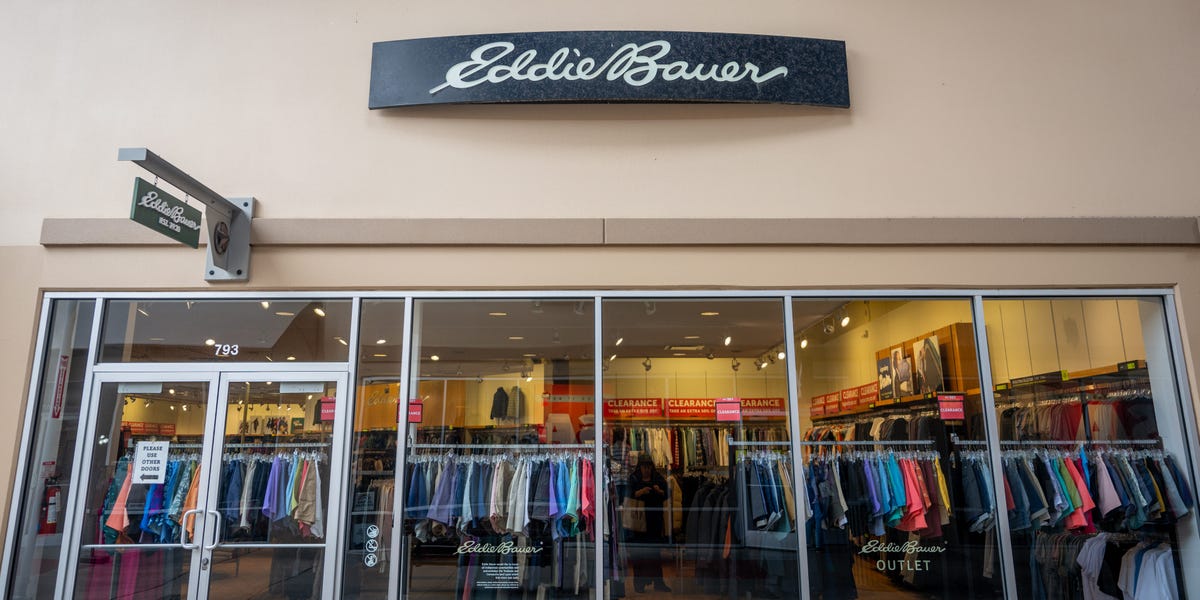
Outdoor lifestyle retailer Eddie Bauer closed approximately 200 North American stores in 2026, shifting its business entirely to manufacturing, wholesale, and online operations.
Read the full article here