





The past decade has been a roller coaster for the housing market.
Some cities have experienced surprising yet sustainable booms in growth, while others have deflated as movers choose to live elsewhere. The reallocation of America’s population has driven high housing demand across multiple markets.
The number of households added is a key way economists measure how much pressure a market faces, said Nadia Evangelou, a senior economist at the National Association of Realtors (NAR).
“Household growth is one of the most direct indicators of housing demand,” Evangelou told Business Insider. “When you add 357,000 households in 10 years, that’s about 357,000 additional housing units that needed to be absorbed by the market, whether it’s rental or ownership. That’s real demand because these households need a shelter.”
NAR mapped out the metro areas with the largest percentage change in household growth from 2014 to 2024. Evangelou said that some of the metro areas changed composition during that timeframe, but a few that didn’t — including Austin — stand out.
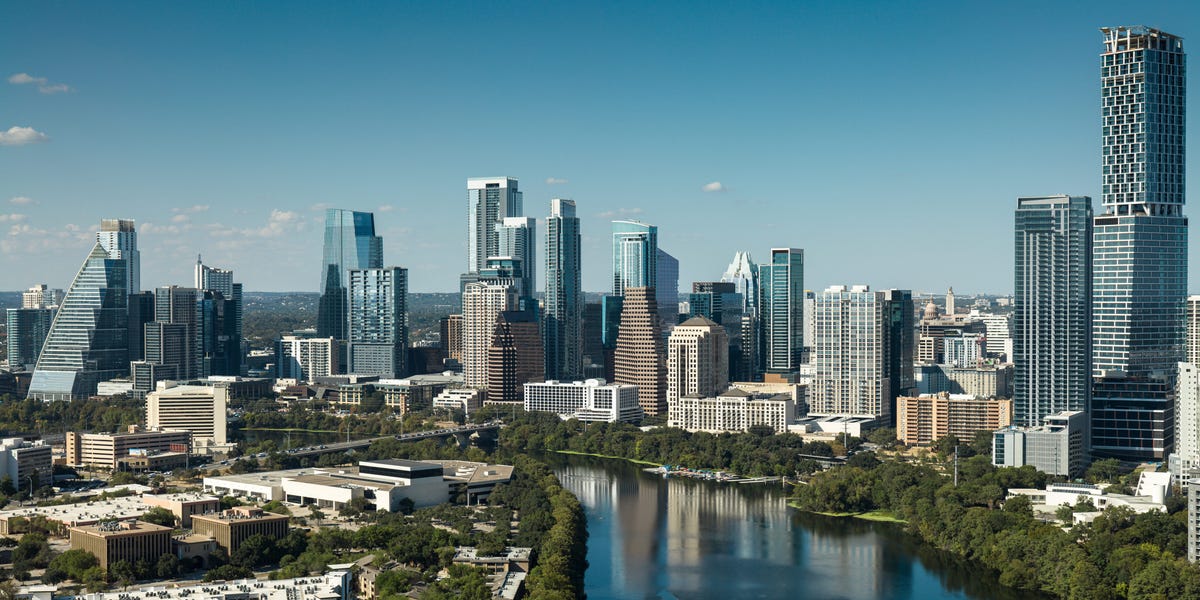
Austin ranked in the top 10 and had more than 1 million occupied units in 2024, up from just over 700,000 a decade earlier. Over that period, the city’s household growth rate — nearly 51% — was more than triple the national rate of 13%.
The city became a hotbed for movers — especially from California — but it also became a poster child for a boomtown losing its edge. Some residents left as housing costs soared and growth cooled. Still, that narrative may be overblown, Evangelou said. While the influx has slowed from its early-2020s peak, people are still moving in.
Evangelou said the city’s growth wasn’t driven solely by the pandemic. “Even now, what we see is that Austin is still expanding about two and a half times faster than the US overall. That tells us that this isn’t a short-term boom, it’s sustained economic momentum, it’s strong job growth, business expansion, and long-term opportunity all working together in this area.”
Utah had two entries in the top 10, mainly due to the growing number of 30-year-olds living there. “They have a high concentration of millennials, and they think that can also explain this increase in the households,” Evangelou said.
Lately, the Midwest has emerged as one of the more affordable regions in the country, but it’s not well represented on the list.
“Most movers relocated to the South; however, we see some Midwestern states attract more,” Evangelou said, largely because of affordability.
See which cities added the most households from 2014 to 2024.
Read the full article here