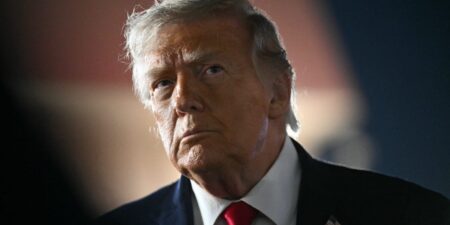





President Donald Trump said Thursday that he ordered the US Navy to “shoot and kill” any boat, including Iran’s small, fast-attack boats, laying mines in the Strait of Hormuz.
The directive adds a new combat element to Navy mine-clearing operations, which began earlier this month. Iranian fast-attack craft have been spotted in the waterway in recent days, with some gunboats firing at merchant vessels. Iran’s conventional navy has been sunk.
“There is to be no hesitation,” Trump said in a social media post. He said Navy minesweepers are clearing the Strait, adding that he ordered the activity to continue “at a tripled up level.”
In the weeks of fighting ahead of the recent ceasefire, the US military engaged Iranian fast boats and mine-laying craft with a mix of capabilities, including the A-10 Thunderbolt II attack aircraft, known simply as the “Warthog.”
US forces destroyed more than 95% of Iran’s naval mines during the Operation Epic Fury bombing campaign, but Tehran likely placed some in or near the Strait during the conflict, a defense official told Business Insider this week.
The official, who spoke on condition of anonymity to discuss US military developments, said American forces are actively addressing the mines using a mix of crewed and uncrewed capabilities to ensure that ships can safely transit the Strait. The US military previously said underwater drones would be part of these efforts.
It’s unclear whether Iran has laid additional mines in the Strait since the US announced a ceasefire with Tehran on April 7, but Iranian fast-attack craft have been active in the region in the two weeks since. Islamic Revolutionary Guard Corps (IRGC) gunboats have opened fire on multiple vessels, according to the British military.
Navy warships and American aircraft have a range of capabilities to track and interdict small craft such as Iranian attack boats, Bradley Martin, a retired Navy surface warfare captain, told Business Insider.
This includes advanced shipboard radars and other systems, large- and small-caliber guns, and the ability to direct crewed aircraft and drones, said Martin, a senior policy researcher at the RAND Corporation think tank.
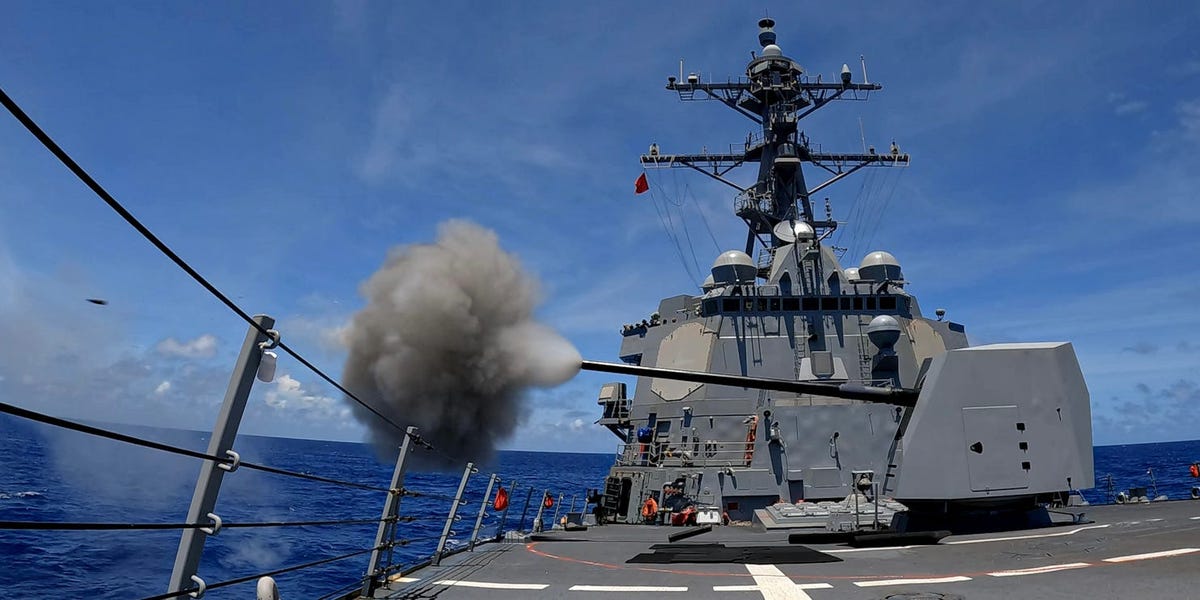
The Navy’s Arleigh Burke-class destroyers, among the first vessels to sail into the mine-clearing operation, are equipped with surface search radars, Mk45 deck guns like USS Spruance used on Sunday to disable a blockade-running Iranian-flagged cargo ship, and autocannons and heavy machine guns.
These well-armed naval vessels also sail with embarked helicopters that can be armed with crew-served machine guns and missiles and engage at stand-off ranges.
During the Houthi conflict, in late 2023, US helicopters opened fire on and sank several boats carrying Iran-backed rebels attacking a vessel in the Red Sea. This tactic could be replicated in the Strait of Hormuz.
The strait is a confined battlespace; however, the combination of capabilities aboard fully equipped destroyers enables them to counter traditional fast-boat employment, which involves swarming tactics and harassment, through early detection and layered fires. They are also well-suited for isolated engagements against a single vessel attempting to place naval mines.
Beyond the destroyers, the Navy has numerous other assets in the broader area that could target Iranian vessels. It is unclear what impact any such engagements might have on the fragile ceasefire that was recently extended.
American and Iranian leadership have offered conflicting statements on who controls the Strait. Tehran said that it seized two cargo vessels in the waterway on Wednesday; on Thursday, Trump said the US has “total control” over it.
The ongoing de-mining operation comes as the Navy also participates in the US blockade of maritime traffic entering or leaving Iranian ports.
US Central Command, which oversees American military operations in the Middle East, said on Wednesday that more than 30 vessels have been directed to turn around or return to port since the blockade went into effect on April 13.
CENTCOM said more than 17 warships are involved in enforcing the blockade — including an aircraft carrier, amphibious assault ship, and destroyers — and more than 100 fighter, rotary wing, and surveillance planes.
Read the full article here