




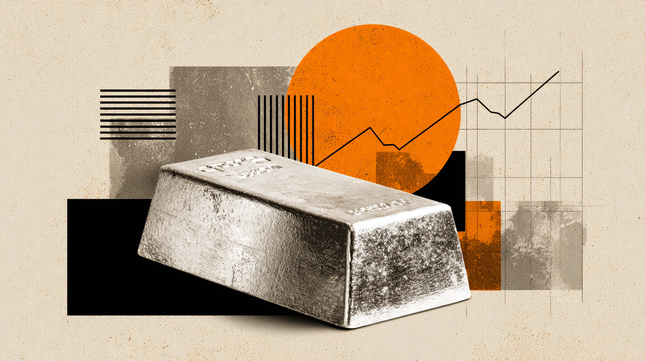
Silver price (XAG/USD) extends its losses for the second successive day, trading around $67.00 per troy ounce during the European hours on Monday. The non-yielding white metal declines as renewed tensions in the Middle East drive oil prices higher and fuel concerns about inflation and interest rates.
Geopolitical risks increased after the Israeli military stated a missile had been launched from Yemen towards Israeli territory, which had been intercepted by its aerial defense systems. Iran-backed Houthis confirm that they have launched attacks on Israel as a group and ‘ban’ Israeli shipping in the Red Sea.
Earlier, the BBC reported on Monday that the Israel Defense Forces (IDF) reportedly struck military targets in Iran following an Iranian missile salvo aimed at northern Israel. This escalation occurred despite US President Donald Trump’s criticism of previous Israeli strikes in Beirut and his active push for a diplomatic resolution between Prime Minister Netanyahu and Tehran.
Silver also faces challenges as the robust US labor market reinforced investor expectations that the Federal Reserve (Fed) could raise interest rates later this year. Friday’s Nonfarm Payrolls (NFP) rose by 172,000 jobs in May, while the previous month’s reading was significantly revised upward to 179,000. With the Unemployment Rate holding steady at 4.3%. Additionally, the Fed is widely expected to hold interest rates steady at the June 16-17 meeting, the first under new Chairman Kevin Warsh.
Silver FAQs
Silver is a precious metal highly traded among investors. It has been historically used as a store of value and a medium of exchange. Although less popular than Gold, traders may turn to Silver to diversify their investment portfolio, for its intrinsic value or as a potential hedge during high-inflation periods. Investors can buy physical Silver, in coins or in bars, or trade it through vehicles such as Exchange Traded Funds, which track its price on international markets.
Silver prices can move due to a wide range of factors. Geopolitical instability or fears of a deep recession can make Silver price escalate due to its safe-haven status, although to a lesser extent than Gold’s. As a yieldless asset, Silver tends to rise with lower interest rates. Its moves also depend on how the US Dollar (USD) behaves as the asset is priced in dollars (XAG/USD). A strong Dollar tends to keep the price of Silver at bay, whereas a weaker Dollar is likely to propel prices up. Other factors such as investment demand, mining supply – Silver is much more abundant than Gold – and recycling rates can also affect prices.
Silver is widely used in industry, particularly in sectors such as electronics or solar energy, as it has one of the highest electric conductivity of all metals – more than Copper and Gold. A surge in demand can increase prices, while a decline tends to lower them. Dynamics in the US, Chinese and Indian economies can also contribute to price swings: for the US and particularly China, their big industrial sectors use Silver in various processes; in India, consumers’ demand for the precious metal for jewellery also plays a key role in setting prices.
Silver prices tend to follow Gold’s moves. When Gold prices rise, Silver typically follows suit, as their status as safe-haven assets is similar. The Gold/Silver ratio, which shows the number of ounces of Silver needed to equal the value of one ounce of Gold, may help to determine the relative valuation between both metals. Some investors may consider a high ratio as an indicator that Silver is undervalued, or Gold is overvalued. On the contrary, a low ratio might suggest that Gold is undervalued relative to Silver.
Read the full article here