






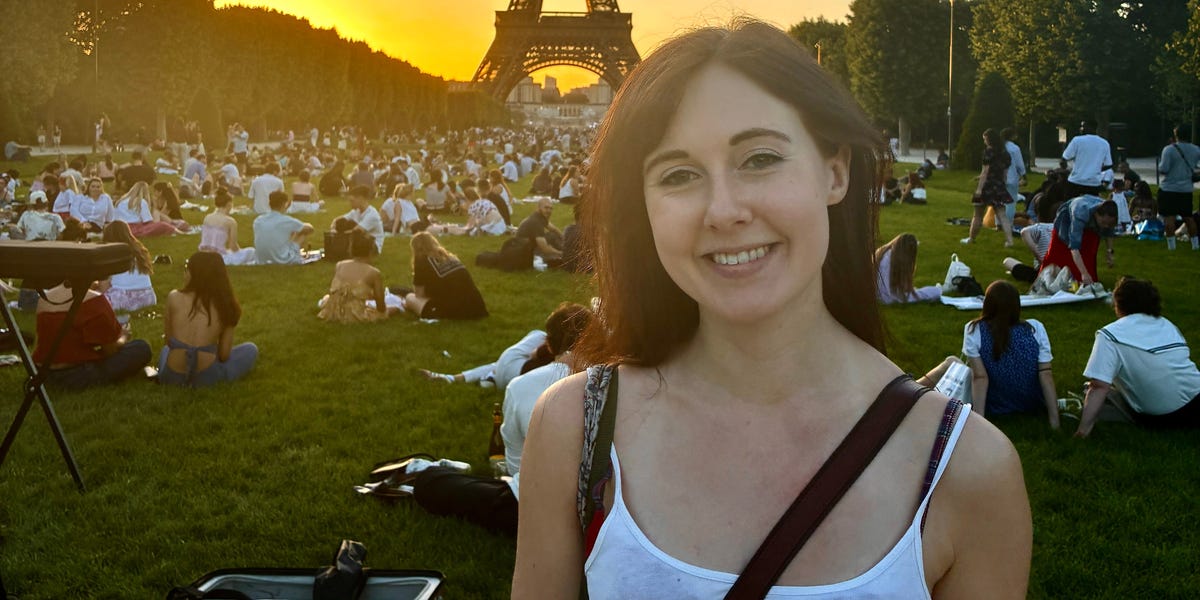
I moved to Paris from the United Kingdom in 2017, and while I expected some challenges along the way, I was surprised to discover that many of the things I’d been worrying about turned out not to be issues at all.
However, in their place were several other unforeseen obstacles that I wished I’d been aware of before I relocated.
The language barrier wasn’t an issue in the way I expected it to be
I’d spoken French fluently-ish as a teen, but I’d barely used so much as a “bonjour” in the four years prior to my relocation. I was worried about the rustiness of my speaking skills, envisioning it causing real difficulties in day-to-day life.
However, I also assumed that, since I would be totally immersed in the language, my French would come back in no time. I was wrong on both counts.
Since practically everyone I encountered in Paris spoke English, my subpar French proved no obstacle at all. In fact, no matter how much I tried to speak French, in restaurants, in shops, on the metro, at the bank, you name it … most people simply replied to me in English.
It was a blessing and a curse; simultaneously very convenient for going about my life, and very inconvenient for improving my French.
Since I worked in English, and the first friends I made were all other international expats (who spoke English together), my opportunities to hone my language skills were virtually nonexistent.
Eventually, getting on dating apps is what brought my French conversation skills back up to snuff.
My takeaway: If you’re not fluent in French before you move here, you will likely manage just fine. However, you may need to be proactive about finding opportunities to improve your speaking skills — and doing so should be a priority.
Becoming comfortable with French isn’t essential to getting by here, but it will vastly improve your experience as an expatriate. And, y’know, it’s just … good manners.
I should’ve been prepared for all of the bureaucracy battles and paperwork
Before I moved, I spent a lot of time researching the requirements I’d have to fulfill to live and work in France.
As an EU citizen, I faced minimal red tape — but for the processes I needed to go through to get up and running as a resident, the message from forums, blogs, and articles alike was clear: French admin can be a nightmare.
Naively optimistic as I was, I dismissed the repeated complaints as hyperbole. “How bad could it be?” I thought to myself, with completely unfounded confidence.
The internet tried to warn me, but I didn’t listen. Most essential tasks, like getting a social-security number and a health card, took way longer and required more effort than I expected.
I imagine this may be the case when relocating to any new country. However, even after nearly a decade of living here, I still dread dealing with French bureaucratic systems (and all the paperwork they require).
My takeaway: Be patient, set aside dedicated time to tackle essential relocation tasks, and take a lot of deep breaths. Getting a French phone number as soon as possible will also make administrative tasks (and life in Paris) a lot easier.
Paris lives up to its chic reputation, but I didn’t have to worry so much about my style
Pre-Paris, I worried I’d look out of place or underdressed because of this city’s reputation for being ultra-chic. (I’m no fashionista.)
However, I quickly discovered that it’s very difficult to be either underdressed or overdressed in Paris.
Something I found very refreshing when I moved to France was how much less “uniform” the clothing felt compared to the UK.
Very extravagant or outlandish ensembles would raise more of an eyebrow here than in, say, London or New York, but as a general rule, at any given activity, occasion, or gathering, you’ll see a real range of styles and levels of “dressiness.”
Within a year of moving to Paris, I felt able to dress in a way that was much truer to my personal tastes than I’d ever felt comfortable doing in England.
My takeaway: Wear whatever you want. Style here feels generally understated, but there’s no Paris “uniform.”
Sundays are way sleepier than I’m used to
Around the time I moved, Galeries Lafayette was advertising that they would “now” be opening on Sundays, and it really confused me.
I couldn’t believe a world-famous department store in a capital city like Paris wasn’t open on Sundays before.
Turns out, a lot of places in France are closed on Sundays, which local labor laws have helped designate as a day of rest.
There are exceptions, and I’ve seen more stores extend their hours over the past nine years. However, I’ve found it’s still very hit-and-miss whether (and, if so, when) I’ll be able to shop on the Day of Rest.
I’d say roughly half the shops I frequent are open on Sundays, and a lot of supermarkets operate on a sort of “compromise” model.
Some only open in the mornings, and others are open all day but have security staff only, meaning there are limitations on how you pay, and you can’t buy alcohol.
I’ve seen shops advertise their Sunday opening time but not their closing time. Which, as far as I can tell, means they close whenever they feel like it.
I’ve been caught out more than once when I’ve gone to grab dinner ingredients, only to find the shop closed an hour earlier than it had the previous week.
My takeaway: Don’t rely on buying your groceries (or anything else important) on Sundays. If you need to purchase alcohol, say for a Sunday lunch or soirée, make sure you do it the day before.
My expectations around vacation have completely shifted
About half the country packs up and goes on vacation for the whole of July … and the other half, for the whole of August. This includes the people running shops, restaurants, offices, and all kinds of other services.
I wish I’d known about this before I was in the middle of experiencing it. That first summer I spent in Paris was very long, very hot, and very quiet.
Everything had kind of ground to a halt at work, my friends were gone for huge swaths of time, and most of my go-to spots for eating or drinking out were closed for a month or more.
These days, I really enjoy the tranquility of Paris when half the residents have migrated south for the summer, but it was a bizarre experience to be unprepared for.
I definitely wished I could have taken advantage of the French norm of booking multiple consecutive weeks off to get away from the stifling city.
My takeaway: Make the most of the expectation that you’ll take a long summer vacation — even if it’s just to enjoy the peace of Paris sans (half the) Parisians.
Also, expect more shops, restaurants, and other businesses to be closed in July and August. Even getting a medical appointment can be trickier during these summer months.
Read the full article here