




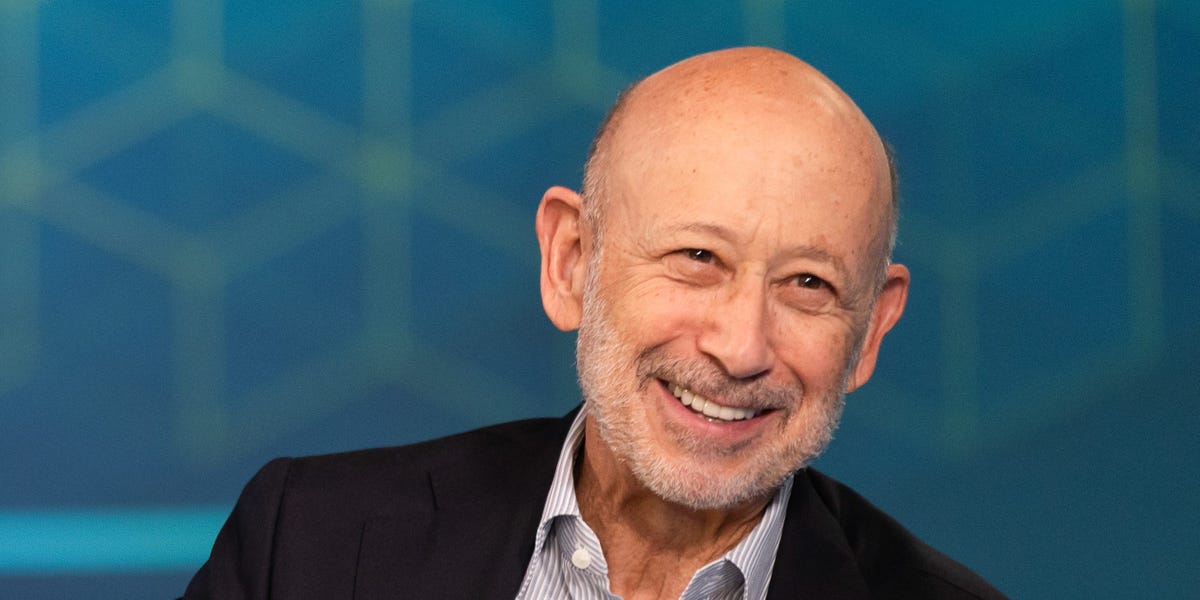
Lloyd Blankfein went from being a poor kid on a Brooklyn housing project to a Harvard graduate, a corporate tax lawyer, then the CEO of Goldman Sachs.
His titanic change in circumstances required a major shift in mindset, Blankfein explained in “Streetwise,” his memoir published this spring.
He wrote that “growing up in public housing, in a family that was just getting by, and attending public schools that were failing, left its mark on me.”
When counting every dollar and applying for scholarships was the norm, it was the “furthest thing from your mind to give money away,” Blankfein wrote. “It required an adjustment on my part when I started to earn a lot and had to learn to enjoy donating some of it.”
Blankfein recalled several times in his life when his hardscrabble upbringing clashed with the affluence around him. At Harvard, he watched his crewmates on the rowing team “ripping towels into shreds” for use as makeshift headbands.
“Where I came from, you used a towel for approximately forty years,” he wrote. “Here people didn’t husband everything or feel that they always had to defer gratification.”
Blankfein also told the story of an awkward dinner at a wealthy girlfriend’s house:
“The first course looked like the top of a pineapple, and I picked off leaves and started eating with everyone else. I chewed and chewed and wasn’t getting anywhere. Everyone was looking at me. It turns out I was trying to chew and swallow the leaves of an artichoke, which I had never seen before.”
His girlfriend’s parents kept requesting their guest “do things they knew were outside my comfort zone, like opening a bottle of champagne. When the cork shot out of the bottle, I almost lost an eye, to everyone else’s amusement.”
Blankfein wrote that after living at both ends of the wealth spectrum, he has mixed feelings about raising affluent children.
“I spend half my time wanting to give stuff to my kids, the other half tormenting them for having stuff I gave them that I didn’t have,” he wrote.
Retiring in style
Blankfein retired as Goldman’s CEO in 2018 after years of weathering crises, battling the press, wrangling with regulators, flying across the world every few weeks, and even surviving cancer.
That last experience made him think hard about how he wanted to spend the rest of his life, and what meaning it would have.
“It couldn’t be about one more weekend when I said goodbye to my family on a Saturday afternoon so I could travel for more than twenty hours to arrive in China for a meeting first thing on Monday,” he wrote.
Since retiring, Blankfein has been free to spend his days taking courses in physics and linguistics, perusing military histories and biographies, and taking on other intellectual pursuits.
“Being able to pursue my curiosity freely over the last few years has felt like a luxury and a gift,” he wrote.
Blankfein also trades his personal account daily because “it’s fun for me to make bets on the market,” offers advice and punditry, supports nonprofits, and spends more time with his family as well as exercising and traveling for leisure.
He recalled in his memoir that when he made partner at Goldman, he was advised that his goal in life should be that if his obituary runs nine paragraphs, no more than three of them should be about his time at the firm.
“In other words, I was to contribute to the world separately from Goldman and was supposed to have a life after Goldman,” he writes.
By the sound of it, Blankfein has taken that advice to heart.
Read the full article here