



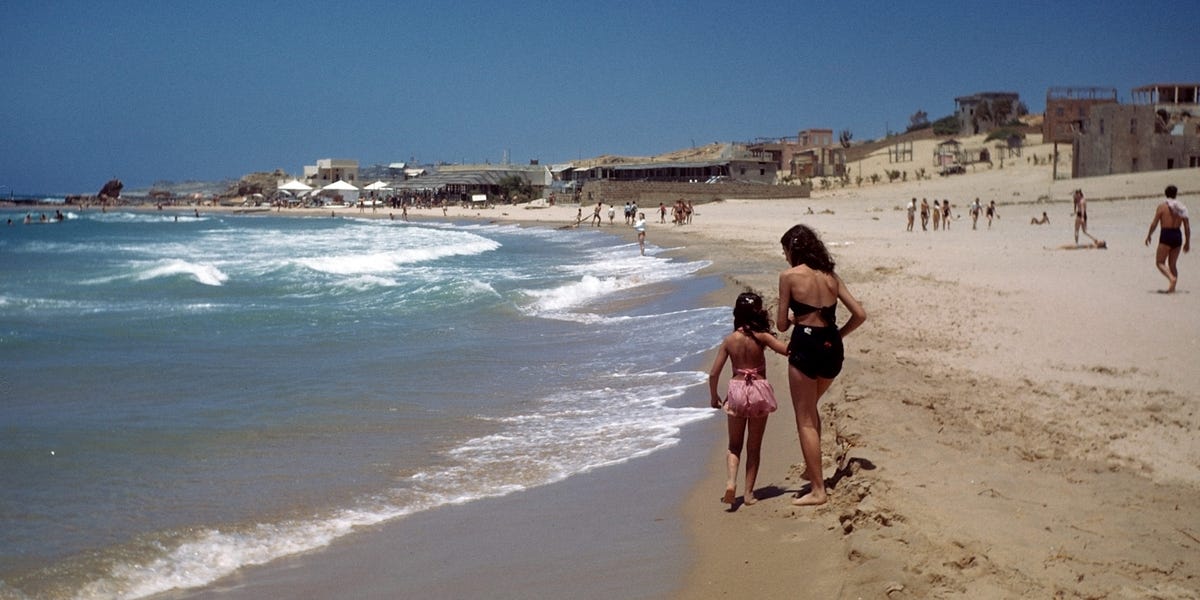
Beirut has been inhabited for over 5,000 years, making it one of the oldest cities on the planet. And, much like any other ancient city, it has been shaped by years of trade, complex domestic and foreign conflicts, and colonialism.
But one of the city’s highest points came following World War II, after Lebanon gained independence from France in 1943. Celebrating newfound freedom, combined with French metropolitan influences, a temperate climate, and access to the Mediterranean Sea, Beirut became a popular tourist destination and a prosperous city, earning it the nickname “Paris of the Middle East.”
Stars like Elizabeth Taylor, Marlon Brando, Brigitte Bardot, and Peter O’Toole on breaks from filming “Lawrence of Arabia” were spotted there, and luxury hotels and clubs dotted its beaches.
However, not everyone was living like an A-list movie star during this period. Economic disparity persisted, and conflicts were brewing that would lead to one of the bloodiest periods in the city’s long history.
When the Lebanese Civil War broke out in 1975, this “Golden Age” came to an end. Almost 1 million people fled the country, and over 150,000 people were killed, per the Middle East Research and Information Project.
The Civil War ended 15 years later, in 1990, though unrest and violence continue in Lebanon to this day. For decades, the country has been drawn into repeated conflicts with Israel, with which it shares a border, and new fighting between Israel and Hezbollah, the Iran-backed Shiite Islamist group based in Lebanon, started in 2023. This conflict has complicated efforts to end the wider war involving the US, Iran, and Israel.
Here’s what Beirut looked like during one of its most prosperous periods.
Read the full article here