





As the military searches for new ways to use cheap drones, the Marine Corps is testing whether helicopters can serve as mobile control hubs for them during missions at sea.
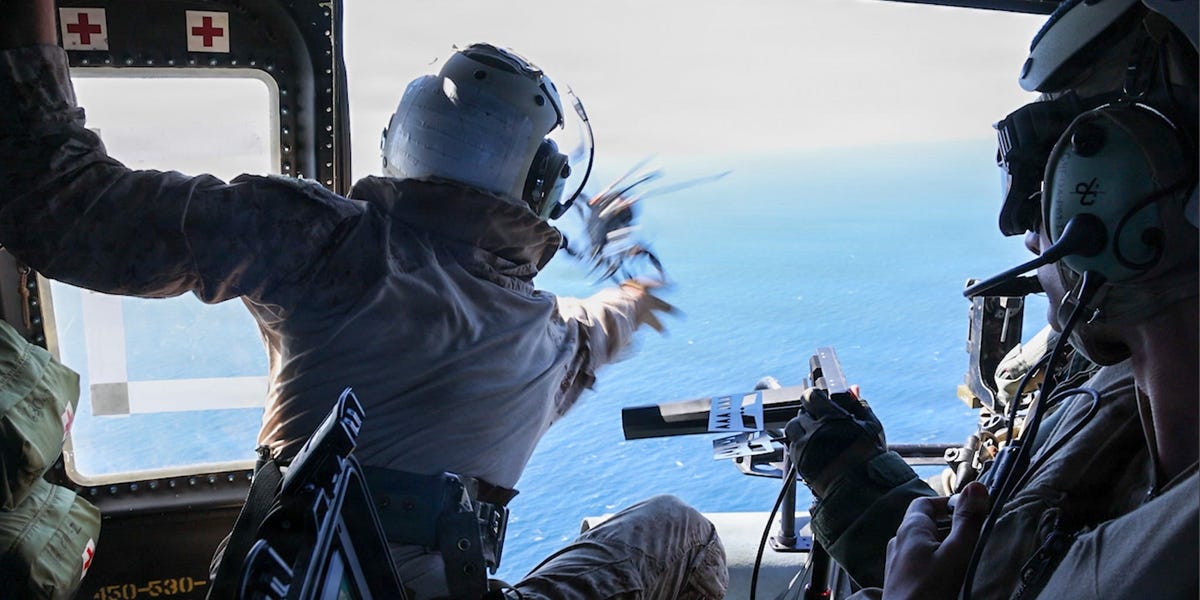
During a recent exercise off the coast of California, Marines launched and controlled small first-person-view drones from aboard UH-1Y Venom and AH-1Z Viper helicopters while supporting a Marine special operations visit, board, search, and seizure drill. The Corps explored whether the uncrewed aircraft could be used to scout ships more closely before troops climbed aboard to help mitigate surprises and reduce the danger, the service said in a news release.
The service said the experiment showed helicopter formations could “scout, target, and provide overwatch from a safe distance” during maritime operations. Boarding and seizing ships can be among the military’s riskiest missions, meaning more time spent surveilling the vessel can greatly reduce the likelihood of encountering tactical problems.
The 3rd Marine Aircraft Wing said in its release that by using the FPV drones “as a remote extension of the helicopter’s own sensors,” the Marines were able to make “an intrinsically dangerous mission more controlled by reducing unknowns.”
Marines used small Neros Archer first-person-view drones, the primary drone used by the Corps. Each one costs a few thousand dollars, and the military expects to buy many more, with the Army seeking as many as one million Neros Archer drones over the next two years.
The exercise also explored whether helicopters could serve as airborne motherships for smaller drones, an idea already emerging on modern battlefields.
In Ukraine, both Ukrainian and Russian forces have increasingly paired larger drones with smaller FPV aircraft and interceptor drones, using the larger combat platforms to ferry offensive and defensive drones closer to the battlefield before releasing them. Such an approach extends the range of drones by miles, giving them greater reach without putting operators closer to danger.
The recent drill follows an earlier Marine Corps exercise in May, which also saw troops practice passing control from ground units to helicopters and launching them from helicopters, early testing of the “airborne mothership” and flying command post concepts for the Corps.
Read the full article here