






A Ukrainian official said the country’s earlier counter-drone technology, even if it’s no longer sufficiently cutting-edge for its own fight, could still be useful for partner nations worried about similar threats and searching for good-enough solutions now.
Ukraine is in a constant innovation race with Russia, with both sides trying to rapidly develop drones and counter-drone defenses to beat the other side. Technology that was once key can rapidly become obsolete on the battlefield, yet still be a better option than what many allies have available now to meet the challenge.
Davyd Aloian, the deputy secretary of Ukraine’s National Security and Defense Council, said some Ukrainian drone technology, including some early designs for interceptor drones built to shoot down incoming attack drones, may no longer be an ideal solution for Ukraine’s needs but could still work elsewhere, where the weapons race is moving more slowly.
In the event of attacks against other countries in Europe, for example, he said “it would be better to have at least the solutions that showed their efficiency months ago.”
Aloian’s idea aligns with a key lesson NATO nations are learning from the war in Ukraine: having a lot of good-enough weapons available today beats a limited arsenal of perfect ones that come too late.
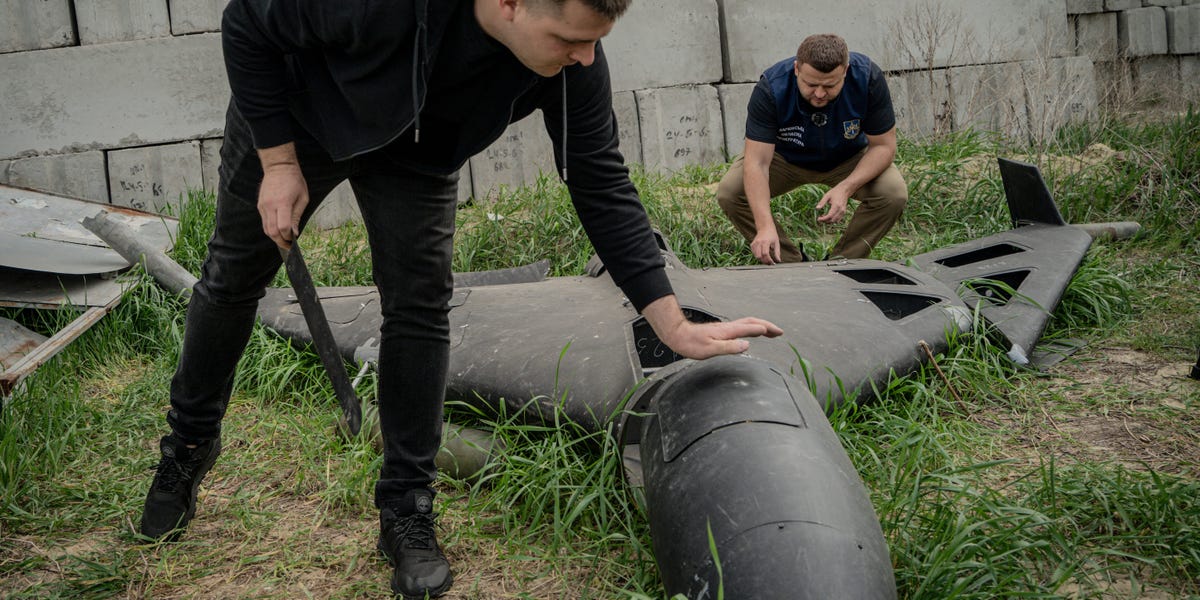
The deputy secretary said that this dynamic was visible in the Middle East during the Iran war, when the US and its Gulf allies faced attacks by Iran’s Shahed drones. Though Tehran used some newer jet-powered one-way attack drones, like Moscow is increasingly deploying, it relied heavily on propeller-driven Shahed designs — the kind that Ukraine had been battling since early in Russia’s war.
During the Iran war, Ukraine sent roughly 200 military experts to the Middle East to help nations strengthen their air defenses. It also sent troops and Ukrainian anti-drone solutions, which were used in combat. The fight triggered a sharp increase in interest in interceptor drones.
Aloian said that designs that were a year old and less relevant at home still proved effective in the region.
“We are ready to share our operation, technologies, and experience, and everything that will be needed in order for our partners to achieve the same level of defense deterrence that we have in Ukraine,” Aloian said.
A starting place could be gear that Ukraine no longer has use for but could still prove practical for another operator in another kind of fight.
Aloian said it would be useful for allies to have “access to those solutions that are efficient.” Even if they’re not used in a fight, they could hold value as training tools, he said.
Ukrainian officials have said that Kyiv is willing to send partner nations defense technology, including interceptors, when it can do so without hurting its fight. It is also planning to export some systems, including long-range drones, that are no longer useful on its battlefield but still interest partners.
Aloian said that in the war with Russia, “speed is essential,” and the defense industry has to work much faster than what allies are used to. Within months, “solutions will already be outdated.”
Ukrainian officials have said that interceptor drone designs can change so quickly that the advantage of a new model may be negated within months. Companies are constantly upgrading platforms while swiftly phasing out obsolete systems. There are possibilities for those systems, though, in regions like the Middle East or elsewhere in Europe.
NATO countries are increasingly concerned about drones, especially after several Russian long-range drone incursions, but they are not under the same immediate pressure as Ukraine, which faces bombardments regularly. Officials have argued that, as they prepare for future drone threats, there is real value in defenses that are available now.
Ukraine has shifted from being a country many expected to be quickly overrun by Russia and urgently seeking help from cautious partners to being a source of new battlefield technology and tactical lessons that many Western militaries now want to study.
Aloian said Ukraine has “the experience, and we have the knowledge, we have the solutions” that it’s already sharing “with our, not even partners, but with friends.”
Read the full article here