




Software engineering roles aren’t going away anytime soon — but they are converging.
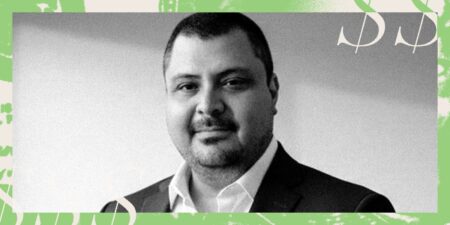
At least that’s the case at the Big Four firm EY, according to Dan Diasio, global consulting AI leader. Diasio said software engineers are able to accomplish and build a lot more quickly than they were previously.
The shift has pushed the consulting giant to move beyond traditional software engineering lifecycles and toward product development lifecycles. That means training engineers to operate more like end-to-end product builders rather than pure coders.
Diasio told Business Insider that roles that were once split across data engineering, software engineering, and AI engineering are now overlapping.
Those used to be three “completely different professions,” Diasio, who is also EY’s Americas consulting CTO.
While the roles still exist as separate titles today, the work is converging, he said. In addition to the skillsets overlapping more than in the past, Diasio said that the company is also shifting its expectations of engineer hires to work across data, software, and AI.
“The role titles will catch up,” Diasio added in an email. “We’ve already started moving our training and talent development towards this product-first view.”
Part of the shift stems from AI speeding up the product lifecycle, he said. Instead of starting with a requirements document generated by AI, passing it to a design plan generated by AI, and then to a team that builds and codes the software, that process is being streamlined, Diasio said.
That’s all happening “much faster than we would have been able to do it previously,” Diasio said.
Diasio is describing a shift that has swept through the software engineering industry since late 2025, when improvements to AI coding models like Anthropic’s Claude Code and OpenAI’s Codex automated most coding work. A number of engineers have told Business Insider that they haven’t touched code directly since December.
Shifts in hiring technical talent
Amid this transformative moment for engineering, EY is reshaping its hiring strategy for technical workers.
“We’re no longer just evaluating someone’s coding skills — that floor has risen. Instead, we are looking for people that break through the ceiling,” Diasio added.
That means top engineers are inquiring more about intent during interviews, the AI leader said. For example, EY engineers may ask a candidate why they made specific design decisions, what outcome they were solving, and how that work fits into a product.
Diasio said that “well-crafted intent, architecture thinking, and scalability” are the factors separating top talent now. He emphasized the importance of top engineers being involved in the hiring process.
“A talent hires A talent,” Diasio said.
This comes at a time when the consulting giant is broadly reevaluating its talent strategy, from onboarding to promotions.
EY’s talent chief recently said that AI is making career paths more fluid. The firm now requires all early-career applicants to complete skills-based assessments and is seeking candidates who can evolve with the technology, Ginnie Carlier, EY Americas’ chief talent and culture officer, previously told Business Insider.
Diasio said EY is also increasingly prioritizing managerial skills in hires across the firm’s business and technology sectors. That’s a departure from the previous model in professional services firms, where junior workers primarily executed their own tasks until taking on supervisory roles, he said.
Many entry-level hires are now expected to delegate and manage workflows across AI tools. As AI becomes more integrated into day-to-day operations, Diasio said employees need to think more like managers earlier in their careers.
Diasio said the company is allocating more training in that area.
“We are preparing for our new hires to be Day One managers,” he wrote.
Read the full article here